A casual beach walk turned into a remarkable journey through prehistoric history when an 11-year-old boy discovered a fossilized tooth from an ancient elephant relative that lived up to 2 million years ago.
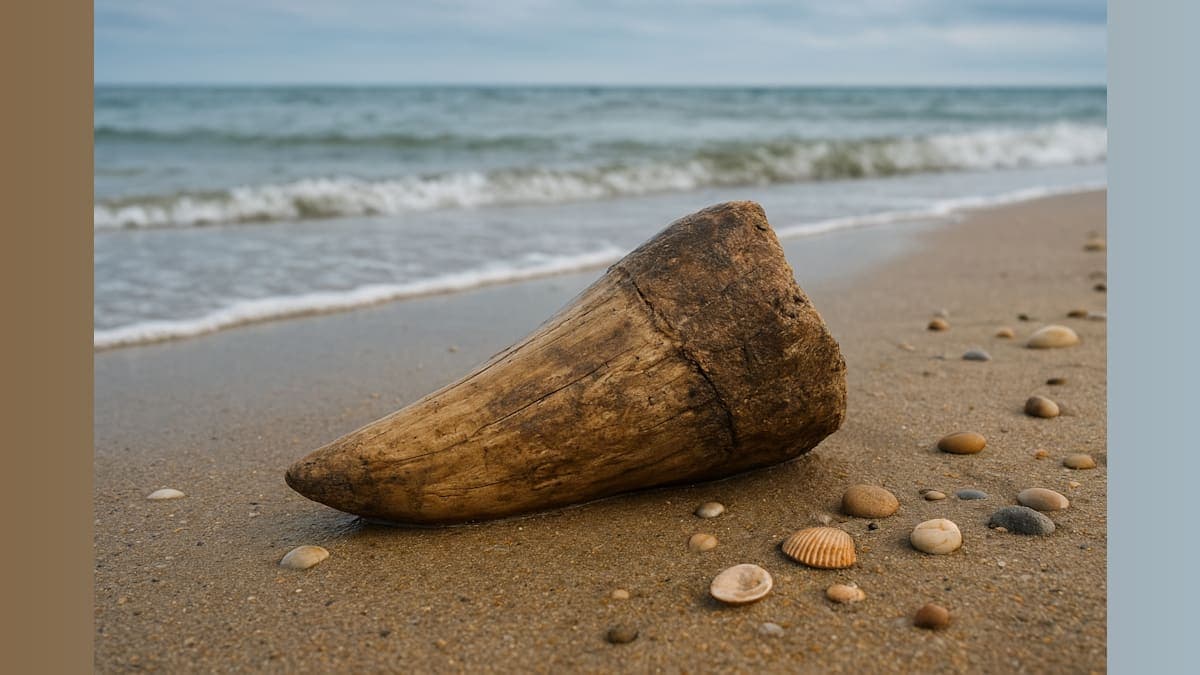
Charlie Orchard-Lisle was walking with his mother Eleanor along East Lane beach in Bawdsey, a Suffolk coastal village in eastern England located approximately 75 miles from London, on May 24 when he spotted an unusual rock-like object along the shoreline. The discovery proved to be far more significant than an ordinary beach stone.
The four-inch-wide specimen was later confirmed by Professor Adrian Lister, a research leader in paleontology at the Natural History Museum in London, as the upper left molar of an Anancus arvernensis. This extinct mammal roamed the Earth during the Late Miocene era through the Early Pleistocene period, approximately 8.5 to 2 million years ago.
The timing of the discovery carried an element of serendipity that Eleanor found particularly striking. "We were walking along and, ten minutes before, my son Charlie was saying how much he loves elephants," she told SWNS news. Moments later, they noticed something protruding from the lapping waves.
"It must have been quite distinctive because it caught both our eyes, so we picked it up," Eleanor explained to SWNS news. "We could tell it was something different. It had a different feel to it."
The Anancus arvernensis was a formidable creature, weighing approximately six tons and standing around eight feet tall at the shoulder. A relative of the African bush elephant, this prehistoric mammal was originally misclassified in 1828 as a Mastodon. The species was distinguished by its straight, uncurved tusks, setting it apart from modern elephants.
Eleanor expressed her amazement at the find, stating to SWNS news: "It is quite incredible. I can't believe you can find something so old on the beach."
Paleontologists believe the ancient tooth may have been preserved within the red crag cliff at Bawdsey for millions of years before natural erosion released it, allowing the waves to carry it to shore where Charlie would make his extraordinary discovery.
The discovery joins a growing list of significant paleontological finds made by young amateur fossil hunters in recent years, demonstrating that remarkable scientific discoveries can happen during ordinary outdoor activities. The find serves as a reminder of the rich prehistoric heritage preserved along coastal regions, where erosion continually reveals glimpses of ancient life that once inhabited the planet millions of years before human civilization emerged.