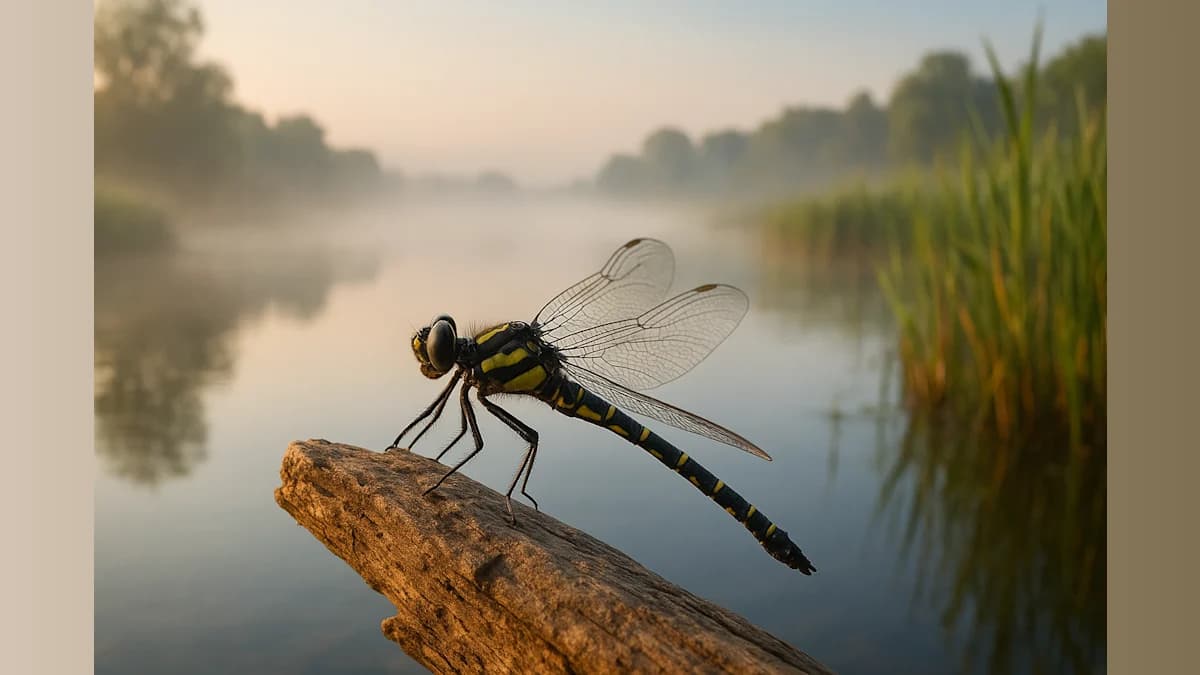
A morning walk along a Welsh river produced an extraordinary wildlife encounter when Britain's longest dragonfly species decided to hitch a ride on a woman's thumb.
Sarah Hawkes, a conservation officer with Buglife Wales, discovered the striking Golden-Ringed Dragonfly during an early morning excursion near the Ceiriog River in Wales. The insect, which can reach lengths of up to four inches with an equally impressive wingspan, provided a rare opportunity for close observation of one of Britain's most spectacular invertebrates.
The encounter occurred in ideal conditions for such a sighting. The cool morning temperatures had left the dragonfly somewhat lethargic, as these insects depend heavily on external heat from the sun for their energy. Hawkes spotted the creature clinging to a grass stem near a hedgerow as she walked with her dog along the river, which tumbles down from the Berwyn Hills.
The Golden-Ringed Dragonfly represents a species with highly specific habitat requirements. These remarkable insects breed primarily in acidic rivers and streams that flow off peat and cross sandy soils and particular rock types. This environmental specificity explains their concentration in Wales, Scotland, and North West England, where such conditions naturally occur.
The location of this sighting holds particular ecological significance. The Dee River Catchment, which includes the Ceiriog River, has been designated as one of Britain's Important Insect Areas due to the presence of numerous rare and specialized insect species. This classification underscores the conservation value of the region's unique aquatic and terrestrial habitats.
Despite their delicate appearance, Golden-Ringed Dragonflies are formidable predators. These fast, agile, and powerful flyers feed on large insects including wasps, beetles, bumblebees, and even other dragonfly species. Their hunting prowess begins long before they take to the air. The larvae spend up to five years buried at the bottom of streams, ambushing prey that passes overhead in a patient wait that can last half a decade before emergence.
According to the North Wales Wildlife Trust, these dragonflies can be observed on the wing from May through September, making summer the prime season for encounters with this species. The extended larval development period and specific breeding habitat requirements make each sighting of an adult Golden-Ringed Dragonfly a noteworthy event for naturalists and casual observers alike.
For Hawkes, whose professional role involves protecting invertebrate species across Wales, the encounter represented both a professional highlight and a personal moment of connection with the wildlife she works to conserve. The brief interaction served as a reminder of the remarkable biodiversity that thrives in Britain's upland river systems and the importance of preserving these specialized habitats for future generations.