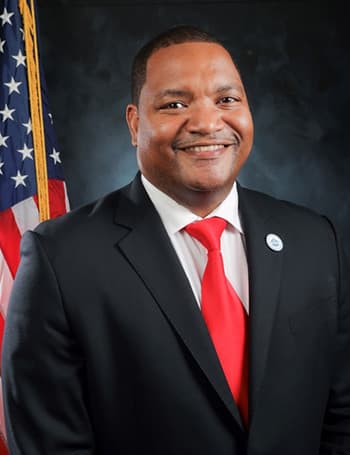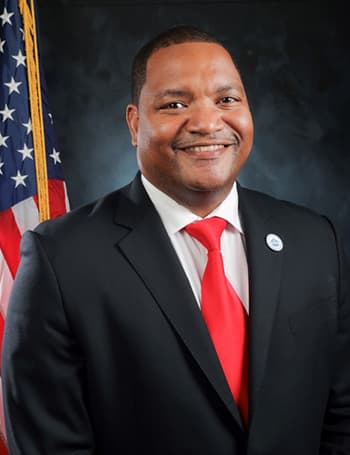
Open Space Director Kevin Quinn says officials must balance conservation against housing affordability and the shrinking supply of developable land
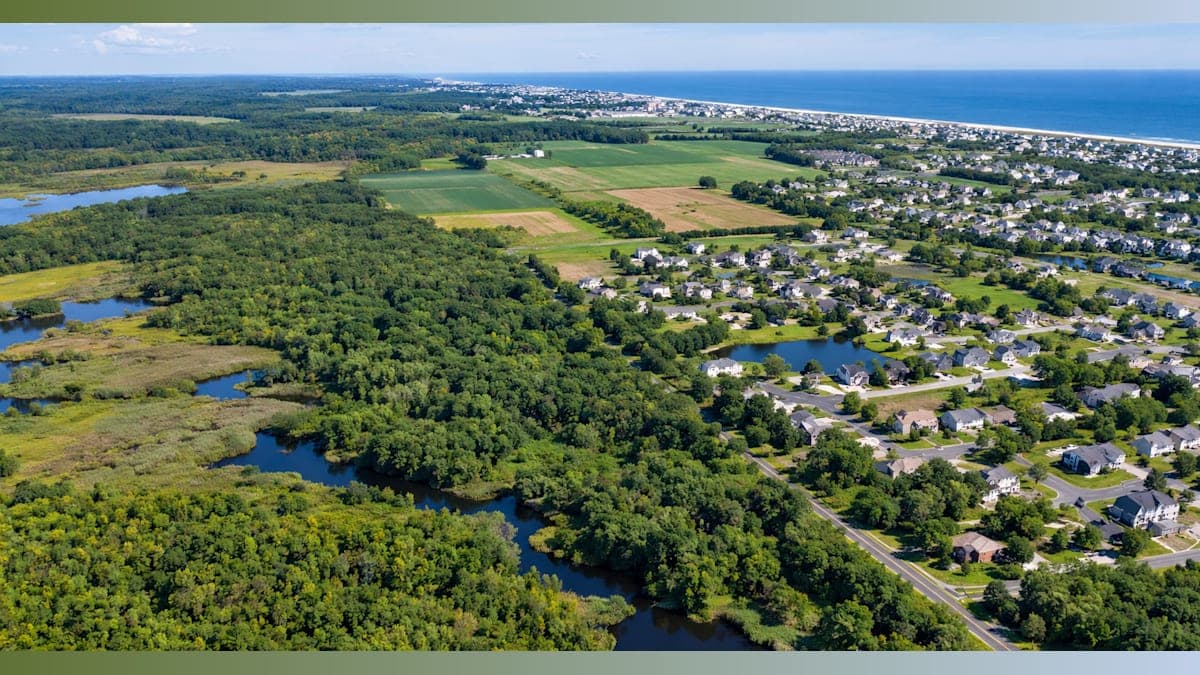
CAPE MAY COURT HOUSE — Preserving open space sounds like an easy decision in a place such as Cape May County, where beaches, wetlands, farms and undeveloped land are central to the region's identity.
But Kevin Quinn says every acre taken out of development carries consequences, too.
Quinn, Cape May County's director of Open Space and Farmland Preservation, said county officials increasingly have to weigh conservation against another pressing problem: the cost and availability of housing.
“We're dealing with, obviously, a housing affordability [issue],” Quinn said Thursday on Off The Press with Scott Cronick on News Talk 1400 & 92.3 WOND. “If we're taking the wrong properties out of the equation, it could have a detrimental effect on, you know, the affordability.”
It's a balancing act made particularly significant by just how much of Cape May County has already been protected.
Quinn said “almost 50 percent” of the county's land is preserved through a combination of county, municipal, state and federal programs.
County planning documents show the scale is indeed enormous: a 2022 Cape May County Farmland Preservation Plan identified 65,231.6 acres of preserved open space.
“The same person that may be upset that, you know, there's open space disappearing in a perceived way, that person might also be the same one that's complaining that it costs too much money to have a house,” Quinn said.
“It has to be a balance.”
More Than 65,000 Acres Already Preserved
The 65,000-plus acres don't all belong to Cape May County.
In fact, the overwhelming majority don't.
The county's preservation plan, using NJDEP Preserved Lands GIS data, attributed 56,624.6 acres — nearly 87% of all preserved acreage — to the state.
Municipalities accounted for another 5,376.4 acres, Cape May County itself 2,004.6 acres, the federal government 620.2 acres and nonprofit organizations 605.8 acres.
That distinction is important because Quinn isn't suggesting Cape May County government has purchased nearly half the county.
Rather, he was describing the cumulative effect of decades of preservation by different levels of government and conservation organizations.
Cape May County's own Open Space and Farmland Preservation program says it has preserved approximately 5,000 acres of open space and farmland since voters created the program in 1989.
And Quinn says that doesn't mean the county should stop preserving land.
It means officials need to be selective about what they preserve.
“We're trying to preserve properties that have a resource or are already interconnected to other preserved properties to kind of create more of a contiguous pathway,” Quinn said.
He said the county isn't looking simply to accumulate acreage.
“We're looking for, you know, a few acres minimum that can provide a resource to the community without taking away something that may be valuable in the future,” Quinn said.
Not Every Available Property Should Be Preserved
Quinn said potential acquisitions undergo scrutiny before the county moves forward.
“When an opportunity presents itself, there's a whole study that's done in advance,” he said.
Part of that involves determining what the municipality itself envisions for the property.
“We don't want to infringe on the municipality's plans or, you know, an opportunity for them to designate a specific piece of property in a town center or something that they have going on,” Quinn said.
“But, you know, at the end of the day, there's land available. If somebody has the desire to sell it to us for preservation, we can do that.”
The county's Open Space Review Board is part of that decision-making process.
And preservation can have another consequence: land removed from private development can also come off the local property-tax rolls.
Quinn acknowledged that issue is considered.
“That's something that, as Joe pointed out, we weigh that in part of the conversation,” he said.
A $520,000 Decision in Rio Grande
A recent county acquisition illustrates exactly the type of choice Quinn was describing.
In June, Cape May County purchased 3.2 acres at 3110 Shunpike Road in Rio Grande for $520,000 through the Open Space Program.
What makes the acquisition noteworthy is its location.
The property was within a designated Town Center, an area intended to accommodate orderly mixed-use growth. Middle Township nevertheless supported preserving the property, according to the county.
County Commissioner Director Leonard Desiderio said at the time that preservation decisions involve consultation with municipalities to determine which properties are best suited for the program.
The purchase provides a real-world example of the tension Quinn described on WOND: land can have value for preservation while simultaneously having potential value for future development.
Voters Created the Fund in 1989
Cape May County's preservation program dates to 1989, when voters approved creation of an Open Space and Farmland Preservation Trust Fund by approximately a 2-to-1 margin.
The fund is supported by a dedicated county property tax of 1 cent per $100 of assessed valuation and currently generates approximately $8 million annually, according to the county.
“In 1989, the voters of Cape May County approved a trust fund to preserve open space and agricultural lands for the future,” Quinn said.
The program has evolved considerably since then.
Quinn described five major components during Thursday's interview: traditional open-space acquisition, farmland preservation, parks and recreation projects, historic preservation and a newer Maritime Resource Preservation Program.
With farmland, the county doesn't necessarily buy the farm itself.
Instead, it can purchase its development rights.
“In that program, we are ultimately purchasing the development rights to preserve land for agricultural use,” Quinn said.
The county tries to partner with the state on those transactions to share costs.
“The farmer gets to keep their farm and they are supplemented with, you know, some financial assistance,” Quinn said. “There's an incentive there to do that so that they can always farm.”
Open Space Money Doesn't Just Buy Open Space
The trust fund can also help municipalities create recreational spaces.
“Think trails, parks, active or passive recreation facilities,” Quinn said. “And a lot of that's about accessibility.”
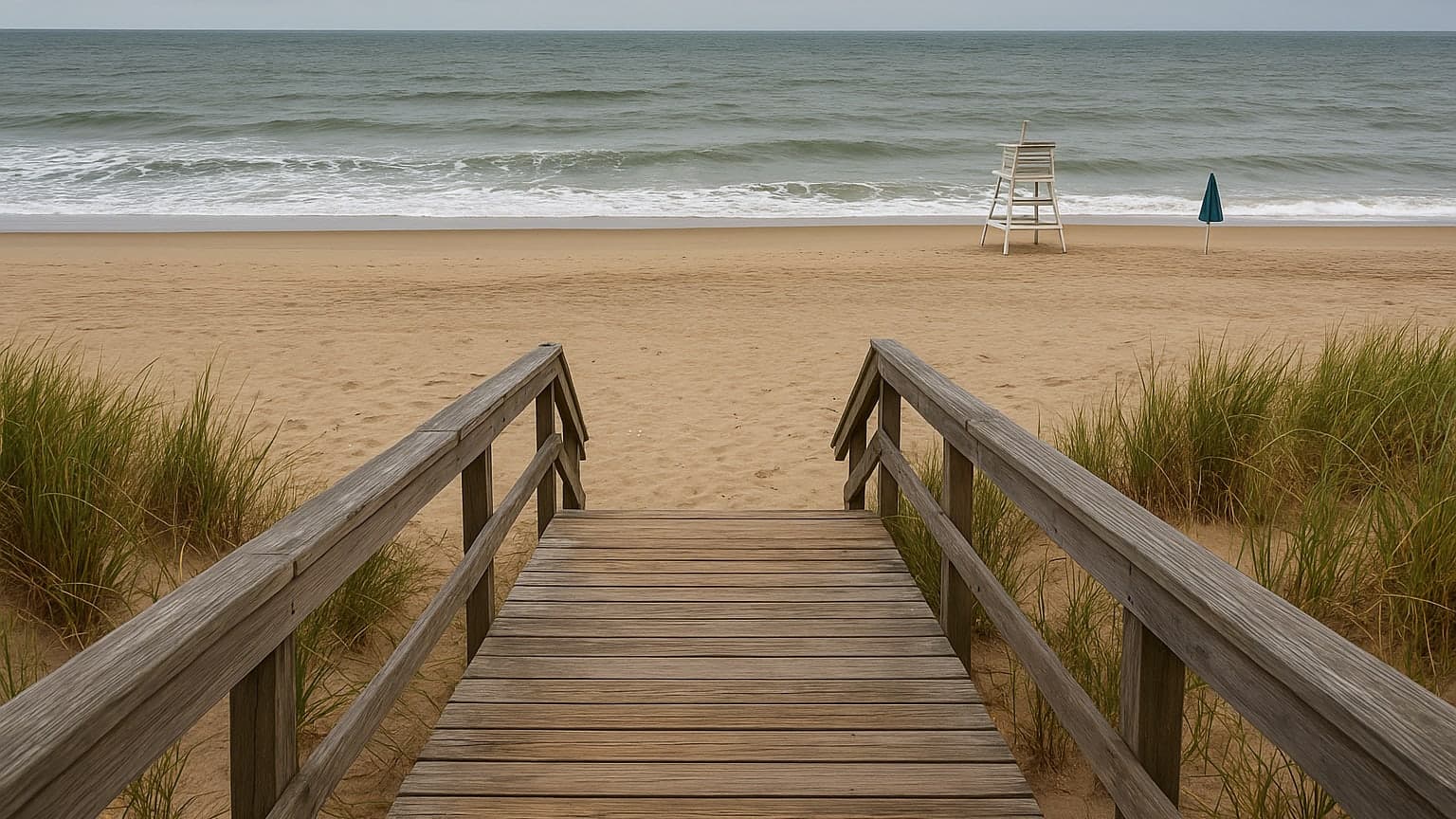
For Quinn, that can include something as seemingly small as the end of a street at the beach.
“The beach ends are neat,” Quinn said. “There's one every block.”
He views them as potential miniature public spaces.
“I consider them, you know, potential to be small parks,” Quinn said.
They're also “gathering points,” he said, that connect neighborhoods with “one of our largest recreation assets” — Cape May County's beaches and ocean.
Historic preservation is another component, although Quinn said structures must already be listed on the state or national historic register to qualify under that portion of the program.
The county is also developing its new Maritime Resource Preservation Program.
‘A Tremendous Amount of Responsibility’
Quinn's comments come as Cape May County confronts competing pressures familiar throughout the Jersey Shore: protecting the environment and character that make the county attractive while maintaining enough land for housing and economic development.
He said cooperation between county planners and individual municipalities is critical because land-use decisions can last far longer than the elected officials who make them.
“The thing with planning is that you are taking on a huge responsibility for the potential for future development, future plans,” Quinn said.
Political leadership changes, he noted, while land-use decisions can be permanent.
“Somebody has an idea and that idea gains a lot of momentum,” Quinn said. Without sufficient consideration, he said, a proposal could have “a negative impact somewhere down the road” — or a potentially positive idea might never gain traction.
“It's something that I realized really has a tremendous amount of responsibility,” Quinn said.
For the person overseeing Cape May County's preservation program, that means the goal isn't simply to preserve the greatest number of acres possible.
It's deciding which acres should remain undeveloped — and which ones the county may need someday for something else.
Kevin Quinn appeared Thursday on Off The Press with Scott Cronick, with Joe Molineaux filling in as guest host. The program airs weekdays from 4 to 6 p.m. on News Talk 1400 & 92.3 WOND.
About the Author
Karen Johnson
With over 30 years of news experience in major markets like Los Angeles, Denver, and Columbus, Karen now covers our area for South Jersey NewsBeat. She also brings her articulate and conversational news delivery to WOND radio listeners every weekday. Her background includes work with the NBC Radio Network, and she thrives in fast-paced news environments.