"The shockwave is slowly going to come to Atlantic City... But we have time to get our stuff together and try to fight it off." - Anthony Marino, casino analyst
ATLANTIC CITY, N.J. — The countdown has already begun.
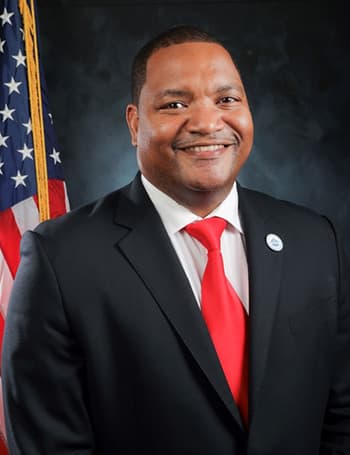
That's the message from veteran casino analyst Anthony Marino, who says Atlantic City's gaming industry still has time to adapt before three full-scale New York City casinos dramatically reshape the Northeast gaming market—but not much time.
Speaking Monday morning on WOND's The Don Williams Show, Marino described the expansion of Resorts World New York City and the eventual arrival of two additional casinos as the biggest competitive challenge Atlantic City has faced in decades. While the threat is real, he believes Atlantic City still possesses advantages that New York cannot duplicate—provided casino operators and local leaders capitalize on them.
"I wouldn't call it really surprising news," Marino said of Resorts World's latest expansion announcement. "This has been foreordained ever since last year when they decided to issue three licenses in New York City."
Resorts World, located at Aqueduct Racetrack in Queens, began offering live table games in late April after receiving one of New York City's first full casino licenses. Last week, the casino announced another major expansion, including a second hotel tower, a 7,000-seat entertainment arena, additional restaurants and bars, and a sports and media complex—many of the same amenities that have long made Atlantic City a destination resort.
A Different Kind of Threat
Marino says many people misunderstand where the real danger lies.
"It's clearly a threat to Atlantic City," he said. "Not so much that New Jerseyans are going to go over there and gamble, but the New Yorkers who have been coming here to Atlantic City to gamble for 47, 48 years may stop coming."
Those visitors have helped fuel Atlantic City's casino industry since gambling was legalized in 1978. If they begin staying closer to home, Marino said the effects could ripple through every aspect of the resort economy.
"That's a threat that we have to live with and get prepared for," he said. "No doubt about it."
Resorts World Already Exceeding Expectations
While the larger New York casino market is still years away from reaching full build-out, Marino said Resorts World is already posting eye-popping numbers.
"They're doing extremely well," he said. "I've been following their weekly reports. They're setting records."
According to Marino, the casino is generating more than $1,000 per slot machine per day in gaming revenue.
"That's almost unheard of in the casino world anywhere in the United States," he said. "The Borgata is the closest to that. Locally, they sometimes get up to $800 a slot machine in a particular month. But ever since they opened in late April, they've been doing that week after week after week."
He also pointed to the property's table game performance.
"There's a large Asian population that loves table games," Marino explained. "The table games have been doing extremely well."
The analyst said Resorts World is benefiting from a densely populated customer base in Queens and Brooklyn that numbers nearly five million residents.
"The doors have been open and people are streaming into that property," he said.
Atlantic City Still Has Time
Despite those impressive early results, Marino cautioned against assuming Atlantic City is already losing the battle.
"Right now Atlantic City continues to do well through the first half of this year," he said. "Brick-and-mortar gaming is up. So far those impacts have not yet come down."
Instead, he described the competitive threat as something that's still building.
"The shockwave is maybe gathering up there in Brooklyn and in Queens where Resorts World is," Marino said. "And the shockwave is slowly going to come to Atlantic City."
Then came what may have been the interview's most important observation.
"But we have time to get our stuff together and try to fight it off."
Atlantic City's Biggest Advantages
Marino believes Atlantic City's greatest strengths have little to do with gambling itself.
Asked whether the city's beaches and Boardwalk actually attract gamblers, he offered a nuanced answer.
"No," he said. "But they attract the surrounding environment that makes gamblers happy."
He explained that casino patrons are drawn to destinations that feel vibrant and exciting.
"What gamblers want to do—they want to walk into a casino that's busy, it's crowded, machines are jingling, they're jangling, and there's a sense that, 'I can do this. I'm going to be the guy that's going to knock this casino off legally and win big.'"
While Resorts World has recreated much of that casino excitement, Marino said it still lacks many of the amenities that transform a gaming hall into a true resort destination.
"Sooner or later that starts to fade into the background and you need the surrounding infrastructure," he said.
Ironically, Resorts World is now investing billions to build exactly those amenities.
"They announced that... we're going to build a 7,000-seat concert arena. We're going to ultimately have three different hotel towers with about 2,000 hotel rooms," Marino noted.
Atlantic City Must Keep Evolving
Marino said the next two years represent a critical window for Atlantic City to continue reinventing itself.
He praised several of the city's strongest casino operators.
"I think we have three incredibly popular casinos—Borgata, Hard Rock and Ocean," he said. "They can compete with anything Resorts World or Metropolitan Park or Bally's Bronx is going to do."
But casinos alone won't determine the city's future.
Marino pointed to ongoing efforts to diversify Atlantic City's economy through residential development, second homes, Airbnb properties and other non-gaming investments.
"There's an attempt to make Atlantic City now... using whatever unused land that's out there into residences to bring people in, second homeowners, maybe Airbnbs," he said.
He also emphasized the importance of continued tourism marketing.
"Atlantic City will still always be an attractive destination if marketed properly," Marino said, pointing to the work of Visit Atlantic City and other organizations promoting the resort.
Optimism Despite Uncertainty
Although Marino acknowledged that some weaker casino operators could struggle as New York's gaming industry expands, he stopped well short of predicting widespread closures.
Instead, he sees the coming years as a defining period for Atlantic City's future.
"If all that is done right," he said, "I think Atlantic City can compete with what's going on in New York—but there may be some casualties along the way."
For Marino, the message is clear.
The competition is coming.
The clock is ticking.
But Atlantic City still has an opportunity to prove that a destination built on its beaches, Boardwalk, entertainment and nearly five decades of casino history can remain competitive—even as one of the nation's largest gaming markets rises just across the Hudson River.

About the Author
Scott Stephens
Scott has been an on-air personality, producer and newscaster for 30+ years. He has been a mainstay in the South Jersey Community and on the air across many different area stations. Scott can currently be heard on Kool 98.3 and News Talk 1400 & 92.3 WOND.