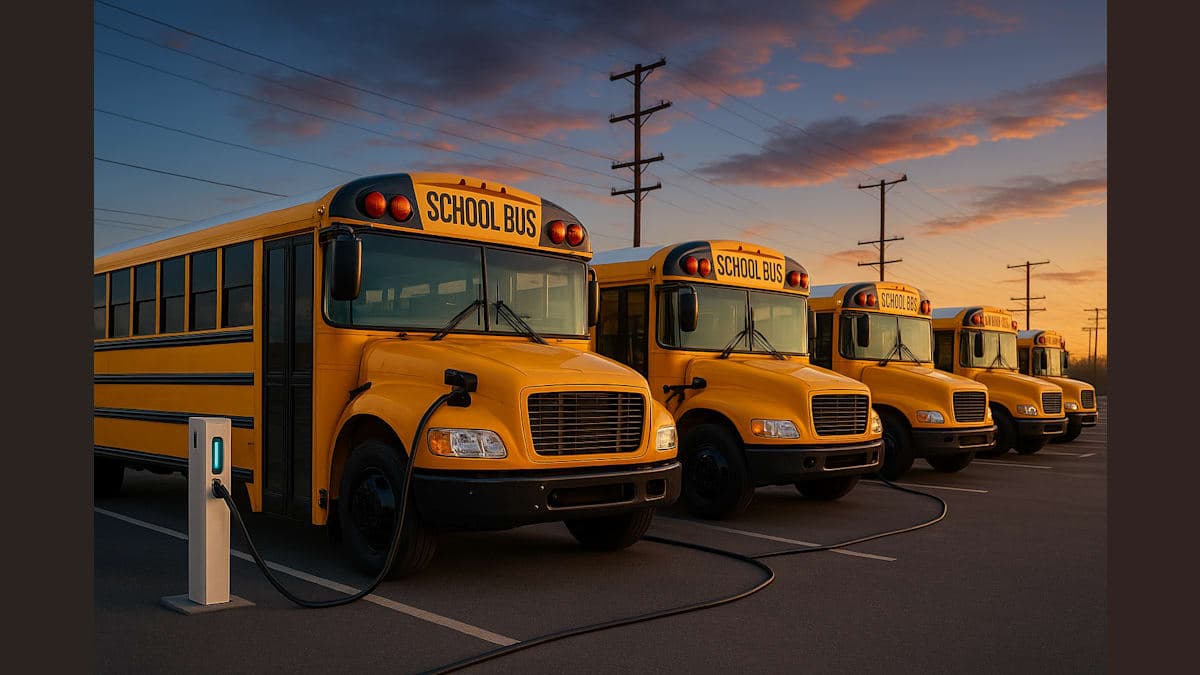
The Cherry Creek School District has introduced an innovative approach to electric vehicle technology that extends far beyond student transportation. Six new electric school buses now serve a dual purpose: ferrying students to and from school during the day, then functioning as mobile backup batteries to support the Denver area's power grid during peak evening demand.
The system operates on a straightforward principle. After completing their afternoon routes and returning students home, the buses return to their depot where a bi-directional charging system allows them to feed excess battery power back into the electrical grid. This occurs precisely when residential demand surges—during late afternoon and early evening hours when households activate kitchen appliances, air conditioning units, and entertainment systems.
Highland Electric Fleets designed the system to capitalize on the substantial battery capacity remaining after daily routes. Hundreds of kilowatt hours typically sit unused in the buses between the end of afternoon routes and the start of morning operations. By releasing this stored energy during peak demand periods, the buses help stabilize the grid when it faces maximum stress. The vehicles then recharge overnight during off-peak hours when electricity demand reaches its lowest point.
"This partnership works to support our environmental goals while delivering long-term operational savings," Jennifer Perry, Cherry Creek's interim superintendent, said at the June 3rd groundbreaking for the new bus facility, according to Good News Network.
The financial structure of the project proves particularly advantageous for the district. Highland Electric Fleets secured a $2.4 million federal rebate that funded both the six buses and the charging facility. Cherry Creek School District paid nothing for the infrastructure or vehicles.
Beyond the initial cost savings, Perry noted that long-term operational economics favor electric buses. With diesel fuel prices remaining elevated and electric vehicles requiring significantly less maintenance due to a 95 percent reduction in moving parts compared to traditional combustion engines, the district anticipates substantial ongoing savings.
The environmental and public health benefits extend beyond carbon emissions reduction. The elimination of diesel tailpipe exhaust improves air quality in communities where buses operate and park. Additionally, the dramatic reduction in noise pollution from electric motors compared to diesel engines contributes to quieter neighborhoods and school zones.
Highland Electric Fleets estimates the scalability of this grid-support model demonstrates significant potential. According to the company, two dozen such buses could manage excess demand from 100 homes during peak hours. Scaling up to several hundred buses could support over a thousand households, suggesting a viable path for broader implementation across metropolitan areas.
The Cherry Creek initiative represents one of several pilot programs Highland Electric Fleets currently operates, testing the viability of vehicle-to-grid technology in real-world school transportation settings. As utilities nationwide grapple with managing peak demand and integrating renewable energy sources, such distributed battery systems may offer a practical solution that leverages existing transportation infrastructure.