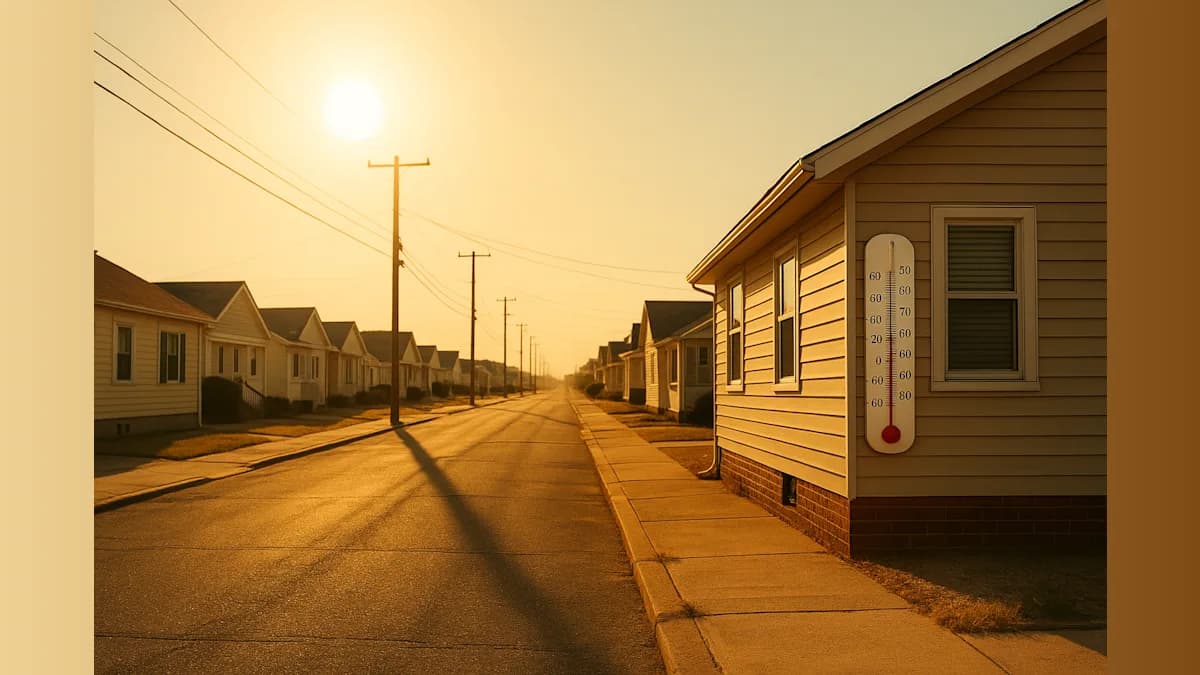
Much of the United States is experiencing dangerous and potentially record-breaking temperatures as a heat dome has settled over the Midwest and Atlantic Coast, affecting up to 90 million Americans. The current heat wave presents an unusual and concerning pattern: nighttime temperatures are remaining unusually warm, preventing the natural cooling period that typically offers relief and recovery from daytime heat.
In the Baltimore-D.C. region and southeastern Pennsylvania, including Philadelphia, high temperatures on Thursday were expected to reach the low to mid 100s with heat indices around 110 degrees Fahrenheit, according to the National Weather Service forecast. Overnight lows are expected to remain in the low 80s for many of those areas. Friday's forecast will be much the same.
"We're seeing temperatures well into the evening that are staying shockingly high and, in some cases, never dropping below 80 or 75 degrees. And this is really concerning," Ashley Ward, director of the Heat Policy Innovation Hub at Duke University's Nicholas Institute, told NPR. Ward emphasized that climate change is making the trend worse.
"We're not getting the opportunity for recovery overnight, as we've historically seen," Ward told NPR. "Our bodies need it, of course, but plants and animals … also our energy infrastructure. We need to be able to cool off overnight."
Climate Change Driving Warmer Nights
Climate change means that each summer brings more heat waves similar to the current one and more hot nights. The Fifth National Climate Assessment, published three years ago, notes that nighttime temperatures are rising faster than daytime temperatures in the United States. The assessment states that the number of nights where the temperature never falls below 70 degrees Fahrenheit is increasing everywhere in the country except the Northern Great Plains.
"The trends have been for those overnight lows to be warmer and warmer and warmer, especially when we're dealing with these big heat wave events," Alex DaSilva, a meteorologist with Accuweather, told NPR. The atmosphere is retaining more heat at night, DaSilva explained, meaning that daytime temperature rise starts from a hotter floor.
The situation is made worse by generally more humid conditions, also attributable to climate change. For that reason, afternoon summer showers may not help. "It can even feel worse sometimes after a rain shower or a thunderstorm comes through," DaSilva told NPR.
Health Risks and Vulnerable Populations
The combination of high temperatures and humidity creates dangerous conditions because people cannot evaporate sweat off their skin when there is significant water content in the air, Ward explained. This can lead to heat stroke or heat exhaustion.
"It's really a combination of temperature and relative humidity," Kenney told NPR's Morning Edition. "The sweating response is really only valuable if that sweat can evaporate."
These temperatures are a concern for anyone exposed to them, but for people without access to air conditioning, the situation is especially dangerous. According to the U.S. Energy Information Administration, 88 percent of U.S. households had air conditioning installed as of 2020.
However, a separate study by KFF — a nonprofit organization focused on health policy, polling, and journalism formerly known as the Kaiser Family Foundation — found that Asian, Black, and Hispanic households were more likely than White households to lack air conditioning. The study also found that lower-income households were more likely to be without air conditioning than those with higher incomes.
The most vulnerable people are older men and women. The problem is compounded by comorbidities such as heart disease and diabetes, Kenney noted.
Safety Recommendations
For those who must be out in the heat, Kenney recommends taking it slowly and getting used to the heat gradually. Staying hydrated is critical. "Make sure they drink before their heat exposure and especially afterward to try to catch up," he advised.