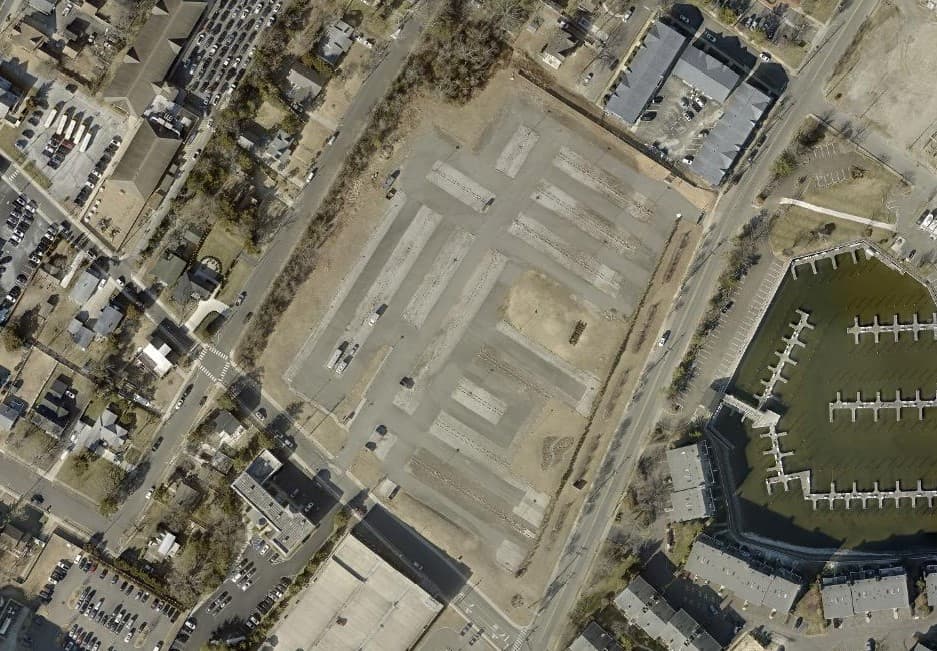
Our state is witnessing a significant shift in public sentiment toward data center development, with residents increasingly skeptical of promises that these massive facilities will transform local economies for the better.
Gov. Mikie Sherrill has championed data centers as engines of the modern digital economy and wants New Jersey positioned as a national leader. Yet she's simultaneously working to prevent these facilities from becoming financial burdens on everyday ratepayers. This month, Sherrill signed the Data Center Fair Share Act, legislation designed to ensure data centers cover their own energy costs rather than shifting expenses to residential consumers. The law establishes a separate ratepayer classification and pricing structure specifically for these facilities.
But the controversy extends well beyond electricity bills. Communities are objecting to where these industrial-scale buildings are being placed. In Vineland, residents have intensified their opposition to a data center that's part of a $17 billion agreement between developers and Microsoft. The backlash mirrors what's happening in Michigan, where 13 data centers in various stages of planning or construction have become a flashpoint in a Senate race that could determine control of the chamber.
The economic promises attached to these projects are meeting with increased doubt. New Jersey residents remember similar assurances about offshore wind projects during the Murphy administration — claims that major investments would fundamentally reshape the state's economy. Having heard these arguments before, voters are approaching new development pitches with considerably more caution.
Local concerns span multiple fronts: potential groundwater contamination, rising electricity rates, constant noise from round-the-clock operations, and questions about whether promised jobs will actually benefit nearby residents. Perhaps the most contentious issue is transparency. Many voters perceive big tech companies forcing their way into communities with minimal resident input, raising fears about what comes next if the process starts with such limited local involvement.
The data center industry has evolved through distinct phases. Commercial facilities first emerged during the dot-com boom of the 1990s, then pivoted after that bubble burst when Amazon Web Services ushered in the cloud computing era with its need for enormous custom facilities. The 2020 artificial intelligence explosion brought another wave of expansion. Despite recent legislative protections for ratepayers, residents can see how easily the tech industry bypassed local oversight in the past — and they're now paying electricity rates many describe as the highest they can remember.
National polling reflects this wariness. According to a June Reuters survey, only one-third of Americans support the current pace of data center construction, and a mere 14 percent would approve of one being built in their own community.
Health Insurance Crisis Hits Government Workers
State and local officials are confronting a severe affordability crisis in employee health insurance. State actuaries have projected double-digit premium increases for plans covering local government and education workers — a situation the Treasury Department characterized in 2025 as a financial death spiral.
New Jersey began offering health benefit plans to local government employees in 1964. At one point, more than 700 local entities participated. However, the plan structure and relatively low employee contributions have recently triggered a surge in medical and prescription drug claims. The problem intensified with widespread use of expensive weight-loss medications and years of depleted reserves that forced some plans to take out loans.
The League of Municipalities reported participation had dropped to 560 entities by March 2026. A July list shows just 540 government participants remain.
When premium rates skyrocketed in the early 2020s, municipalities with the healthiest employee populations left the system. These departures drove rates even higher for remaining participants, whose insurance pools became more expensive to cover. The same dynamics that destabilized local government plans have now affected education worker coverage. School district employees have endured steep rate hikes, and actuaries recently recommended a 34 percent premium increase for active school district employees in 2027.
The state is implementing several responses, including corporate Medicaid fees designed to prevent companies from shifting labor costs onto taxpayers. The 2027 state budget incorporates plan modifications with increased cost-sharing and incentives for public and education workers to choose higher-deductible options. Worker unions are advocating for legislation with structural reforms. Despite these efforts, the crisis remains unresolved as healthcare costs continue their upward trajectory.
Funding Gap Widens in District 2 Congressional Race
Republican Jeff Van Drew is seeking a fifth term representing New Jersey's 2nd District in Congress. His Democratic challenger is Cape May Mayor Zack Mullock, who won his party's primary decisively but now faces a significant financial disadvantage against the well-funded incumbent.
Federal Election Commission filings through June 30 reveal the disparity. Mullock reported $157,715 in contributions for the quarter, $165,456 in operating expenses, and $120,210 in cash on hand. Van Drew's campaign showed $223,026 in contributions, $82,174 in operating expenses, and $1,538,041 in available cash — more than twelve times his opponent's resources.

About the Author
Karen Johnson
With over 30 years of news experience in major markets like Los Angeles, Denver, and Columbus, Karen now covers our area for South Jersey NewsBeat. She also brings her articulate and conversational news delivery to WOND radio listeners every weekday. Her background includes work with the NBC Radio Network, and she thrives in fast-paced news environments.