Assemblyman Don Guardian says the nearly silent aircraft offered a glimpse at a potentially new form of regional transportation
ATLANTIC CITY — An aircraft capable of taking off and landing in about 150 feet could someday help connect Atlantic City with Philadelphia and other regional destinations — and some of the technology behind that vision has already been demonstrated at Bader Field.
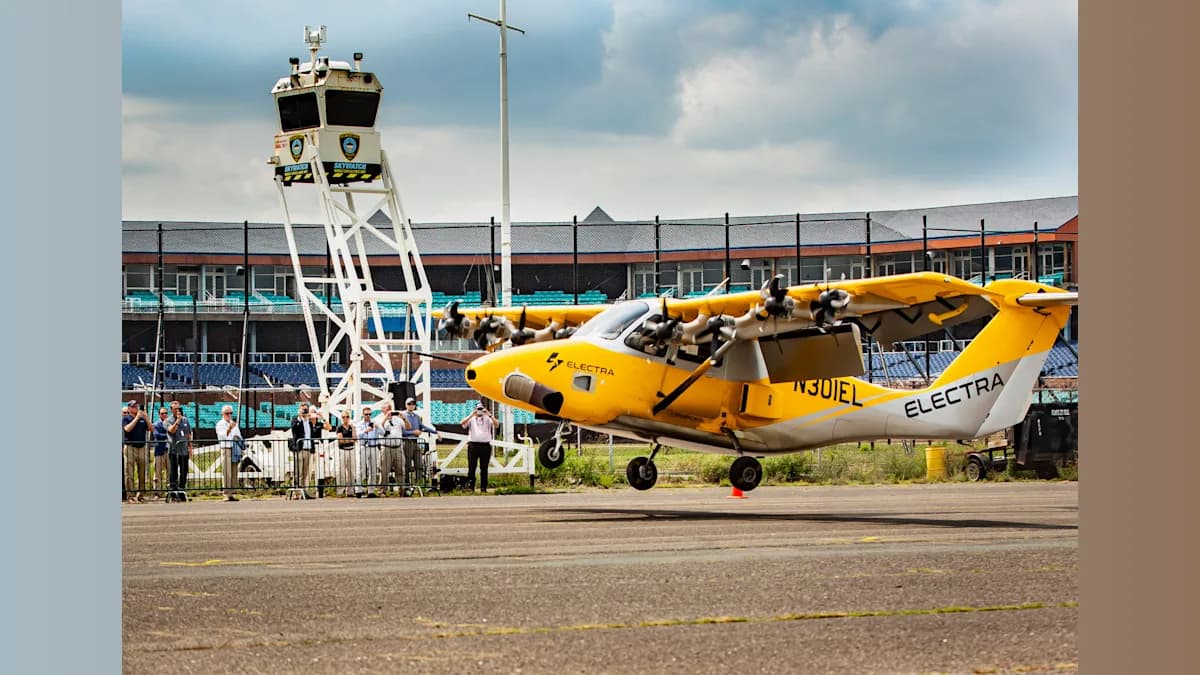
A hybrid-electric aircraft developed by Electra recently flew into the former Atlantic City airport as part of a federal program examining how a new generation of aircraft could connect smaller aviation facilities with major airports and metropolitan areas.
Assemblyman Don Guardian, R-Atlantic, who attended the Atlantic City demonstration, described what he saw Wednesday during an appearance on The Lorry Young Show on WOND.

“I didn't hear it because it's electric,” Guardian said. “It is quiet.”
But what really caught his attention was the amount of space the aircraft needed.
“It landed in 100 feet. Then, it took off in 100 feet,” Guardian said, describing the demonstration. “One hundred feet is, you know, smaller than a football field. It's like a parking lot.”
The manufacturer lists a 150-foot takeoff and landing ground roll for its planned production aircraft.
Atlantic City part of federal aviation experiment
The Federal Aviation Administration announced Aug. 18 that Electra, the Pennsylvania Department of Transportation and New Jersey Department of Transportation conducted demonstration flights connecting smaller airports with major aviation hubs.
The route included Manassas, Virginia; Millville Executive Airport; Atlantic City Bader Field; Northeast Philadelphia Airport; and Philadelphia International Airport.
The demonstrations are part of the FAA's Advanced Air Mobility integration effort, which is examining how next-generation aircraft can safely operate within the nation's existing aviation system.
NJDOT Commissioner Priya Jain called the Bader Field flight New Jersey's first Advanced Air Mobility demonstration and said the technology could eventually allow passengers to travel more directly to their destinations rather than first driving to a major airport.
Guardian said the potential became apparent to him when he saw how little runway the aircraft required.
“The concept is within 100 or 200 miles, you could use this as a very inexpensive way,” Guardian said.
He envisioned aircraft of this type eventually operating from much smaller locations than conventional airplanes require.
“Their ability to land in a parking lot means you could go from, let's say, Kennedy Airport to, you know, the Hyatt Regency in Midtown and land there and take off from there, too,” Guardian said.
Atlantic City-to-Philadelphia service specifically envisioned
Atlantic City's involvement isn't incidental.
Electra says a Pennsylvania-led coalition participating in the federal program is examining an Atlantic City-to-regional-destinations concept that specifically includes feeder service to Philadelphia International Airport.
The project is intended to study whether existing aviation facilities and other small access points could support underserved trips of approximately 50 to 500 miles.
That could potentially create a new transportation option for Atlantic City visitors who now primarily arrive by car, bus or rail.
However, the demonstration does not mean scheduled Atlantic City-to-Philadelphia passenger service is imminent. The technology remains under development and federal evaluation, and the FAA says additional demonstration flights are planned through the remainder of 2026.
Hybrid-electric, not completely electric
Guardian referred to the aircraft during the interview as electric, but the technology being developed by Electra is more precisely described as hybrid-electric.
The company's system uses batteries during takeoff and landing and a turbogenerator during cruise. Electra says the batteries can be recharged while the aircraft is flying or on the ground.
The aircraft demonstrated at Bader Field is part of Electra's development program. The company's planned commercial aircraft, the EL9 Ultra Short, is designed to carry nine passengers and take off and land with a ground roll of about 150 feet.
In July, Electra announced that the FAA had formally established the certification basis for the EL9, an important regulatory step toward eventual certification. The company applied for FAA Part 23 type certification in November 2025.
The company now anticipates the EL9's first flight in late 2027 or early 2028, meaning the production aircraft remains some distance from carrying commercial passengers.
Guardian: ‘You couldn't hear this plane coming in’
For Guardian, one of the most striking aspects of the Atlantic City demonstration was not what he saw, but what he didn't hear.
He contrasted the aircraft with the noise complaints that can accompany other aviation activity at Bader Field.
“There was no one there. You couldn't hear it,” Guardian said. “If you were on Route 40 there, you couldn't hear this plane coming in.”
The FAA says the demonstrations aren't simply showcases. Federal aviation officials intend to use information gathered during the program to identify regulatory and operational gaps and develop procedures for safely integrating advanced aircraft into the National Airspace System.
Guardian believes Atlantic City's participation gives the region an early look at where short-distance aviation could be heading.
“It's very exciting,” he said.

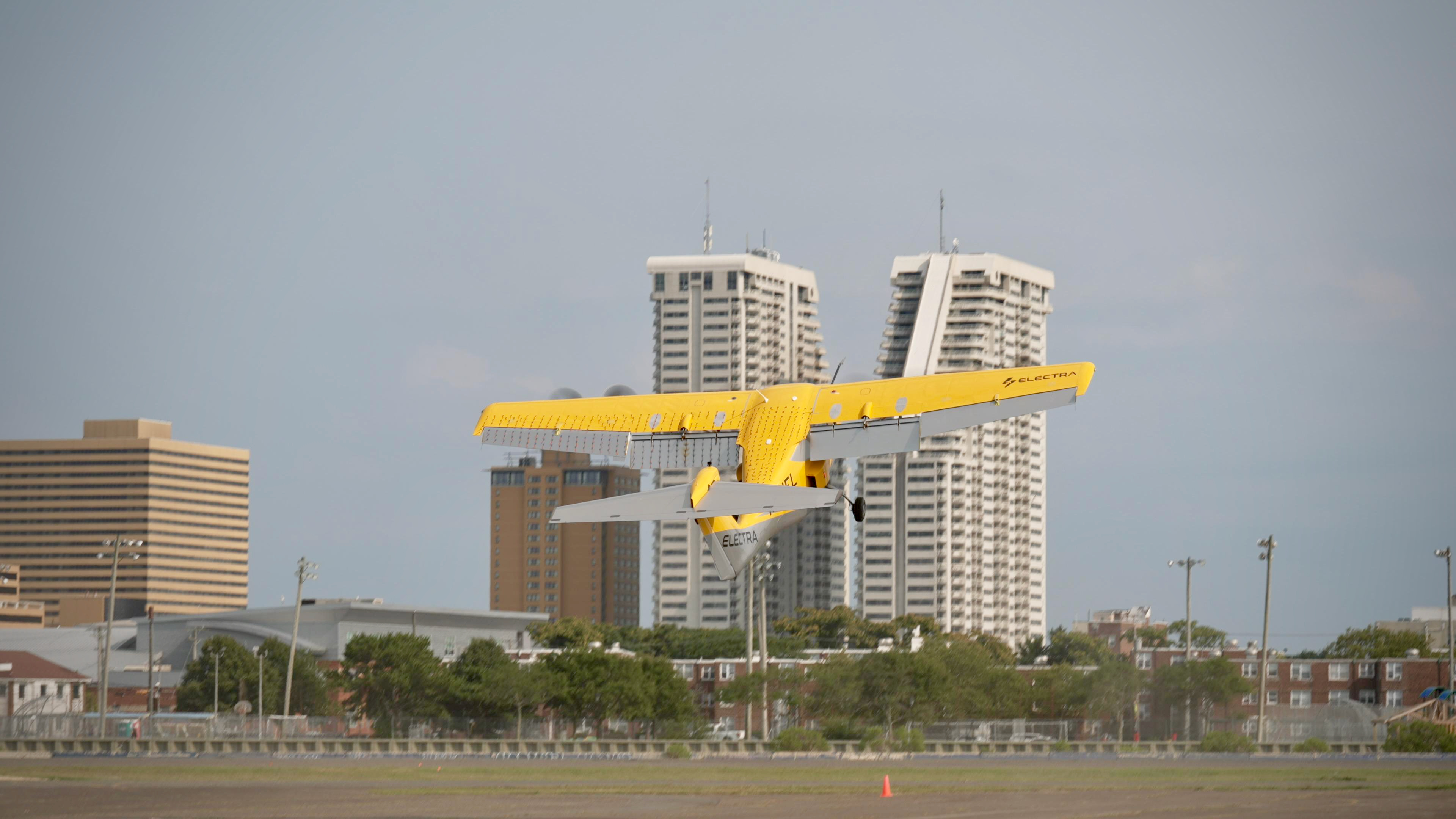
EL2 flying over Atlantic City. Credit: Electra

About the Author
Karen Johnson
With over 30 years of news experience in major markets like Los Angeles, Denver, and Columbus, Karen now covers our area for South Jersey NewsBeat. She also brings her articulate and conversational news delivery to WOND radio listeners every weekday. Her background includes work with the NBC Radio Network, and she thrives in fast-paced news environments.