The energy coursing through Dearborn's soccer fields and sports shops reflects a historic moment for the city's substantial Iraqi community: after four decades, Iraq has qualified for the World Cup. The Lions of Mesopotamia, as the national team is known, last competed in the tournament in 1986, meaning entire generations of Iraqis have never witnessed their country on soccer's grandest stage.
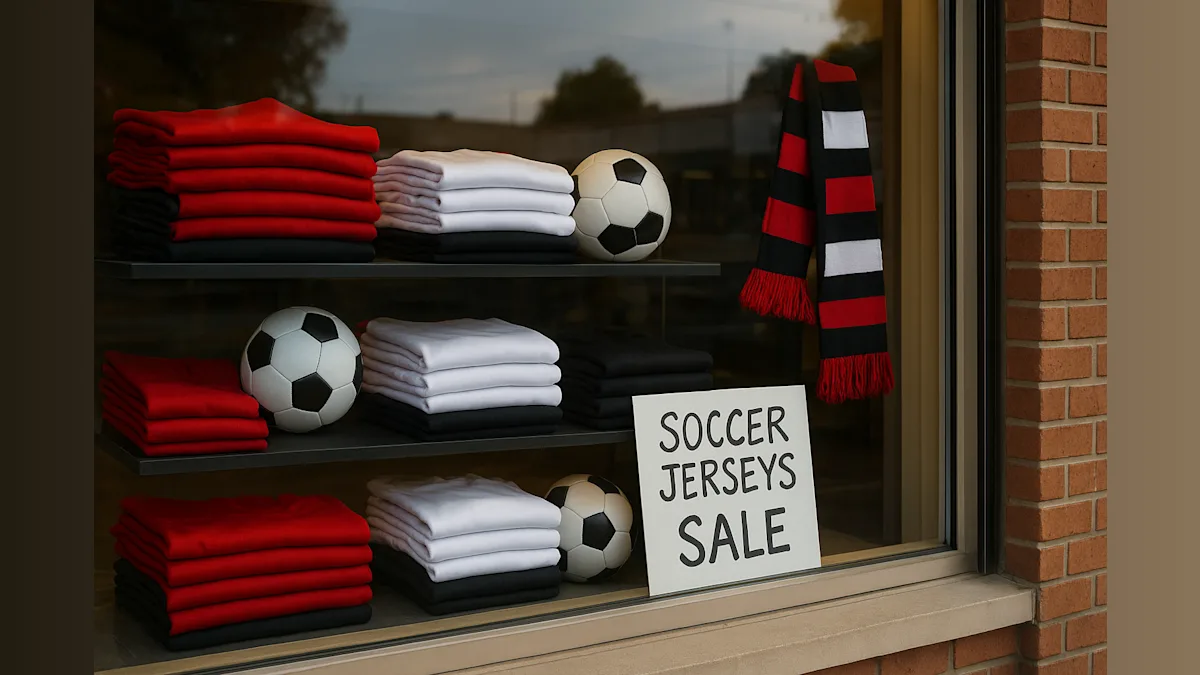
The qualification has transformed this Michigan soccer town into a hub of anticipation and pride. At Soccer World in Rochester Hills, owner Waad Sana reports receiving approximately 100 calls daily from fans seeking Iraqi national team jerseys. The demand has grown so intense that the store now maintains a waitlist for the coveted apparel.
Sana's connection to Iraqi soccer runs deep. He attended Iraq's last World Cup appearance in Mexico in 1986, an experience that inspired him to open Soccer World. The decades-long wait for Iraq's return to the tournament makes this moment particularly poignant for the longtime business owner and Iraqi immigrant.
"Imagine for 40 years, that's 10 tries to qualify for the World Cup, and Iraq [failing] at it," Sana told NPR. "And now we made it. For me to see that love and passion, it gives you goosebumps."
The enthusiasm extends beyond retail establishments to the playing fields where Dearborn's youth learn the game. At a recent match in the local Iraqi Chaldean soccer league, the intensity on the field mirrored the broader community excitement. The season opener, played under sweltering conditions in a domed facility in the Detroit suburbs, featured competitive play that drew yellow cards within minutes of kickoff.
Zee Esho, a 34-year-old spectator who emigrated from Iraq to Michigan as a child, has never seen his national team compete in a World Cup. Yet he vividly recalls how soccer served as a unifying force in his homeland, transcending ethnic and religious divisions even during periods of conflict and instability.
"When they play, you have people from the South, from the North, from the West, from the East, all gathering together to watch the game," Esho explained, speaking to NPR about the team's ability to unite Iraq's diverse population.
Iraq faces formidable competition in what some observers have labeled a "Group Of Death," matched against Norway, Senegal, and France. However, local fans maintain that simply reaching this stage represents a monumental achievement. Esho expressed confidence that Iraq would secure at least one victory, predicting that such a win would send Iraqi supporters into celebration.
The World Cup fervor reflects soccer's growing prominence in American culture. Sana recalls arriving in the United States from Iraq in 1976 as a teenager, eager to play the sport he knew as football. His first visit to a sports store produced confusion when an associate brought him an American football after he requested a football, an encounter that highlighted how much the sporting landscape has evolved over the past five decades.
At Michigan FC, a youth league that draws children from Detroit's diverse immigrant communities, Director Abbas Alwishah observes how deeply the World Cup resonates with young players. Even six-year-olds understand the significance of Iraq's qualification, absorbing the excitement from their parents and the broader community.
"Their parents watch it, and they hear about it in the community," Alwishah told NPR as his middle-school-aged team conducted warm-up drills. "To them it's like their heritage."
The support for Iraq extends beyond those with direct Iraqi heritage. Fatima Alzahraa Yazdchi, a 16-year-old player originally from Kuwait, plans to cheer for Iraq despite her own country's absence from the tournament. She views Iraq's qualification as a significant milestone and anticipates an exciting World Cup.
Yazdchi intends to watch the matches with her father, whom she credits for teaching her soccer skills and instilling her passion for the sport. Her enthusiasm captures the underdog appeal that Iraq's return has generated across different nationalities within the community.
As game days approach, Dearborn prepares to rally behind the Lions of Mesopotamia. Whether Iraq advances far in the tournament or not, the community views the team's presence on the world stage as a victory four decades in the making. Sana has even prepared vintage Iraqi soccer chants to teach younger fans, ensuring that traditions spanning generations will echo through viewing parties across the city.
The qualification represents more than athletic achievement for Dearborn's Iraqi diaspora. It symbolizes resilience, unity, and the enduring connection between a community and its homeland, expressed through the universal language of soccer.