Two descendants connected by one of the most infamous Supreme Court decisions in American history met last week in the nation's capital, their gathering coinciding with a modern court ruling that echoes the racial tensions of 1857.
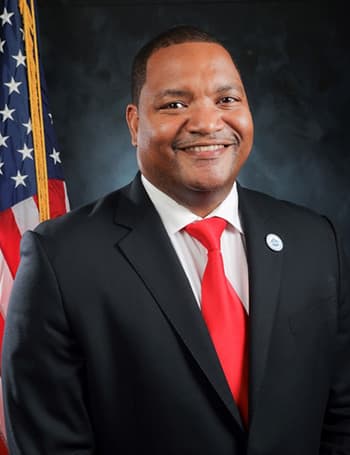
Lynne Jackson, the great-great-granddaughter of Dred Scott, and Charlie Taney, the great-great-grandnephew of former Chief Justice Roger Taney, convened at St. Mark's Episcopal Church on Monday, June 30, 2026. The church sits mere steps from the Supreme Court building, where justices were preparing to issue a landmark decision on birthright citizenship that would invoke the legacy both descendants carry.
The Dred Scott case of 1857 represents a dark chapter in American jurisprudence. Chief Justice Roger Taney authored an opinion declaring that enslaved people were not American citizens, a ruling that helped precipitate the Civil War. The decision characterized Black people as inferior and unfit to associate with white people in social or political relations.
Charlie Taney acknowledged the burden his family bears. "He actually participated in a lot of important law…and our family's proud of that," Taney told NPR. "But unfortunately he also authored what is commonly thought of as the single worst decision in the history of the Court. It's been called odious."
The 14th Amendment, adopted after the Civil War, effectively overturned the Dred Scott decision by affirming that virtually all babies born in the United States are citizens. Yet this constitutional guarantee faced renewed challenge when President Trump issued an executive order in 2025 attempting to limit birthright citizenship upon his return to the White House.
On the final day of its term last week, the Supreme Court issued a landmark ruling affirming that almost all babies born on American soil qualify as citizens. Chief Justice John Roberts, writing for the majority, suggested the Trump administration had attempted to rewrite history without adequate evidence.
"Citizenship, then and now, was the right to have rights—to freely participate in our political community," Roberts wrote in the majority opinion. "The Framers of the 14th Amendment extended that promise to 'every free-born person in this land.' We keep that promise today."
The decision was not unanimous. Three conservative justices dissented, including Justice Clarence Thomas, who argued the 14th Amendment was intended specifically for freed slaves and their children. Thomas expressed doubt about the longevity of the majority opinion, writing that he was not certain it would stand the test of time.
Eric Wessan, the Solicitor General of Iowa, characterized the ruling as a narrow victory during remarks to the conservative Federalist Society last week. "On the constitutional issue, it was a 5 to 4 decision," Wessan said, speaking to NPR. "One difference in vote would have yielded a difference in outcome on the Constitution."
Wessan observed that the justices have been engaged in what he termed shadowboxing over whether colleagues invoke race selectively to achieve partisan ends in cases involving voting and redistricting. The birthright citizenship question, which appeared settled for a century, proved contentious within the current court.
Justice Ketanji Brown Jackson penned a separate opinion emphasizing that the 14th Amendment accomplished far more than simply overturning Dred Scott. She characterized the amendment as a national reset, not merely a spot treatment for the dark stain of slavery. Jackson described the ruling as a death knell for efforts to limit citizenship.
Despite the Supreme Court ruling, the political battle appears far from over. President Trump and congressional allies have indicated they will continue pursuing restrictions on birthright citizenship.
Charlie Taney expressed concern about the long-term consequences for those seeking to limit citizenship. "You know, I hope their grandchildren don't go through what I went through," Taney told NPR. "[Having] to slide down on my seat when the Dred Scott case came up because my name was Taney. So the people that would like to be part of getting rid of your birthright citizenship, they might want to keep that in mind, what they'll do to their own family for the future."
Nine years ago, Taney publicly apologized to Lynne Jackson. Since that moment, the pair have appeared together more than a dozen times to discuss reconciliation and healing.
For Jackson, who now operates a foundation in Missouri honoring Dred Scott and his fight for rights, forgiveness came naturally. "Remember the R-word?" Jackson asked, speaking to NPR. "Everybody thinks it's race or racism or something like that, and it's sincerely just the word 'relationship.' You start to build a relationship."
Jackson described the Dred Scott case as a major catalyst for the Civil War, a historical rupture whose reverberations continue to shape American law and society. Now, she and Taney hope their relationship can serve as a model for a nation still grappling with questions of race, citizenship, and belonging that the Supreme Court confronted both in 1857 and in 2026.