The start of the 2026-2027 school year has brought an unwelcome equation for district administrators nationwide: soaring diesel costs that threaten to drain budgets and force difficult operational choices.
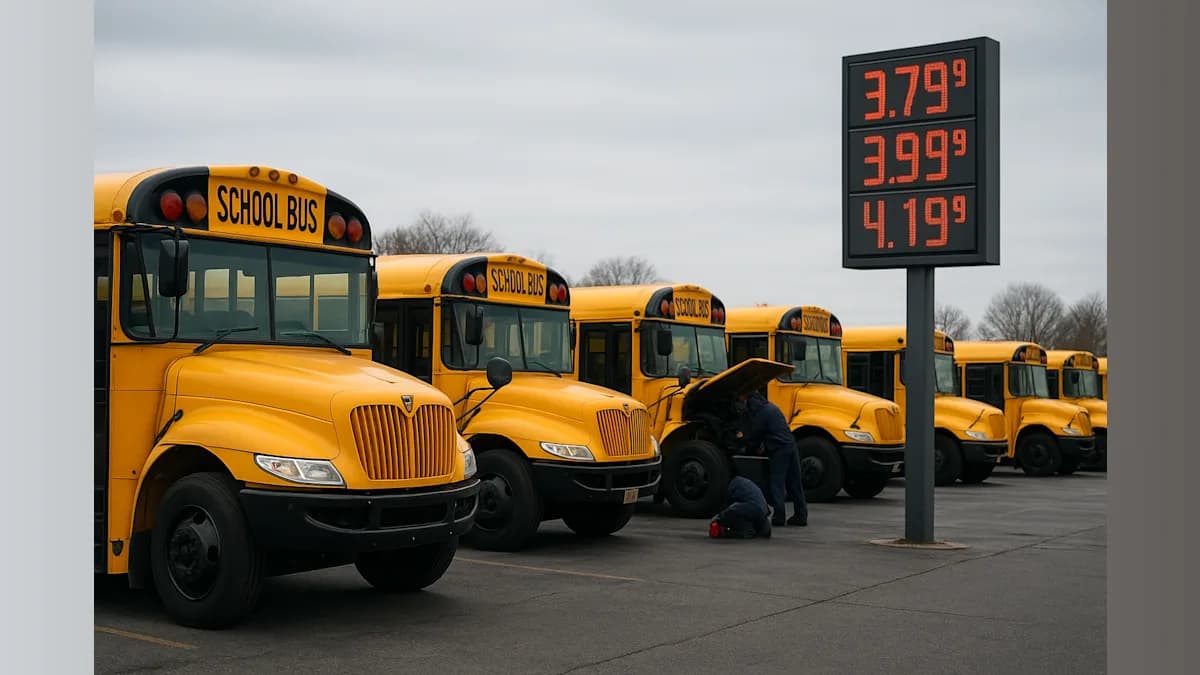
Diesel prices have climbed nearly $2 per gallon since August 2025, reaching a national average of $5.62 on Wednesday, according to AAA. Last year at this time, the same gallon cost $3.70. The increase carries significant weight for school transportation, as approximately 90 percent of the nation's 480,000 school buses operate on diesel fuel.
The financial pressure began mounting in spring when fuel prices rose following the war with Iran. A May survey conducted by organizations representing school superintendents and bus companies revealed that more than half of responding districts reported diesel costs already exceeding their budgeted allocations.
In Yakima, Washington, the impact translates to stark numbers. Jacob Kuper, the Yakima School District's assistant superintendent of finance and operations, calculated that elevated diesel prices could increase costs by 38 percent during the current school year—an additional $130,000 that he described to NPR Topics: National as the equivalent of one teacher's salary.
Kuper responded by implementing multiple cost-saving measures. The district consolidated bus routes, staggered bell times, reduced total trips, and increased student capacity on individual buses. These adjustments also decreased staffing requirements, he noted, explaining that fewer drivers become necessary when routes are combined.
The strategy appears to be working financially. Kuper projected the district would save between $400,000 and $500,000 through these efficiency measures. However, the changes create new challenges as students return to classrooms this fall. Drivers now face longer routes and extended daily hours, making their workdays more demanding.
Yakima benefits from geography, Kuper acknowledged. The district's compact footprint means route extensions remain modest compared to sprawling rural systems, limiting the additional time students spend on buses.
The May survey documented similar responses across the country. Forty percent of school districts reported consolidating bus routes, while approximately 20 percent indicated they were limiting non-essential transportation such as field trips. Some districts said they were exploring transitions to non-diesel vehicle fleets.
Elleka Yost, director of advocacy and research at the Association of School Business Officials International, which helped conduct the survey, warned that districts face difficult choices as schools reopen. Many are drawing from reserves or rainy-day funds as temporary solutions, she wrote by email to NPR Topics: National, but this approach may compromise their capacity to address future financial emergencies.
In Boise, Idaho, the school district has pursued route optimization to minimize stops. Lanette Daw, the district's transportation supervisor, explained that each stop adds mileage and expense. The district also introduced eight electric buses to its fleet this week, funded through a federal Clean School Bus Program award, as officials evaluate whether electric vehicles could provide long-term fuel cost relief.
Despite these efforts, Boise's transportation budget has grown by approximately $600,000 this year.
California presents a different challenge. In Monterey, transportation director Tom Thorpe monitors prices with what he described as careful, conservative attention. The district has converted most of its roughly 50 school buses from diesel to gasoline, but state and local taxes push Monterey's gas prices well above national levels. On Wednesday, gasoline in Monterey averaged $5.77 per gallon compared to the national average of around $4.10, according to AAA—potentially exceeding diesel costs in other regions.
Thorpe anticipated the budget shortfall before the previous school year ended. Despite maximizing route efficiency, he faced constraints: buses reach capacity, and student ride times require consideration. He approached his supervisor twice for additional funding, acknowledging his initial projections fell short.
The additional allocation came through, allowing Monterey to complete the quarter. Looking ahead, the district joins others nationwide in scrutinizing budgets line by line, identifying expenditures that can be redirected toward fuel costs.
In Yakima, Kuper continues balancing competing priorities. His objective remains clear: maintain bus service, stay within budget, and whenever possible, shield classrooms from the cuts required to achieve both.