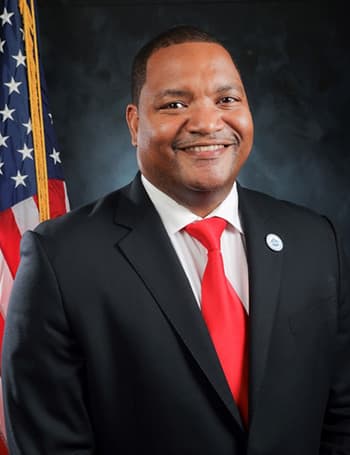
EGG HARBOR TOWNSHIP, N.J. — From cryptocurrency investment schemes to fake IRS agents and AI-generated voices impersonating loved ones, Egg Harbor Township Police Chief Fred Spano says financial scams are becoming more sophisticated—and more expensive for local victims.
During an interview Monday on WOND Radio's The Lorry Young Show, Spano shared several recent cases investigated by his department, including one in which a township resident lost nearly $300,000 after being lured into what appeared to be a legitimate cryptocurrency investment.
Another victim recently handed over nearly $25,000 in cash after fraudsters convinced the individual that their bank account had been compromised and that the money needed to be placed in "safe keeping."
"We have been seeing it," Spano said of the growing number of scams. "We've been seeing it for years. And I think the trends, like as far as the type of scams and frauds that are being perpetrated against... people that are retired, that are kind of financially stable in life. And obviously that's a reason that they're being targeted."
According to Spano, older Americans lose billions of dollars annually to financial fraud.
"Citizens of older adults are losing more than $3 billion to these financial frauds annually," he said, citing federal data. "And I'm sure that number is much higher since then."
Cryptocurrency Scam Cost Resident Nearly $300,000
Among the most costly local cases involved a resident who believed they were making a sound investment in cryptocurrency.
The victim was contacted by someone encouraging them to invest in digital currency through what appeared to be a legitimate investment opportunity.
"They put in money believing that they were going to make a windfall," Spano explained. "And a couple months later when they went to try to withdraw some of the almost $300,000 that they put into it, it was basically a ghost. There was nothing there."
By the time the victim contacted police, the money was gone.
"That's when the person finally made a report to us," he said.
Spano said scammers often spend weeks or months gaining a victim's trust before convincing them to invest.
The 'Inside Job' Bank Scam
Another scam becoming increasingly common involves criminals posing as bank fraud investigators.
Spano described one recent case in which scammers convinced a resident that suspicious activity had been discovered on their bank account.
The victim was instructed to withdraw cash—but told not to trust anyone working inside their own bank.
"They'll say that we need you to go to your branch," Spano explained. "But please do not talk to anyone in your branch because it's an inside job. We believe they're involved."
The fraudsters then direct victims to meet someone in a nearby parking lot to hand over the cash.
"They're going and they're giving the money away as if they know that they're part of this, and they're working with the fraud department... and it's all just part of the fraud."
In one recent township case, nearly $25,000 was lost this way.
Gift Cards, Bitcoin and Fake IRS Agents
Spano said many scams begin with someone pretending to represent a trusted organization.
Among the most common are fake IRS agents claiming a victim is under investigation for tax evasion.
"We had a tax evasion where there's a phone call claiming that they're from the IRS," Spano said. "In order to clear themselves... they just need to transfer money."
Victims are frequently instructed to purchase gift cards.
"They provided several thousand dollars by buying gift cards and then providing the gift card information to the fraudster," he said.
Others are told to transfer money using Bitcoin or PayPal.
"Gift cards or Bitcoin," Spano said. "Things like that."
One key point he emphasized is that the IRS does not initiate contact by telephone.
Grandparent Scams Becoming More Sophisticated
Spano also warned about the continued rise of so-called "grandparent scams," in which criminals convince grandparents that a grandchild has been arrested, injured or stranded and urgently needs money.
"They're commonly known as the grandparent scams where the scammers are contacting older adults, impersonating a grandchild or another relative," Spano said.
Technology is making those scams even more convincing.
"Sometimes they will use technology to emulate their voice," he said.
The scammers often claim a loved one has been arrested and needs bail money immediately.
"They need bail money and people are falling for it," Spano said. "They'll be sent the link to deposit the money."
His advice is simple.
"You should immediately try to contact that relative or someone before you do any transactions."
Utility Companies, Tech Support and Immigration Scams
Spano said residents should also be cautious of unsolicited emails or phone calls claiming to come from utility companies, computer support services or government agencies.
Many scam emails closely resemble legitimate communications from companies such as internet providers or electric utilities.
"They'll have fraudulent websites that appear to be maybe the financial institution that you belong to," Spano explained. "But there's something a little bit off that you don't notice."
He also described immigration scams in which fraudsters prey on fear.
"People will target immigrants and say that, 'We know you're here illegally,'" Spano said. "We'll clear you if you send some money."
Police Taking Scam Prevention Directly to Residents
Recognizing the growing threat, the Egg Harbor Township Police Department regularly conducts fraud-prevention presentations at local over-55 communities.
"We started doing these type of presentations to our over-55 communities," Spano said.
"We learn, unfortunately, through other people's mistakes."
The presentations use real cases investigated by local police to educate residents before they become victims.
Chief's Advice: Slow Down and Verify
Throughout the interview, Spano repeatedly stressed that the best defense against fraud is to slow down, verify information independently and never allow fear or urgency to dictate decisions.
"If it's too good to be true, it's fraud," he said.
He also offered several practical tips:
Never give personal or banking information over the phone, by email or text.
Never allow unsolicited callers remote access to your computer.
Never purchase gift cards or cryptocurrency for someone you don't know.
Never withdraw cash because someone claims your account has been compromised.
Verify suspicious calls using the official phone number from your bank statement, utility bill or company's website—not a phone number supplied by the caller.
His message to residents was straightforward:
"When someone emails you or calls you—especially if you don't know them... don't do it. Don't engage."
And perhaps his simplest piece of advice summed it all up:
"Do your due diligence."

About the Author
Karen Johnson
With over 30 years of news experience in major markets like Los Angeles, Denver, and Columbus, Karen now covers our area for South Jersey NewsBeat. She also brings her articulate and conversational news delivery to WOND radio listeners every weekday. Her background includes work with the NBC Radio Network, and she thrives in fast-paced news environments.