
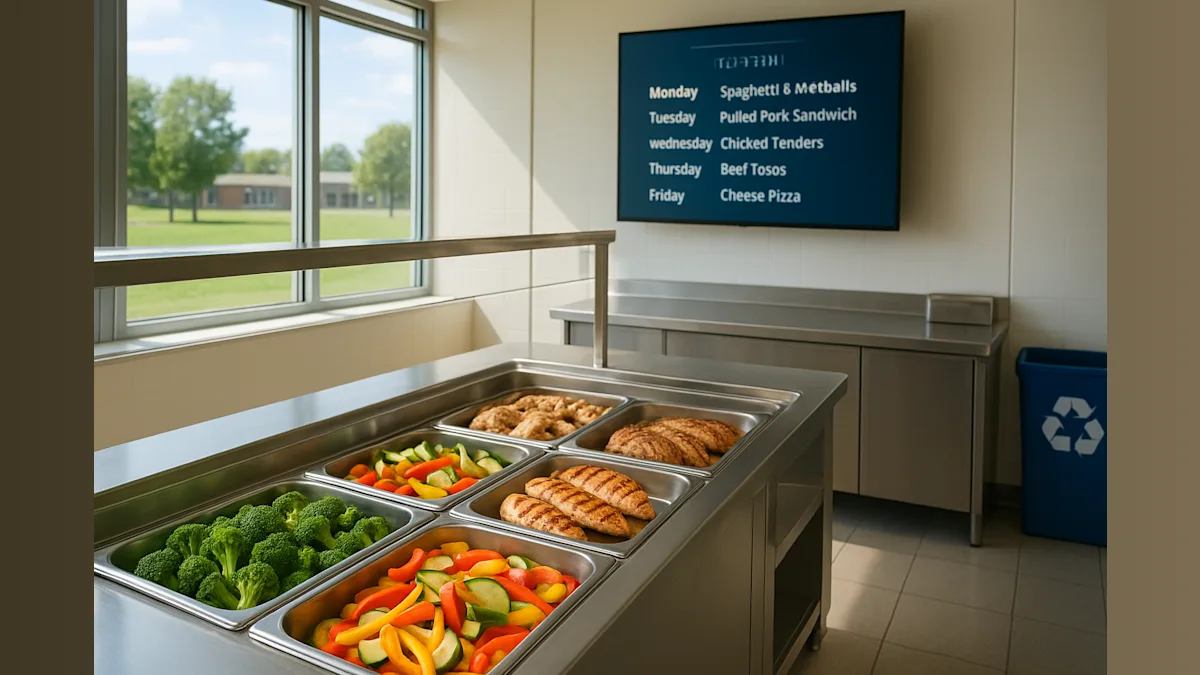
England is preparing for sweeping changes to school cafeterias as the government announces its first major revision of food standards in more than ten years. The new regulations will eliminate deep-fried foods entirely from school menus and sharply curtail access to sugary desserts, marking what advocates describe as a watershed moment for children's nutrition.
The overhaul comes as recent government polling reveals that three-quarters of parents across the United Kingdom harbor concerns about the quality of food their children consume at school. Health statistics underscore the urgency: one in three children now leave primary school either overweight or obese.
Under the forthcoming standards, chicken nuggets, chips, and other deep-fried items will be banned outright from school kitchens. High-sugar desserts such as doughnuts, cakes, and ice cream will be restricted to once weekly, with fruit-based alternatives required on other days. The final version of these regulations will be published later this year following public consultation, with implementation scheduled for September 2027.
The reforms also mandate increased servings of grains, pulses, and vegetables. Sample menus circulated by officials include Mexican bean burritos, cottage pie with root-vegetable mash, and roasted chickpea wraps with vegetables and mozzarella.
Alongside the nutritional changes, the government plans to extend free school meals to every child in families receiving universal credit, reaching an additional 500,000 students in England.
"This is a genuinely pivotal moment for school food," Stephanie Slater, chief executive of School Food Matters, told Positive News. The charity campaigns for nutritious and sustainable school food access. "But the success of these reforms will depend on how they are implemented. Along with clear and robust standards, they will require adequate funding and effective monitoring and compliance in schools."
While healthier ingredients might initially appear more expensive, the Department for Education contends the changes could reduce costs by substituting meat with protein from pulses and other plant-based sources. The government suggests that a school governor should oversee compliance with the new standards.
Some schools have already embraced the philosophy behind these reforms. At Greenside primary school in west London, students recently queued for chickpeas and spicy rice alongside roasted sweet potatoes, green beans, and garlic-braised spinach, all served burrito-style with various toppings.
The school operates a weekly "breaducation" program where pupils bake bread connected to their curriculum studies. Chef Jo Ilbury, who leads the catering team, explained that leftover loaves are sold to parents at day's end. The school maintains herb planters that children can harvest from and a student-managed compost bin, integrating sustainability throughout the educational experience.
"We're working with other schools in the borough to help them find ways to put food education at the heart of their curriculum by learning from practices that have worked for us," Ciara Finney, headteacher at Greenside primary school, told Positive News. "As for our menu, it won't need to change. We're there already."
Yet progress remains uneven across the country. For every school where students bake sourdough, others continue serving highly processed meals low in vegetables and nutritional value. This disparity has prompted concerns about whether the new standards will achieve their intended impact.
Food writer and campaigner Bee Wilson, who founded the charity TastEd in 2019, emphasized that regulatory changes alone may prove insufficient. Her organization provides schools with free resources on food education designed to help children develop appreciation for fruits and vegetables.
"It doesn't matter how healthy a lunch is if most of it goes in the bin," Wilson told Positive News. She noted that schools frequently report significant food waste when introducing unfamiliar dishes. In secondary schools, this can drive older students to abandon cafeterias entirely in favor of corner shops or fried chicken establishments.
To address this challenge, Chefs in Schools launched Try Something New Day earlier this year, a weekly initiative encouraging schools to introduce novel ingredients into meals. The charity, which places trained chefs in school kitchens, recommends that institutions allocate a portion of their catering budgets to offering tastings of healthy foods.
Amber Francis, head chef and food educator at Christ's College in Finchley, north London, developed the concept. Every Tuesday during break time, she presents students with small samples of ingredients ranging from different tomato varieties to less common items such as kohlrabi, kale, blood orange, and pomelo. Francis was crowned Champion of Champions on BBC's Great British Menu in 2025.
"It's about getting young people to step out of their comfort zone and have conversations about what they do and don't like," Francis told Positive News.
The success of the government's initiative may ultimately depend on whether schools can replicate such educational approaches alongside the regulatory changes. As implementation approaches, advocates stress that familiarizing children with healthier options through education will prove as critical as the standards themselves in transforming school nutrition across England.