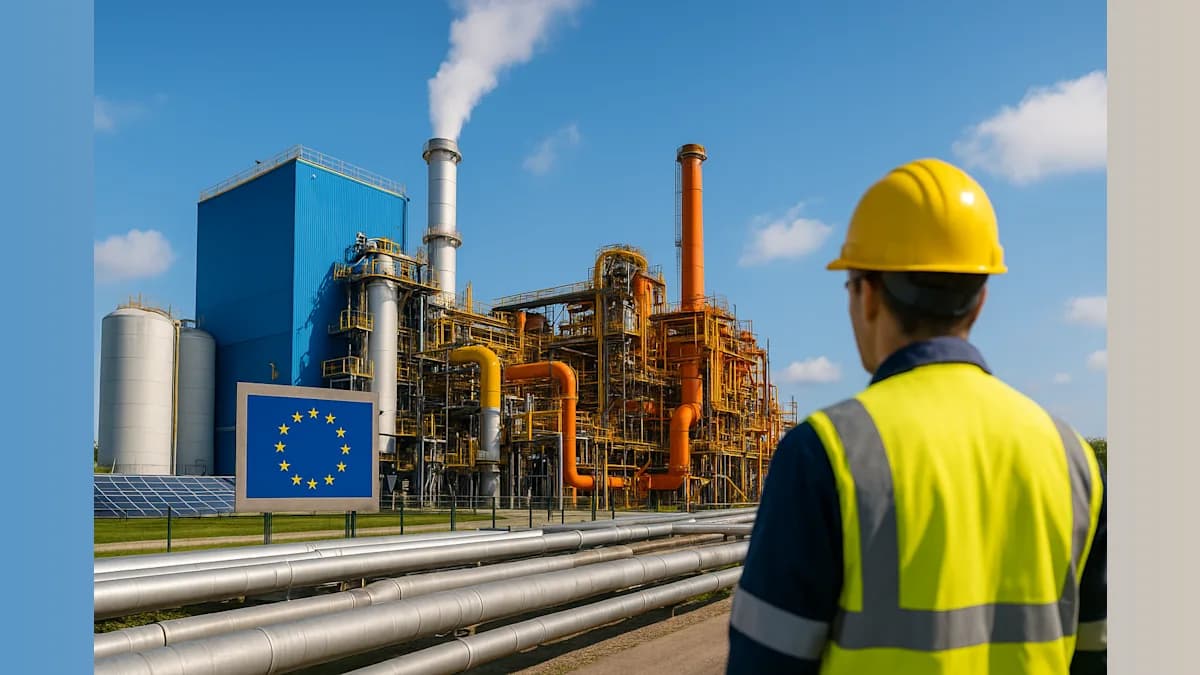
The European Commission has launched an ambitious initiative to transform how industries generate heat, approving 65 projects across 10 member nations with €400 million in grant funding. The industrial heat decarbonization project auction represents a significant step toward eliminating fossil fuel dependence in manufacturing sectors that have historically relied on combustion for their thermal energy needs.
The approved proposals encompass a diverse array of cutting-edge technologies, including geothermal heat systems, plasma cutting, solar concentration, electromagnetic and dialectic heating, and advanced heat pumps. These innovations address a fundamental challenge in industrial decarbonization: most manufacturing processes require substantial heat, and that heat has traditionally come from burning fossil fuels.
Demand for the program exceeded expectations dramatically. According to PV Magazine, firms submitted grant applications totaling €1.4 billion—approximately 300 percent more than the commission had budgeted. Projects were selected from Austria, Belgium, Portugal, Czechia, Slovenia, Denmark, Hungary, France, Germany, and Spain, representing a broad cross-section of European industrial capacity.
The participating industries span critical manufacturing sectors, including paper and wood pulp production, pharmaceuticals, ceramics, glass manufacturing, iron and steel production, construction materials, food and beverages, and textiles. This breadth demonstrates the universal applicability of heat decarbonization technologies across diverse industrial processes.
If all proposed technologies achieve their nameplate capacity, the environmental and energy impacts would be substantial. Over five years, the projects could eliminate heat production equivalent to burning 1.5 billion cubic meters of natural gas. Over a decade, they would prevent 6.6 million tons of CO2 emissions while generating 16.3 terawatt hours of heat through clean energy sources.
The initiative arrives as Europe confronts its fourth consecutive summer under a heat dome, with elevated temperatures affecting continental regions during peak travel season. The timing underscores the urgency of addressing industrial heat production, which contributes not only to greenhouse gas emissions but also to urban heat through what planners term "waste heat"—radiative thermal energy from manufacturing facilities that increases ambient temperatures in surrounding areas.
Several European cities have pioneered innovative approaches to managing industrial waste heat. In Hamburg, Germany, the Aurubis copper smelter—which produces 400,000 tons of pure copper annually—channels its radiative heat into a nearby heating system. This infrastructure provides hot water for approximately 28,000 homes and buildings while eliminating 120,000 tons of CO2 emissions per year.
Finland's Varanto has developed an even more sophisticated thermal exchange system. The city-wide network captures waste heat from data centers and residential heat pumps, storing the thermal energy in water that is then pumped deep underground into a massive cavern. The stored heat remains available throughout the year, returning to the surface during Finland's harsh winters to provide decarbonized home heating.
These waste heat recovery systems illustrate a broader principle underlying the European Commission's decarbonization initiative: industrial thermal energy need not be wasted or generated through fossil fuel combustion. By deploying advanced technologies and integrated infrastructure, manufacturers can meet their heat requirements while simultaneously reducing emissions and contributing to urban sustainability.
The €400 million investment represents a fraction of what industries requested, yet it provides critical seed funding for technologies that could reshape industrial energy consumption across Europe. As these 65 projects move from proposal to implementation, they will test whether plasma, solar, magnetic, and geothermal technologies can deliver the intense, reliable heat that modern manufacturing demands without the carbon footprint of traditional combustion systems.