Summer camp has long represented freedom for American children—a chance to swim, hike, and play outdoors during the months away from school. This summer, however, extreme weather events are keeping campers indoors and forcing program cancellations across the country.
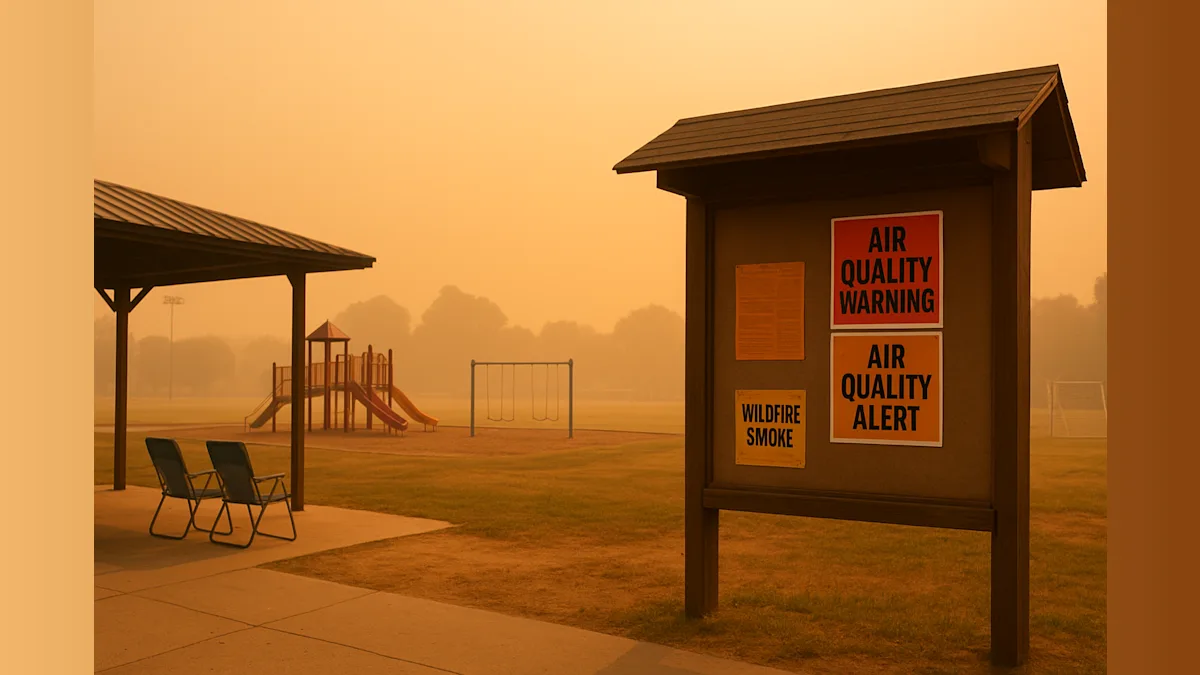
At Beauvoir Summer Camp in Washington, D.C., seven-year-old Penelope recently enjoyed free swim on a Friday in July, playing mermaid games with pool noodles and friends. Yet the pool sat empty during the previous week's scheduled swim time. Hazardous air quality from wildfire smoke forced campers to remain inside, and earlier in the summer, extreme heat had already curtailed outdoor play.
Drew Mackay, the director of auxiliary and summer programs at Beauvoir School, acknowledged the new challenges facing camp administrators. Adapting to extreme weather conditions has become standard practice rather than an occasional inconvenience, he said.
The disruptions extend far beyond the nation's capital. In northern Minnesota, Camp Widjiwagan in Ely evacuated in July as wildfires devastated communities and blanketed the Midwest and Northeastern United States with dangerous smoke. The camp, which hosts over 700 children each summer and leads programs across North America, took the unprecedented step of submerging 19 historic canoes underwater to protect them from the fires.
"This is a pivotal moment," Ben Hoffman, the camp's executive director, told NPR. "We have never sunk canoes at camp."
The evacuation forced campers to miss traditional end-of-session celebrations. Eleanor Pitts, a 17-year-old who has attended Camp Widjiwagan for seven summers, had just completed a 26-day backpacking trip in Willmore Wilderness Park in Alberta, Canada, starting in June with four other girls and a counselor. The group learned the day before their scheduled return that wildfire smoke would prevent their homecoming celebration at the base camp.
The experience brought climate change into sharp focus for Pitts, who also observed flooded rivers in Canada caused by extreme heat melting snow runoff. She expressed concern about the future of outdoor programming in light of these environmental shifts.
Families throughout the country report similar struggles. In Pennsylvania, Lauren Smith and her children faced a succession of weather-related disruptions. Temperatures approaching 100 degrees Fahrenheit disrupted activities at a soccer camp on a large, treeless field. Wildfire smoke then confined the family indoors, followed by persistent rainfall.
Smith described the summer as a waiting game, with her children eager for opportunities to play outside. When conditions finally permitted, she struggled to bring them back indoors. During the extended indoor periods, her family turned to decluttering, baking, and painting acorns to pass the time.
The summer of 2026 has delivered a relentless series of extreme weather events nationwide. Deadly floods prompted disaster declarations in parts of Texas, while an extreme heat wave in July was characterized as the new normal for July Fourth celebrations. Research indicates that heat waves, droughts, hurricanes, and floods have intensified and increased in frequency as the climate warms due largely to fossil fuel combustion.
Henry DeHart, the chief executive officer of the American Camp Association, which provides resources and accreditations to hundreds of camps nationwide, emphasized the importance of summer programming for child development. Camp experiences teach independence, problem-solving, and teamwork—skills that will prove essential in an increasingly technology-driven world, he noted.
While weather has always presented challenges for outdoor programs, DeHart observed a marked increase in the frequency of extreme conditions. Camps that previously experienced three to five days with heat index readings above 105 degrees Fahrenheit now face eight to 10 such days, he said.
Some camps have managed to adapt their programming. Ellen Watkins, who directs Miakonda Day Camp on a 160-acre site for Scouting groups in Ohio, moved activities indoors and provided masks when wildfire smoke arrived. Staff conducted swim exercises on dry land and utilized an inflatable archery set. Parents expressed appreciation for the camp's ability to continue operations despite the air quality concerns.
A 2024 Gallup survey found that 55 percent of United States parents reported their school-aged children attend at least one structured summer program. For these families, the disruptions represent more than inconvenience—they affect a fundamental aspect of childhood that has remained largely unchanged for generations.
This generation of school-aged children has already contended with the isolation imposed by the COVID-19 pandemic, which forced students into remote learning. Now they face a different set of challenges as extreme weather conditions make outdoor activities not merely difficult but potentially dangerous.
Back at Beauvoir Summer Camp, seven-year-old Penelope offered her perspective on the changes affecting her summer. She described climate change as areas changing all around a person all the time. Despite the disruptions, she and her fellow campers remain focused on simpler concerns—maximizing their remaining pool time before summer ends.