
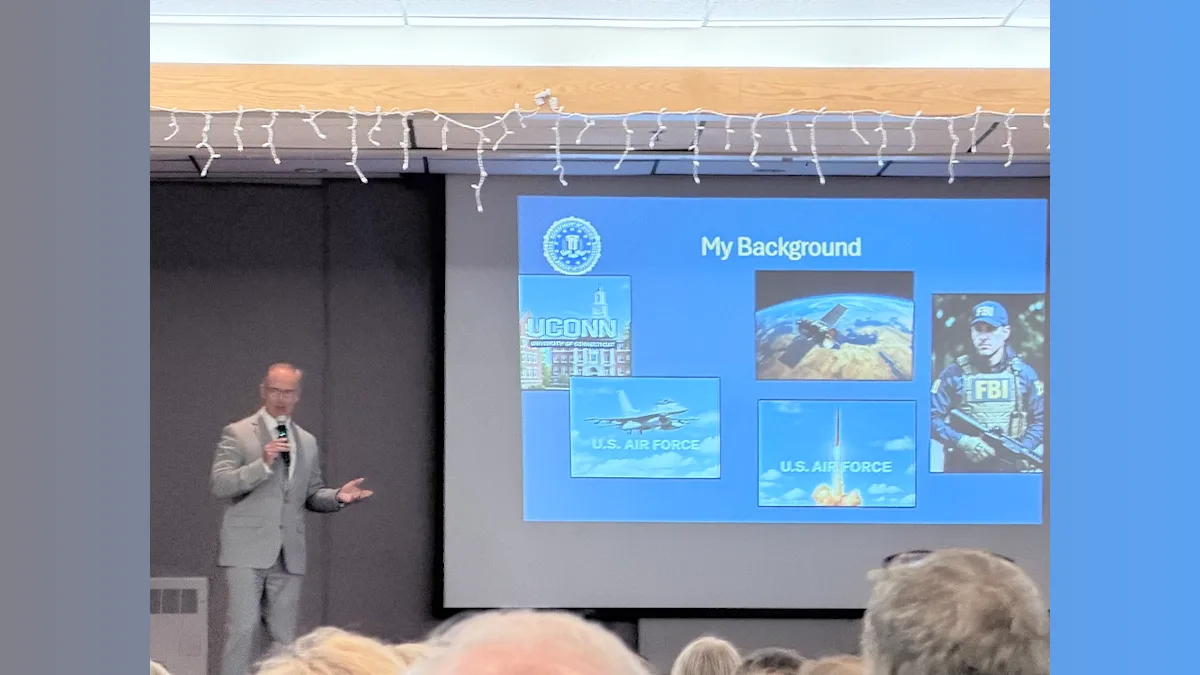
More than 150 people attended a fraud prevention event in Lower Township, where an FBI agent explained how criminals exploit trust, create urgency and use new technology to steal money.
LOWER TOWNSHIP, N.J. — Criminals are using increasingly sophisticated tactics, including artificial intelligence to imitate the voices of loved ones, as they attempt to steal money and personal information from unsuspecting residents.
That was among the warnings shared during a fraud prevention event in Lower Township on Tuesday, Sept. 22, where more than 150 people gathered to learn how to recognize scams and protect themselves from financial fraud.
The event was hosted by Lower Township Mayor and Council in partnership with the Lower Township Police Department.
FBI Special Agent Derek Altieri, assigned to the bureau's Newark Division Northfield sub-office, which serves Atlantic, Cape May and Cumberland counties, outlined common fraud schemes and offered practical advice for avoiding them.
The presentation was particularly relevant to Lower Township, where approximately 27% of residents are age 65 or older, according to Census estimates cited by township officials.
FBI Warns About AI Voice Cloning and Family Impersonation
One of the concerns discussed during the event was the growing use of artificial intelligence in fraud schemes.
Altieri explained how scammers can use AI technology to imitate a family member's voice or create convincing fraudulent documents.
In a family impersonation scam, a criminal may contact someone while pretending to be a child, grandchild or other relative experiencing an emergency.
The caller may claim to have been arrested, injured or stranded and insist that money must be sent immediately.
The use of AI-generated voices can make these calls more convincing, particularly when the victim believes they recognize the voice of someone they love.
Residents were encouraged to establish a family code word that can be used to help verify whether an unexpected emergency call is legitimate.
They were also advised to independently contact the family member through a trusted phone number rather than relying on information provided by the caller.
Romance Scams, Cryptocurrency Fraud and Fake Government Calls
Altieri also discussed several other types of fraud targeting residents.
Romance scams involve criminals developing relationships with victims, often through dating websites or social media, before requesting money under false pretenses.
Government impersonation scams involve callers or messages falsely claiming to represent agencies such as the IRS, Social Security Administration or law enforcement.
Other schemes discussed during the presentation included fraudulent cryptocurrency investments, email payment fraud and fake computer security alerts.
In some cases, scammers may claim that a victim's computer has been compromised and demand payment to resolve a nonexistent security problem.
In others, criminals may impersonate a legitimate business or financial institution and attempt to redirect payments to fraudulent accounts.
Altieri explained that scammers frequently exploit trust, create a false sense of urgency and attempt to isolate victims from family members or friends who might recognize the warning signs.
Warning Signs That Should Raise Suspicion
A central message of the presentation was the importance of pausing before responding to unexpected requests for money or personal information.
Residents were encouraged to be particularly cautious when someone:
Demands immediate payment or insists that a transaction must remain secret.
Requests payment through gift cards, cryptocurrency or gold.
Claims to be a government official or family member experiencing an emergency.
Pressures someone to send money without consulting family members or trusted advisers.
Sends an unexpected email requesting changes to payment instructions.
Displays a computer security warning demanding immediate payment or a telephone call.
The FBI emphasized the importance of independently verifying suspicious requests.
Residents should contact the individual, business or government agency directly using a phone number they already know or have obtained from a trusted source.
They should not rely on telephone numbers, links or contact information supplied in suspicious messages.
Township Officials Emphasize Resident Safety
Lower Township officials said the event was organized to help residents recognize fraud before they become victims.
Councilman Joe Wareham said protecting residents from financial scams is an important part of the township's responsibility to the community.
"We are focused on quality of life for our residents, and that isn't just paving roads and improving parks," Wareham said.
"It's also providing educational forums like these to ensure our residents are safe and never have to experience the pain of a financial scam."
The event provided an opportunity for residents to ask questions about common scams and learn how to protect their financial information.
Township officials said advances in technology are creating new opportunities for criminals to deceive potential victims, making public education increasingly important.
What to Do If You Suspect a Scam
Residents who believe they have been targeted by fraud should contact local law enforcement.
Anyone who has sent money to a suspected scammer should also contact their bank, credit card company or other financial institution immediately to determine whether the transaction can be stopped or reversed.
Internet-related fraud can be reported to the FBI's Internet Crime Complaint Center at https://www.ic3.gov .
Residents should preserve suspicious emails, text messages, transaction records and other relevant information that may assist investigators.
The FBI also encourages people to discuss potential scams with family members and friends, particularly when someone is being pressured to send money quickly or keep a financial transaction secret.
Lower Township officials said the strong turnout for Tuesday's event demonstrates the community's interest in learning how to recognize fraud and protect residents from financial exploitation.