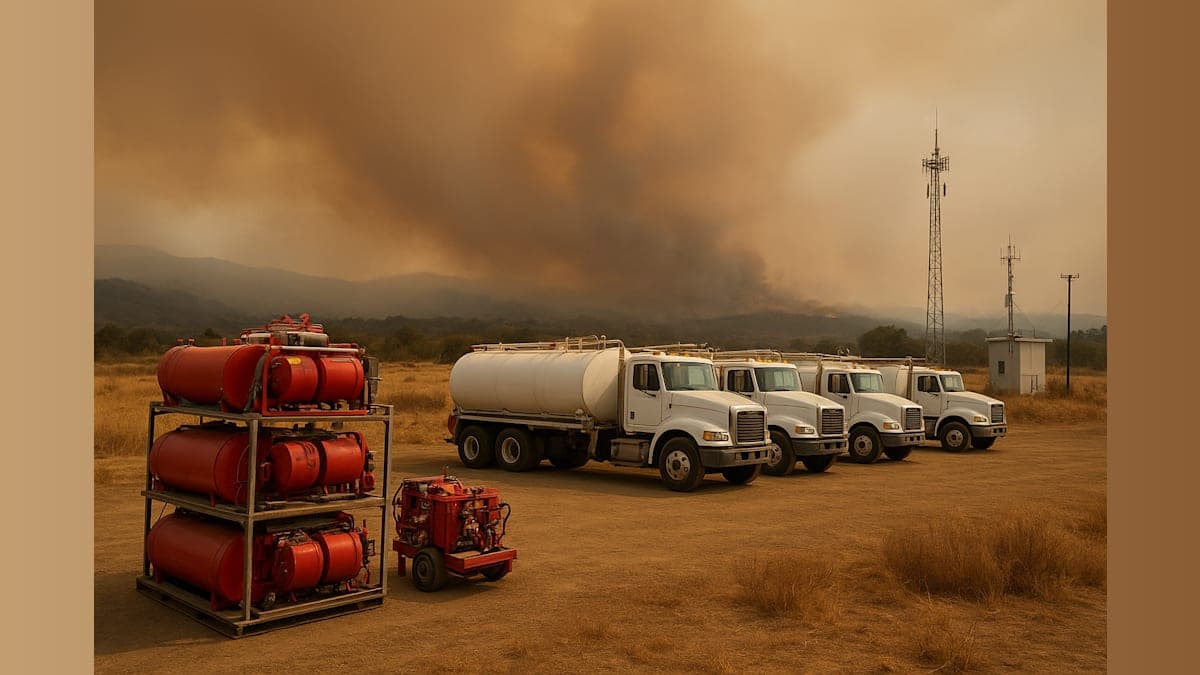
The wildfire crisis gripping Western states has reached the intensity federal forecasters warned about months ago, with officials confirming Wednesday that firefighting resources remain adequate to address current conditions despite predictions of worsening blazes ahead.
Federal authorities overseeing wildfire response across the region report they are managing the current outbreak with available personnel and equipment, though the season's trajectory suggests more challenging conditions lie ahead. Experts anticipate both an increase in the number of fires and the scale of individual incidents as summer progresses.
The acknowledgment comes as Western communities face what officials describe as a fully developed fire season, with multiple active blazes already testing response capabilities across several states. The federal government's resource assessment reflects current operational demands rather than projected needs as conditions deteriorate.
This year's fire activity aligns with seasonal forecasts that identified heightened risk across the Western United States due to persistent drought conditions and accumulated dry vegetation. The combination of environmental factors has created circumstances favorable for rapid fire spread and sustained burning.
Federal officials' assertion that resources remain sufficient for now carries an implicit caveat, as the qualifier suggests potential strain on firefighting capacity if conditions worsen as predicted. The statement reflects the ongoing challenge of balancing current operational needs against the uncertainty of future demands during an extended fire season.
Western states have experienced increasingly severe fire seasons in recent years, with longer burning periods and larger affected areas becoming more common. The current season's early intensity raises concerns about sustained pressure on firefighting resources through late summer and early fall, when fire activity historically peaks in many regions.