Athens is converting the site of its defunct airport into an expansive urban park that will rank as the second-largest such green space on the European continent. The Ellinikon Park represents a major environmental initiative for a city that holds the unfortunate distinction of recording the highest temperature ever measured in Europe.
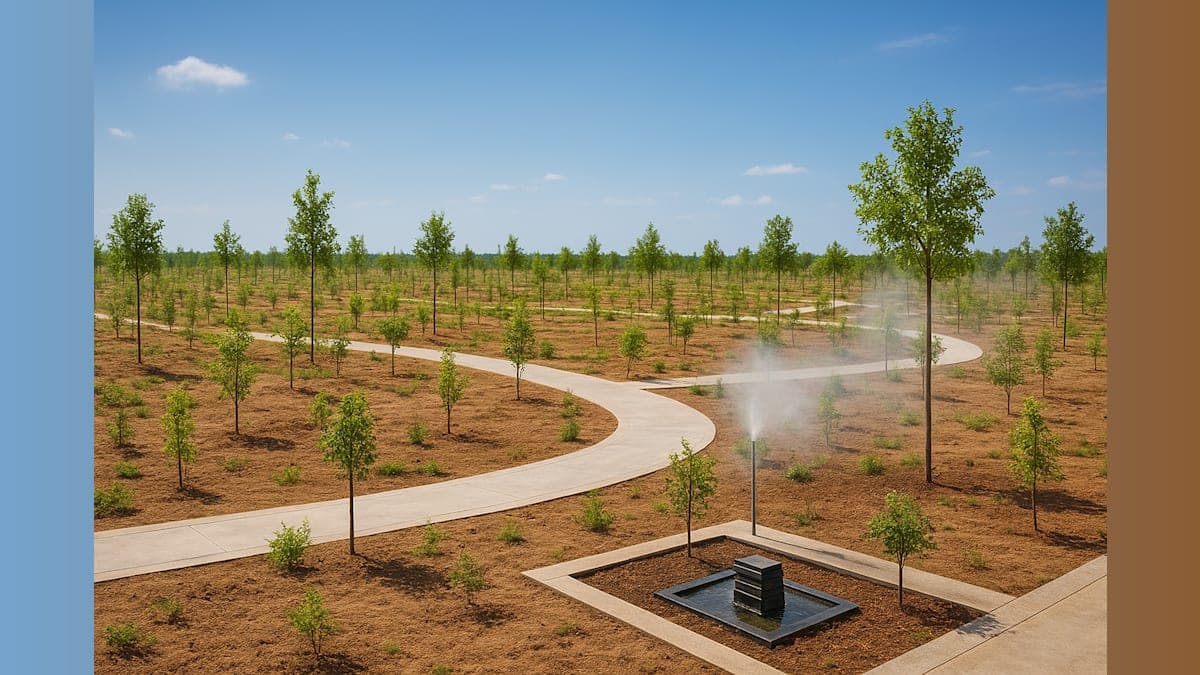
Stretching across 400 acres along the coastline in a southern Athens suburb, the park has been engineered from its inception to maintain moisture, vegetation, and cooler temperatures regardless of water scarcity or extreme heat conditions. Every element of the design aims to reduce air temperature by 7.2 degrees Fahrenheit compared to the surrounding urban environment of asphalt and concrete.
The planning process incorporated sophisticated modeling techniques to determine optimal placement of pathways and vegetation. Designers analyzed factors including wind patterns, the rate at which moisture evaporates, airflow dynamics, and Computational Fluid Dynamics to maximize the park's ability to regulate thermal conditions.
The completed park will contain 30,000 trees alongside 3 million smaller plants representing more than 520 different species. Approximately three-quarters of the flora will consist of native varieties or species well-suited to the local climate. Rest areas throughout the park are being constructed to provide shade coverage exceeding 60 percent.
Water management features will play a critical role in maintaining comfortable temperatures. The design incorporates flowing water channels, misting installations, and low-consumption water basins to keep the atmosphere humid and cool when conditions permit.
The extensive cooling measures address a genuine crisis. Athens once held the record certified by the World Meteorological Organization for the highest European temperature ever documented: 48.0 degrees Celsius, equivalent to 118.4 degrees Fahrenheit. The Greek capital became the first European city to create a chief heat officer position specifically to address dangerous heat waves.
Athens contains twice the population of the next nine largest Greek cities combined, yet has historically suffered from inadequate green space. Under Mayor Haris Doukas, the city planted its first micro-forest in 2024 and completed greening initiatives that added 5,000 trees across six neighborhoods and at the historic Acropolis.
The combination of scorching heat and limited rainfall creates hostile conditions for vegetation not adapted to Mediterranean conditions. The Ellinikon Park addresses this challenge through intelligent water management systems. Onsite treatment facilities will provide non-potable water for irrigation, while an extensive rainwater collection system will supply the park's water features including fountains and misting equipment.
Construction teams salvaged materials from the demolished airport infrastructure, repurposing hundreds of tons of concrete slabs and rubble. Traditional Greek stone varieties will be incorporated into the design, including materials such as Kavala marble, white Dionysos-Penteli marble, Karystos slate, and Mandras sandstone to ensure constructed elements complement natural features.
The Ellinikon Park is scheduled to open to the public next year, with additional renovation phases planned for 2030. The project represents a significant step toward addressing urban heat and providing essential green space for residents of one of Europe's most densely populated and hottest capital cities.