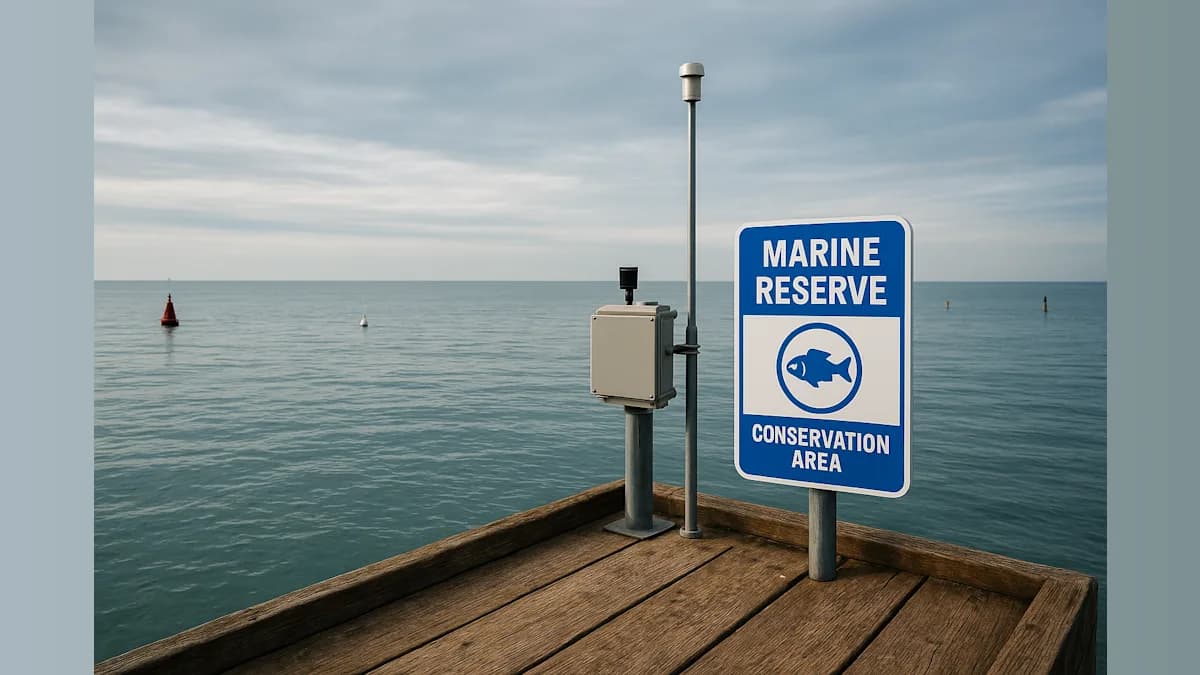
The French Polynesian government has announced the creation of a massive marine protected area spanning approximately 200,000 square miles of ocean, an expanse roughly twice the size of Arizona. The new preserve, designated as the Te Tai Nui a Hau Marine Protected Area, represents a significant milestone in global ocean conservation efforts and positions French Polynesia as a leader in marine stewardship.
Located near the Austral, Marquesas, and Western Society islands, this newly protected territory brings French Polynesia's total conserved ocean area to approximately 540,500 square miles—an area twice the size of Texas. The designation means that 30% of French Polynesia's waters will now be protected from all extractive activities, with other human uses subject to strict limitations.
The announcement builds upon conservation measures implemented last year, when French Polynesia fully protected approximately 350,000 square miles around the Gambier and Society islands. The government also designated several thousand miles of artisanal fishing zones, allowing local communities to continue traditional fishing practices that have sustained them for generations.
These artisanal fishing zones represent a careful balance between conservation and community needs. Fishing in these designated areas is limited to single pole-and-line catch from boats less than 12 meters (39 feet) in length, preserving traditional fishing methods while protecting marine ecosystems. The new preserve network includes 3,088 square miles of artisanal fishing zones around the Austral Islands and nearly 7,336 square miles around the Marquesas, covering coastal areas and nearby seamounts.
The protected waters harbor exceptional marine biodiversity, including seabirds, sharks, whales, and species found nowhere else on Earth. These areas serve as critical migration routes and breeding grounds for marine life, making their protection essential for maintaining healthy ocean ecosystems across the Pacific.
French Polynesian President Moetai Brotherson has expressed hope that this decision will serve as a model for large-scale ocean conservation rooted in local leadership and traditional stewardship. The initiative directly supports the global goal of protecting at least 30% of the ocean by 2030, commonly known as the "30 by 30" target.
The establishment of the Te Tai Nui a Hau Marine Protected Area represents the culmination of more than a decade of work led by Polynesian communities and local leaders. The Pew Bertarelli Ocean Legacy, a member of a large coalition that assisted the French Polynesian government in planning, financing, and executing the new reserve, emphasized the community-driven nature of the project.
"Communities across the Austral and Marquesas islands have spent years shaping a collective vision for conserving their ocean that reflects both their cultural traditions and their future needs," explained Donatien Tanret, who leads Pew Bertarelli Ocean Legacy's work in French Polynesia, speaking to Good News Network. "From the start, that vision included coastal protected zones around the islands and their seamounts, where artisanal fishing can continue for the local people who depend on it."
The project has received support from numerous international philanthropic organizations, including the Becht Foundation, Bezos Earth Fund, Bloomberg Ocean Fund, Blue Marine Foundation, Blue Nature Alliance, Oceans 5, and the Wyss Foundation. These partners work alongside the government and local communities to establish long-term financing mechanisms, governance structures, scientific monitoring programs, and management capacities necessary for effective marine protected area administration.
The French Polynesian approach demonstrates that ambitious ocean protection and local livelihoods need not be mutually exclusive. By integrating large-scale conservation with traditional stewardship practices and sustainable use provisions, the island nation has created a framework that protects marine ecosystems while supporting the communities that depend on them. This model may prove influential as other nations work toward meeting their own ocean conservation commitments in the coming years.