
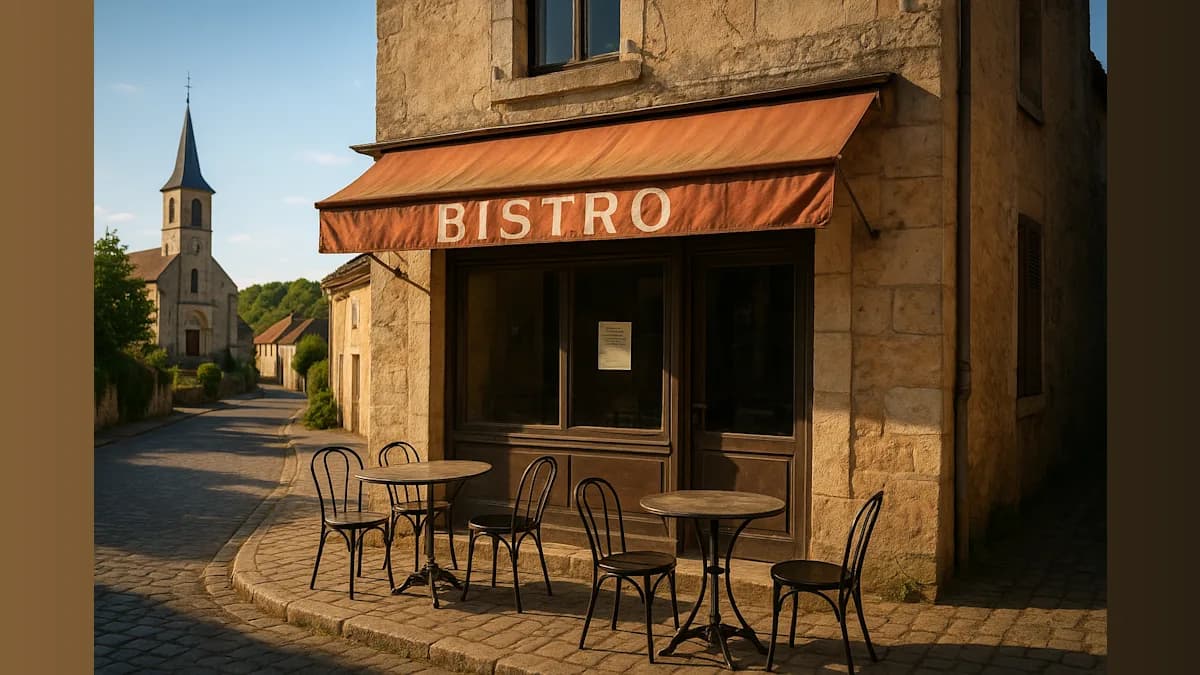
In the small Burgundy commune of Saint-Martin-sur-Ouanne, residents recently faced the loss of their final streetside business when the local cafe-bistro, Au Bon Accueil, shut its doors for eight months. The closure followed the earlier demise of the village boulangerie, leaving the community without a central gathering place. However, swift action by local officials has restored the establishment, highlighting the critical role such venues play in rural French life.
Hervé Chapuis, the village chief of Saint-Martin-sur-Ouanne, and the county mayor collaborated to ensure Au Bon Accueil would remain operational. Their efforts reflect a broader struggle across France, where cafe-bistros—often described as the heart of rural economy and society—are vanishing rapidly. According to reporting by the Guardian’s Kim Whillsher, the number of these establishments has plummeted from 500,000 to just 40,000 over the past 125 years.
Nadia Letellier, the new manager of Au Bon Accueil, expressed relief at the reopening. “It’s so important to have a cafe-bistro in a village like this. We couldn’t let it stay closed,” Letellier told the Guardian’s Kim Whillsher during a visit to the village. “And we’re doing well, as you can see. People seem really happy it’s open again.”
The significance of these establishments extends beyond mere dining. Fixed menu three-course meals are common for both lunch and dinner, with locals often occupying the same seats and ordering the same items daily while catching up with neighbors and escaping isolation. This routine is particularly vital in depopulated rural areas, where such venues serve as essential social anchors.
Several factors contribute to the widespread closures, including declining alcohol consumption, a 2% year-over-year price inflation target set by French and European central banks, shrinking rural populations, and senior owners retiring without successors. These pressures have devastated the rural hospitality landscape, making the survival of places like Au Bon Accueil increasingly rare.
In the administrative district of Charny-Orée-de-Puisaye, which encompasses Saint-Martin-sur-Ouanne, the mayor has taken proactive measures. Having run a bistro for seven years before being elected this year, he allocated €25,000 in public funds for renovations to keep another local bistro—formerly known as the Station Cafe—open. “I noticed the same people would come in every morning at the same time, take the same table, the same coffee or a glass of white wine,” he told Whillsher. “The cafe-bistro was their point of reference. If it disappears, there is nothing for them.”
Au Bon Accueil is not the first establishment to benefit from such intervention. The mayor’s local authority already owns another bistro, a restaurant, and three boulangeries, demonstrating a sustained commitment to preserving rural communal spaces. As other villages across France lose their last remaining hubs, Saint-Martin-sur-Ouanne stands as a model of local leadership reversing a troubling national trend.