A simple glass sphere has become the centerpiece of an extraordinary global journey, connecting sixteen thousand individuals across continents through a shared vision of humanity without divisions.
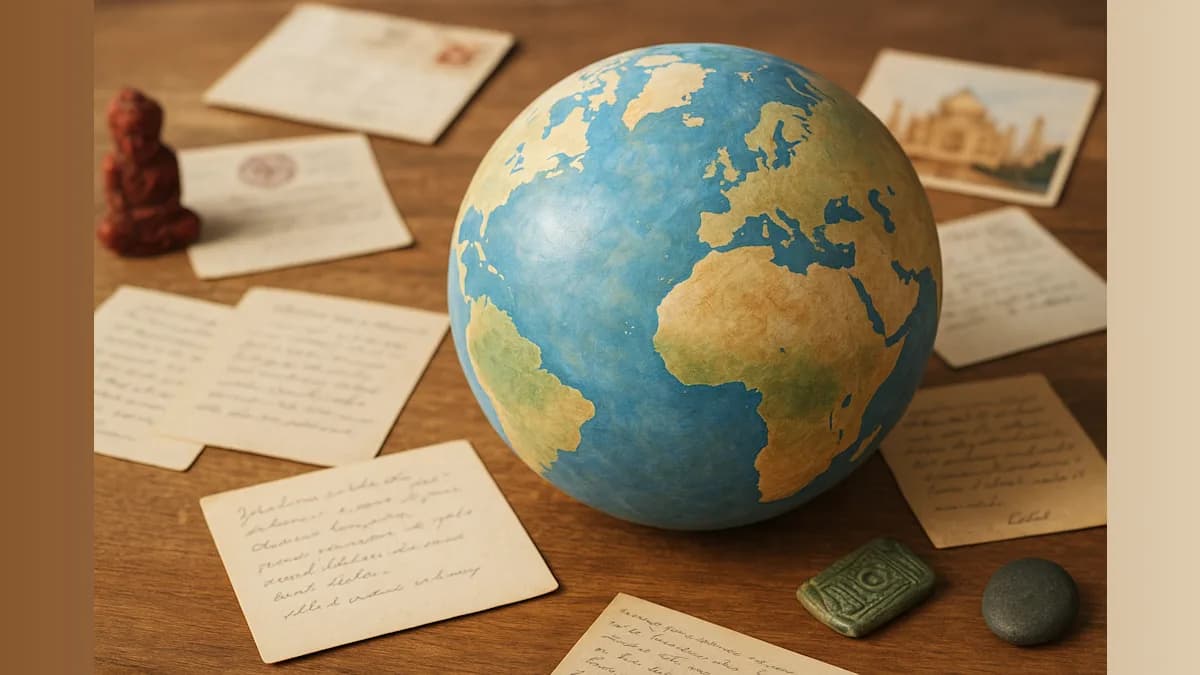
Rama Mani and Alexander Schieffer carry with them a singular possession as they traverse the world: a small glass orb painted by a French artist. The artwork depicts Earth as astronauts see it from space—a blue planet unmarked by the political boundaries that define daily life below. For more than two years, this object has passed through thousands of hands, consistently evoking a similar response wherever it travels. Observers grow quiet, their expressions shift, and something unspoken passes between strangers in the room.
The expedition defies simple classification. It functions simultaneously as spiritual pilgrimage, documentation of human resilience, and testimony from communities often overlooked by conventional narratives. What emerges from their travels is a portrait of interconnection that transcends geography and circumstance.
In Chile, the travelers encountered an eleven-year-old Pewenche girl whose artistry transforms bark into creative expression. Her presence, they note, continues to accompany them long after departure. The encounter represents one of countless moments where brief meetings leave lasting impressions on both visitors and hosts.
Uganda brought them face to face with extraordinary determination. A young refugee who witnessed the murders of his mother and sister channeled unimaginable grief into action. Setting aside one dollar each week, he constructed a handmade school that now serves two hundred children. The institution stands as physical evidence that trauma need not define a life's trajectory.
Perhaps the most intimate recognition of belonging occurred in the Bolivian Andes. A traditional Indigenous community extended an invitation that crossed cultural boundaries: they asked the two travelers—one Indian, one German—to serve as godparents to their daughter. The ceremony involved cutting the child's hair for the first time, a ritual practiced for generations before modern nations existed. The gesture transformed strangers into family through bonds older than any passport or border.
The pattern that emerges from these encounters reveals an unexpected truth about human hospitality. Mani and Schieffer observe that their original intention was to visit homes around the world. Instead, they find themselves repeatedly welcomed into them. The distinction matters: one suggests observation from outside, the other implies acceptance within.
The glass sphere serves as more than artistic representation. It functions as catalyst for recognition—a physical reminder that the divisions marking maps exist nowhere in nature. From space, Earth appears as it actually is: a single system supporting all life, indifferent to the lines humans draw across its surface.
What sixteen thousand people have experienced when holding this painted globe suggests something fundamental about human nature. Despite differences in language, culture, and circumstance, the response remains consistent. The image of a borderless Earth touches something universal, a recognition that precedes ideology or nationality.
The journey continues, adding new stories to a growing collection of encounters that challenge conventional narratives about human separation. Each community visited reinforces the central revelation: the planet itself insists on kinship among those who inhabit it. The glass sphere simply makes visible what has always been true.