On soccer fields throughout central Pennsylvania, children wearing jerseys call out plays in both English and Nepali while their parents observe from the sidelines. For Harrisburg's Nepali-speaking Bhutanese refugee community, these weekly gatherings represent far more than athletic competition — they preserve cultural identity and provide sanctuary during an era of mounting uncertainty.
Harrisburg became home to tens of thousands of Bhutanese refugees beginning in the late 2000s, establishing one of the largest such populations in the United States. These families fled Bhutan following an ethnic-cleansing campaign targeting the Lhotshampa people. During the 1980s, the Bhutanese government implemented policies aimed at modernization and unification that stripped ethnic Nepalis of legal status and suppressed their culture. The displaced population spent nearly two decades confined to refugee camps in Nepal.
Soccer emerged as a critical coping mechanism during those years of displacement. Denied work permits in the Beldangi camps of Jhapa, Nepal, families cultivated farms and established schools during daylight hours. When evening arrived, they turned to the sport as an outlet for processing collective trauma.
Among the refugees was Kalu Singh Tamang, who had competed as a national soccer star in Bhutan before the expulsion. Within the camps, Tamang coached thousands of fellow refugees in the fundamentals of the game. He died in the camp without ever reaching resettlement.
In 2007, the United States government, working with United Nations support, launched a resettlement initiative that ultimately relocated approximately 85,000 refugees. The soccer tradition traveled with them across the ocean.
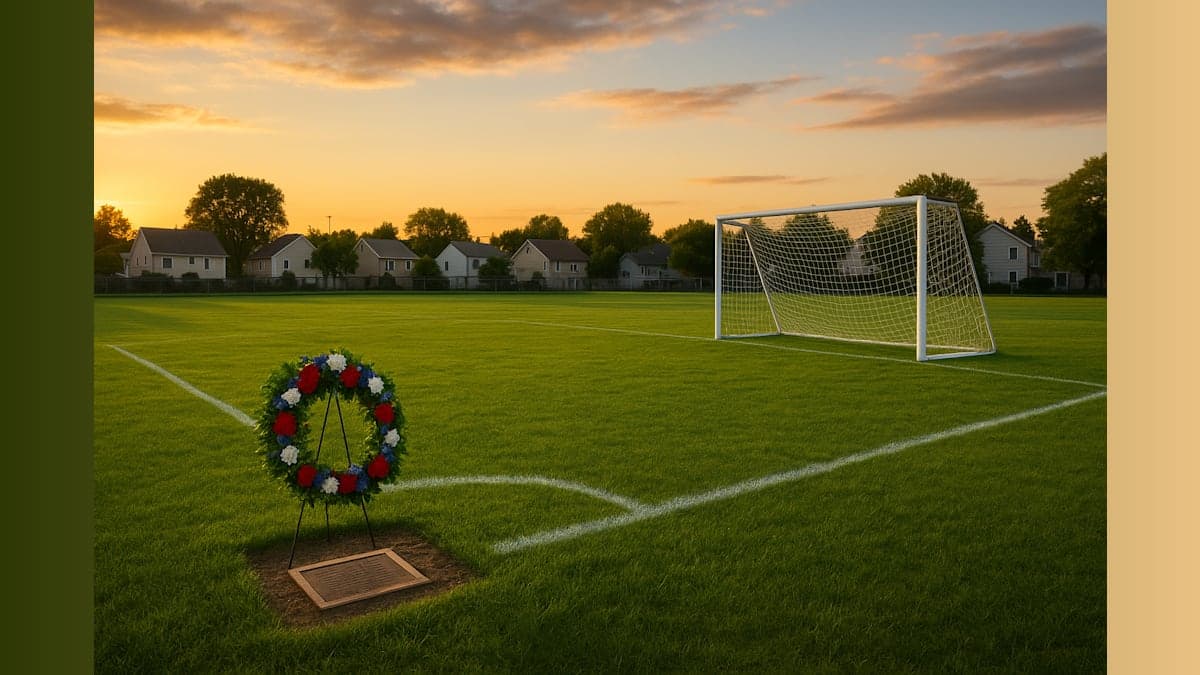
Today, the Kalu Singh Tamang Memorial Championship draws refugees from multiple states for an annual gathering that honors the late coach's legacy. Birkha Gurung, who helped establish the tournament, explained his motivation: "When we were in Nepal, in the refugee camp, I played with [Tamang] and he coached so many of the refugee soccer fans. Our community, especially the adults, are having so many problems with mental health issues [since the camps], so I started this adults' tournament," he told NPR.
Revenue from the championship now supports Soccer for Success, a youth initiative serving more than 50 children weekly. The program ensures younger generations — many of whom will never witness the camps or the homeland their parents abandoned — inherit the sport that sustained their community through decades of statelessness.
Both programs operate under Asian Refugees United (ARU), a Harrisburg-based nonprofit that also provides cultural education to refugee children. The organization has become increasingly vital as the community confronts an immigration enforcement crisis.
Over the past 18 months, dozens of community members have been deported under intensified federal immigration policies. Prior to March 2025, the United States had maintained a practice of not removing these refugees to Bhutan, even when individuals had criminal records. That policy has reversed.
Deportees are now being transported by air to Bhutan, which continues to deny them citizenship and immediately expels them to India or Nepal upon arrival. Unable to secure permanent status in Bhutan, Nepal, or the United States, these individuals face statelessness for a second time, with no nation willing to accept them permanently.
Federal immigration authorities declined to provide comment on the deportation policy when contacted by NPR.
Robin Gurung, co-founder of Asian Refugees United, has shifted from managing soccer programs to full-time advocacy work. His responsibilities now include coordinating with immigration lawyers, developing civic engagement training for staff members, and traveling to Washington to lobby lawmakers.
"We were not prepared for this when we [built] the rapid response team. Our job now requires us to talk to the family members, folks who are in ICE detention. The immediate need is to stop the deportations. Folks who are deported, they are not safe," Gurung told NPR.
The climate of fear extends beyond those directly facing deportation. Bhagawat Dulal, who coaches in the Soccer for Success program and now provides translation services for detained community members, described how anxiety has infiltrated daily routines.
"I had some people I was talking to ask, 'Can I go garden or should I not do that because of the [ICE] situation?' The one thing that has always been there through Bhutan, Nepal and to America: We found a way to garden, because that is what brought us joy — and now the same people are scared to go garden," Dulal told NPR. "I'm so frustrated."
Despite the pervasive uncertainty, the soccer fields continue to fill each week with children learning techniques from their elders. The community maintains its religious observances and festivals. Small businesses operated by refugees showcase trades and skills developed before the camps.
Manju Gurung, an Asian Refugees United staff member, framed the community's determination ahead of a Capitol Hill advocacy day as building "a future of hope, for our parents and all refugee parents around the globe."
The soccer fields have evolved into one of the few spaces where this twice-displaced community still experiences security — a place where the game that sustained them through refugee camps continues to bind generations together on Pennsylvania soil.