August 7 stands as a date marked by extraordinary human achievement across multiple domains, from athletic excellence to revolutionary innovation and historic battles for freedom.
Twenty-six years ago on this date, Tampa Bay third baseman Wade Boggs accomplished a feat never duplicated in Major League Baseball history. The future Hall of Famer reached his 3,000th career hit with a home run during the Devil Rays' 15-10 loss to the Cleveland Indians in 1999. Boggs remains the only player to achieve this milestone with a long ball.
The achievement came remarkably late in Boggs' career. He became the 23rd player in MLB history to reach 3,000 hits, and retired just 10 hits later. His career batting average of .328 remains the highest among all living former players. During his tenure with the Boston Red Sox, Boggs dominated American League pitching, capturing five batting titles between 1983 and 1988. His career statistics reveal a contact-hitting specialist: 1,014 RBIs against just 160 home runs, with a hit occurring roughly every three at-bats.
Nine years ago, Ichiro Suzuki joined the same exclusive club with characteristic flair, tripling off the right-field wall at Coors Field against the Colorado Rockies in 2016. The achievement made him the seventh player in MLB history to collect both 3,000 hits and 500 stolen bases. Earlier that season on June 15, Suzuki surpassed Pete Rose's professional baseball hit record with 4,257, though Rose disputed the accomplishment by arguing that Suzuki's 1,278 hits in Nippon Professional Baseball should not count.
Arizona Diamondbacks assistant hitting coach Mark Grace dismissed such objections when speaking to USA Today, stating the caliber of competition was irrelevant to the achievement's significance.
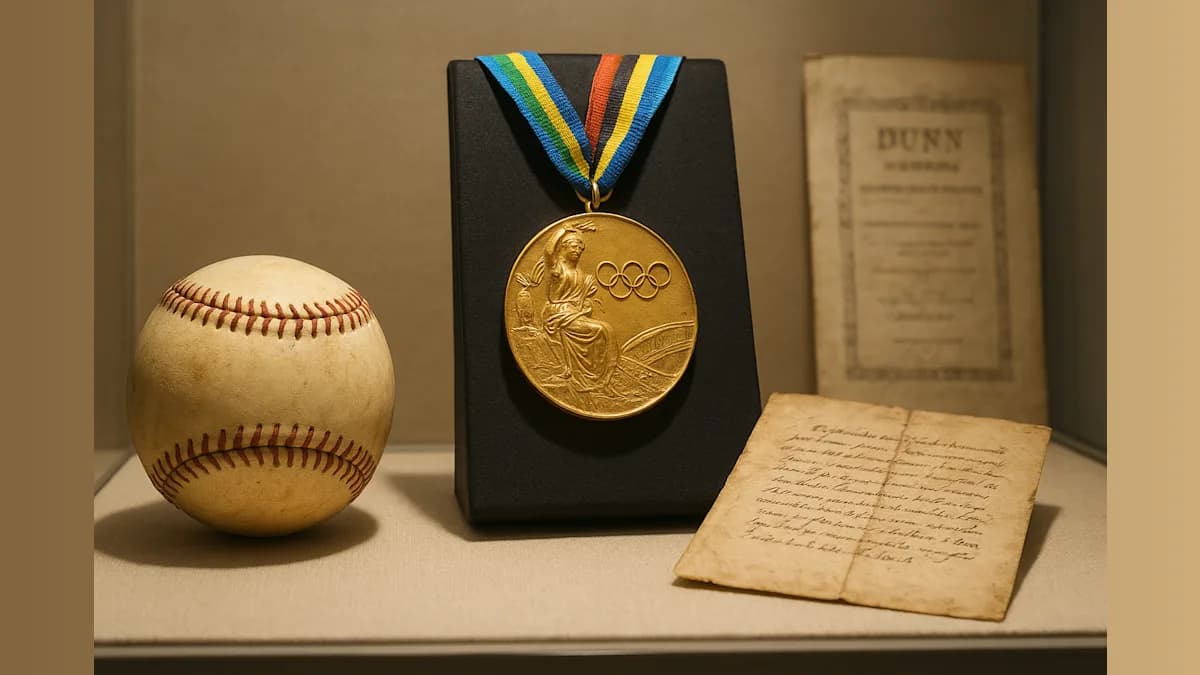
Seventy-eight years ago, Alice Coachman shattered barriers by becoming the first Black woman to win an Olympic gold medal. The American track and field athlete cleared 5 feet 6⅛ inches in the high jump at the 1948 London Games, surpassing the previous 16-year world record by nearly 3 inches.
Born in Georgia, Coachman trained by running barefoot on dirt roads near her home. She dominated the Amateur Athletics high jump championship with ten consecutive national titles and also claimed national championships in the 50-meter dash, 100-meter dash, and 400-meter relay. As a student at the Tuskegee Institute, she won three conference championships as a basketball guard. The cancellation of the 1940 and 1944 Olympic Games due to World War II prevented her from competing during her athletic prime, leading one sportswriter to suggest she might otherwise be considered the greatest female athlete in history.
Following her Olympic triumph, Coachman met with President Harry Truman and former First Lady Eleanor Roosevelt, received parades in her honor, and attended a celebration hosted by Count Basie. In 1952, she became the first Black woman to secure an endorsement deal when Coca-Cola signed her, featuring her on billboards alongside 1936 Olympic champion Jesse Owens.
One hundred thirty-seven years ago, American inventor Theophilus Van Kannel received a patent for the revolving door in 1888. His patent submission outlined numerous advantages over traditional hinged doors, noting the invention operated noiselessly, prevented wind, snow, rain, and dust from entering buildings, could not be blown open, eliminated collision risks, and allowed simultaneous entry and exit.
The Franklin Institute of Philadelphia awarded Van Kannel the John Scott Legacy Medal in 1889. The first revolving door installation occurred in 1899 at Rector's, a Times Square restaurant in Manhattan. Van Kannel established the Van Kannel Revolving Door Company in 1889, which eventually sold to International Steel Company. Despite the parent company's evolution into manufacturing amphibious landing vehicles for World War II battle tanks, the revolving door division remains its only surviving legacy.
Two hundred five years ago, Simón Bolívar secured a decisive victory over Spanish forces at the Battle of Boyacá in 1819, ensuring the success of his independence campaign across South America. Bolívar led liberation movements in Venezuela, Colombia, Ecuador, Peru, Panama, and Bolivia, becoming one of the few historical figures to have a country bear his name.
An admirer of the American Revolution and critic of the French Revolution, Bolívar identified as a classical liberal and free market advocate. He authored the Bolivian Constitution and championed limited government, separation of powers, religious freedom, property rights, and the rule of law throughout his writings and speeches.
Additional historical milestones on August 7 include George Washington establishing the Purple Heart medal in 1782, the opening of the Peace Bridge between Fort Erie, Ontario, and Buffalo, New York, in 1927, and Philippe Petit's high-wire performance between the World Trade Center towers at 1,368 feet in 1974. The Bee Gees reached number one on the US singles chart with How Can You Mend A Broken Heart in 1971, fifty-four years ago.
Notable birthdays on this date include actor David Duchovny, who turns 65, best known for his Golden Globe-winning performances as FBI agent Fox Mulder on The X-Files and in Californication. The Princeton University and Yale graduate has also published three novels and released two alternative rock albums.