The 2026 FIFA World Cup is facing significant complications as immigration policies create barriers for participants and fans attempting to enter the United States for the tournament. Recent incidents have seen officials, team staff, and ticketed spectators denied entry or visas, raising questions about the event's accessibility and the impact on international competition.
Omar Abdulkadir Artan, a decorated FIFA World Cup referee from Somalia, was denied entry to the United States on Saturday after landing at Miami International Airport. Customs and Border Protection stated that Artan was determined to be inadmissible due to vetting concerns but did not elaborate on the specific nature of those concerns.
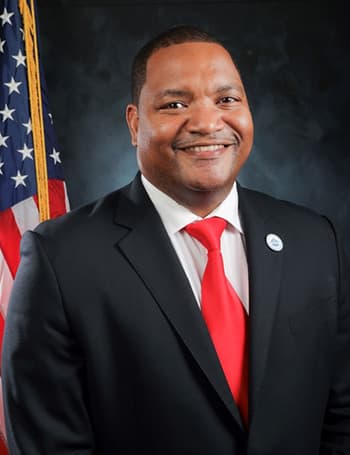
Andrew Giuliani, the executive director of the White House Task Force for the World Cup, said Tuesday the denial was for very good reasons but provided no further explanation. The incident marks a troubling precedent for tournament operations, as referees are essential to the competition's integrity.
Team Iraq also encountered difficulties when a player was questioned for hours at Chicago O'Hare International Airport. While the player was ultimately permitted entry, a photographer for the team was denied due to vetting concerns, according to Customs and Border Protection.
The situation has proven particularly complex for Iran's national team. The country, which is at war with the United States and Israel, was forced to relocate its lodging to Mexico after the government banned players and staff from staying overnight in the United States. While visas for team members were approved last week, more than a dozen support staff did not receive approval, including Mehdi Taj, the president of the Iranian football federation.
In response to a social media post by United States Ambassador to Turkey Tom Barrack, the Iranian Embassy in Turkey accused the United States of violating FIFA regulations and breaching host obligations. The embassy characterized the actions as politically biased interference in sport and stated on X that the government is depriving Iran's national team of its right to play under normal conditions without undue pressure and stress.
The restrictions extend beyond team personnel to affect fans as well. According to the Moroccan news website Hespress, more than 40 members of multiple Moroccan football team supporter associations have been denied visas to attend the tournament, despite many holding tickets to games and hotel bookings.
There are 39 countries currently under either a full or partial United States travel ban. For 19 of those countries, the State Department has suspended issuing all visas. Four countries on those lists — Iran, Haiti, Côte d'Ivoire, and Senegal — are expected to play in the World Cup.
"I view the 2026 World Cup as a massive paradox," said Jules Boykoff, a professor and the author of Red Card: The 2026 World Cup, Sportswashing and the FIFA Greed Machine, speaking to NPR. "On one hand, it has more teams than ever participating. On the other hand, because of the policies of the Trump administration, it looks more like a World Cup of exclusion than inclusion."
Boykoff, a former professional soccer player, expressed concern that the restrictive immigration policies will also shape the experience of fans in the United States, who might be anxious about potential tense interactions with immigration agents outside of stadiums.
David Nevin, a University of Cincinnati professor who teaches a course on sports and politics, characterized these immigration issues as a self-inflicted wound. "When you insert politics into the competition, it's no longer the competition it was," Nevin told NPR. "In some ways (it's) very tangibly when a referee is missing or a player is delayed."
In a statement to NPR, Customs and Border Protection said all travelers seeking entry into the United States, including athletes, coaches, and staff, are subject to inspection and vetting. The agency stated that admissibility determinations are made on a case-by-case basis using law enforcement, national security, and immigration information available at the time of inspection.
FIFA's response to the situation has drawn criticism. Gianni Infantino, FIFA's president, stated in 2025 that everyone would be welcome in Canada, Mexico and the United States for the tournament and that the United States was committed to a smooth travel process. However, following Artan's denied entry, a FIFA spokesperson distanced the organization from the immigration issues, stating that FIFA is not involved in host country immigration processes and that a host government ultimately determines who receives a visa and who is admitted into their country.
Nevin called FIFA's position striking and said the organization has raised the surrender flag on this question, essentially deferring to the United States to do as it sees fit.
The White House did not respond to NPR's request for comment on the matter. As the tournament approaches, the tension between security concerns and the World Cup's traditional spirit of international unity continues to generate debate among policy experts, fans, and participants.