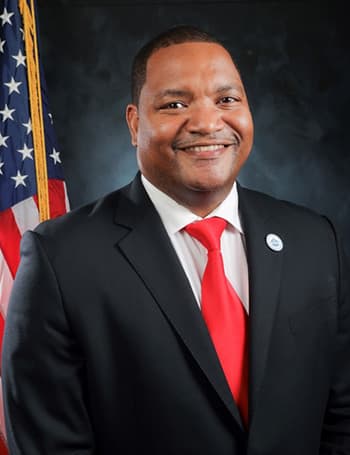
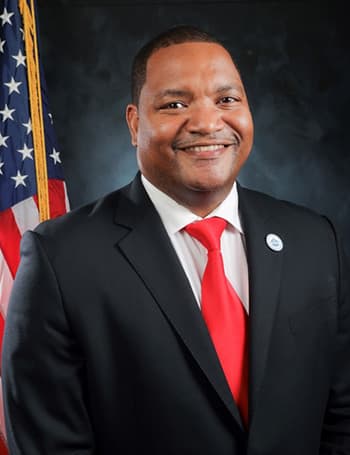
MAYS LANDING — Just one month into his tenure as president of Atlantic Cape Community College, Dr. Jason Abreu says his vision for the college is built around a simple question:
"How do we create the conditions for every student to succeed?"
In his first in-depth interview since becoming the college's 10th president on July 1, Abreu shared an ambitious roadmap for Atlantic Cape's future, one that includes expanding workforce training, embracing artificial intelligence, reaching adults who never finished college and ensuring the institution continues meeting the changing needs of South Jersey's economy.
"My passion for this work runs to and through me," Abreu said during an appearance on WOND's Off The Press with Scott Cronick (weekdays 4-6pm) "I want to make sure that remains at the center of everything that we do — creating conditions for students to be successful."
Abreu succeeds longtime President Dr. Barbara Gaba, who retired after nine years leading the college.
Rather than dramatically changing course, Abreu said he hopes to build on the momentum already created while positioning Atlantic Cape for the future.
"I think where I pick up the baton is really establishing what Atlantic Cape 2.0 looks like," he said. "How are we going to meet the demands of the region? How are we going to make sure every student who comes in has the experiences and tools they need to be successful?"
Reaching Students Who Never Finished College
While many people associate community colleges with recent high school graduates, Abreu said one of Atlantic Cape's biggest opportunities lies with adults who began college but never earned a degree.
"We can't just necessarily discuss 18-year-olds as coming into college," he said.
Abreu cited an estimated 43 million Americans who have completed some college coursework but never finished a credential.
"Community colleges are built for this type of momentum," he said. "How do we go back, reach out to these students and say, 'You began your collegiate journey at some point. Maybe it was last year. Maybe it was 20 years ago. Come back. Join us. How can we help you along the way?'"
He said community colleges are uniquely positioned to help adults complete degrees, earn professional certifications or acquire new workforce skills.
"We have to discuss what credentials mean," Abreu said. "The workforce needs these different types of credentials and skills for individuals to be successful."
Preparing Students for Tomorrow's Jobs
Among the biggest changes Abreu sees coming is the rapid integration of artificial intelligence into virtually every profession.
"I think what we see right now is artificial intelligence," he said. "It changes the way that we do business, the way that we communicate, interactions."
Rather than treating AI as simply another technology trend, Abreu believes colleges must begin incorporating it into workforce education and academic programming.
"I think there's momentum to credential what artificial intelligence looks like in an academic setting," he said.
He noted that colleges around the country have already begun offering AI-focused certificates and degree programs.
"I think there's great opportunities to look at that and seeing how we can create more robust programs using artificial intelligence."
Abreu said students entering nearly every profession—from healthcare and business to public safety and education—will encounter AI tools throughout their careers.
"We see it in our day-to-day services," he said. "We see it with our food applications. We see it with our deliveries. We see it with Amazon and the work that they're doing."
Preparing students for that changing workplace, he said, will be an important priority for Atlantic Cape moving forward.
Building on Atlantic Cape's Momentum
Abreu also praised the work of his predecessor, saying Atlantic Cape is well positioned for continued growth.
He highlighted ongoing investments across the college, including approximately $12 million in campus improvements, expanded student services and efforts to create a more seamless experience for students from enrollment through graduation.
He said the college also plans to expand summer offerings and continue strengthening partnerships with employers throughout Atlantic and Cape May counties.
"Our job is to tell the narrative of where we sit within that individual's goals and aspirations," Abreu said. "Low cost, personalized, high-quality education."
A Mission Shaped by Personal Experience
Abreu said his commitment to student success is rooted in his own life.
Born in South Florida to Cuban immigrant parents, he became the first in his family to attend college.
While pursuing a degree, he worked full time and planned to become a classroom teacher. But when his program required an unpaid student teaching internship, he realized he couldn't afford to stop working.
"The problem was that was not an option in my household," he said.
Unable to complete the unpaid internship, Abreu changed career paths—a decision that ultimately led him into higher education leadership.
"I made it my life's mission to go back and see if we can fix some systems and improve the experiences for our students," he said.
Today, as Atlantic Cape's new president, Abreu says that mission continues to guide every decision he makes.
Whether helping adults return to college, expanding workforce training or preparing students for careers shaped by artificial intelligence, he believes the college's responsibility is clear.
"We have to meet the demands of the region," Abreu said. "And we have to make sure every student who walks through our doors has the opportunity to succeed."

About the Author
Peter Killeen
A 25-year radio news veteran, Peter covers South Jersey for NewsTalk 1400 & 92.3 WOND radio. Known for his concise and impactful delivery, he ensures listeners and readers stay informed without unnecessary filler.