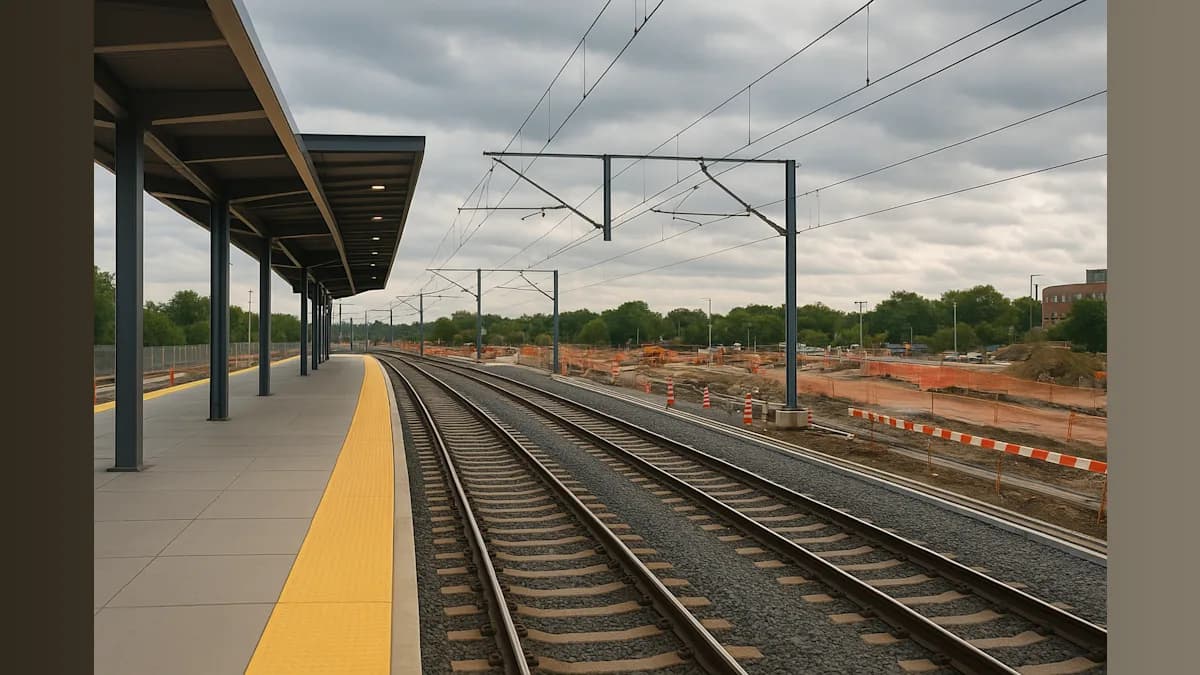
The world's most train-dependent nation is preparing to enter the high-speed rail era. India's first bullet train system, designed with Japanese engineering expertise, is scheduled to begin phased passenger service starting August 15, 2027, connecting major economic centers in the western part of the country.
The Mumbai-Ahmedabad high-speed rail project represents a transformative upgrade for a railway system that currently moves 7.41 billion passengers and 1.67 billion tons of freight annually across approximately 45,000 miles of track. Most of that infrastructure dates to the colonial era, with conventional trains operating at speeds around 63 miles per hour.
The initial operational segment will run between Surat, a global diamond cutting center experiencing rapid economic growth, and Vapi, a major chemical manufacturing hub. "A considerable amount of work on the entire corridor has already been completed," Dharmendra Tewari, Indian Railways' additional director general, told AFP. "The first section of the bullet train will be operational in 2027, between the cities of Surat and Vapi."
When fully completed, the 300-mile line will slash travel time between Mumbai, India's financial capital, and Ahmedabad in Gujarat state by more than four hours. The trains are based on Japan's Shinkansen system, capable of reaching speeds of 164 miles per hour while maintaining an exceptional safety record spanning decades. The earthquake-resistant design addresses seismic concerns in the region.
Japan provided both engineering expertise and substantial financing for the project, which was championed by former Japanese Prime Minister Shinzo Abe before his assassination. The collaboration represents a significant investment in modernizing infrastructure that has struggled to keep pace with India's economic expansion.
Construction has required unprecedented engineering achievements for India, including the nation's first undersea tunnel and its longest conventional tunnel. These technical challenges, combined with complications in land acquisition and permitting, have pushed the project four years behind its original schedule.
The Mumbai-Ahmedabad line serves as a proving ground for high-speed rail technology in India. The country already operates the Vande Bharat, an indigenous express service that reaches approximately half the speed of the Shinkansen. If the bullet train rollout proceeds safely and successfully, planners envision extending high-speed rail connections to the technology hubs of Pune and Chennai during the 2030s.
New Delhi has committed billions of dollars to overhauling railway infrastructure in recent years, recognizing that transportation capacity remains a critical bottleneck for continued economic development. The bullet train project represents the most visible element of that modernization effort, bringing cutting-edge rail technology to a system that has long relied on aging colonial-era foundations.