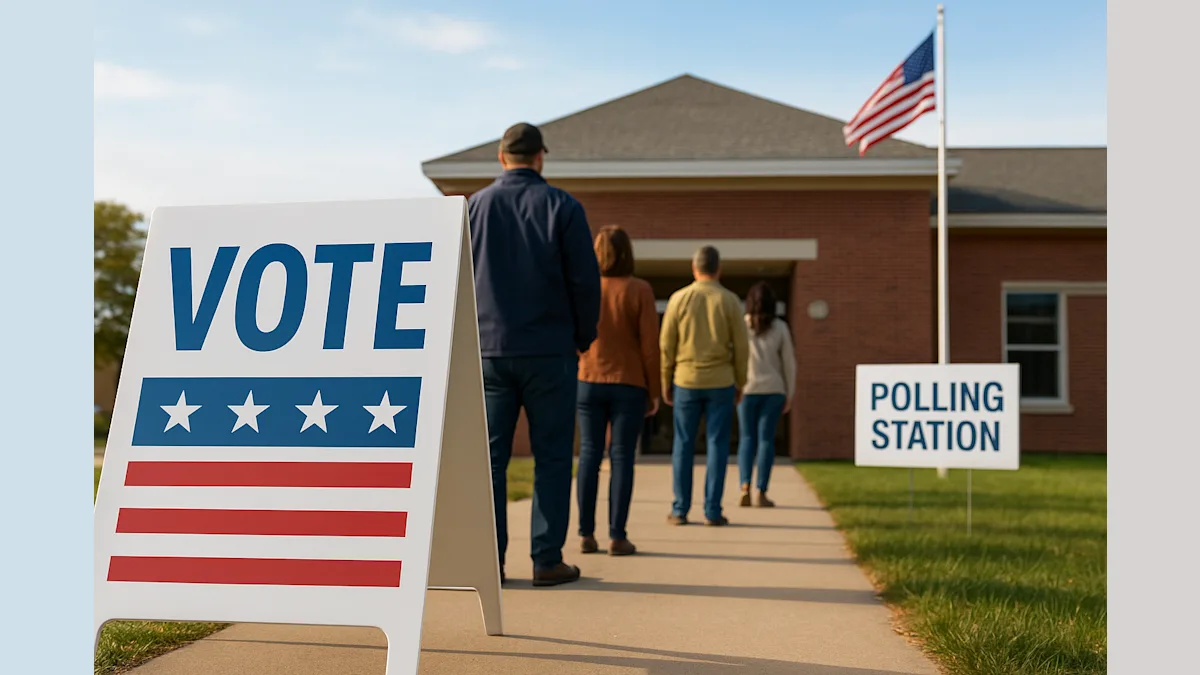
Iowa voters on Tuesday cast their ballots in primary elections that set the stage for competitive general election battles in November, selecting nominees for a pivotal Senate seat and the state's highest executive office.
In the race to fill the Senate seat vacated by Senator Joni Ernst, Democratic state Representative Josh Turek emerged as his party's nominee and will face Republican U.S. Representative Ashley Hinson in what analysts expect to be one of the most closely watched Senate contests in the nation. Hinson secured the Republican nomination during a primary night election party in Cedar Rapids, where she celebrated with family members on stage.
The Senate race carries significant implications for the balance of power in Washington, as both parties view the open seat as a critical opportunity. Hinson, who currently represents Iowa in the U.S. House of Representatives, will leverage her federal legislative experience as she campaigns for the upper chamber. Turek, serving in the Iowa state legislature, will need to introduce himself to voters across the state while making the case for his vision for Iowa's representation in the Senate.
In the gubernatorial contest, Democratic state Auditor Rob Sand ran unopposed in his primary, securing his party's nomination without competition. This allows Sand to pivot immediately to the general election campaign while Republicans continue counting votes in their primary race. The outcome of the Republican gubernatorial primary remains undetermined as vote tallies are finalized across the state.
The primary results on Tuesday, June 2, 2026, mark the official beginning of what promises to be an intense general election season in Iowa. With both the Senate seat and governorship in play, the state is positioned to be a focal point of national political attention through November. Voter turnout and engagement in these races will likely shape Iowa's political landscape for years to come.
As candidates transition from primary mode to general election campaigns, both parties will work to consolidate support, raise funds, and articulate their policy positions on issues ranging from economic development to healthcare and education. The coming months will test each nominee's ability to build coalitions and appeal to Iowa's diverse electorate.