As the nation approaches midterm elections in November, a cascade of court decisions and legislative proposals threatens to transform the American voting landscape in ways that could affect millions of citizens. Journalist Ari Berman, a voting rights expert for Mother Jones, warns that the convergence of Supreme Court rulings weakening the Voting Rights Act and proposed federal legislation requiring strict identification could create barriers not seen in generations.
The Supreme Court's recent spring session delivered what Berman characterizes as a devastating blow to voting protections. The Court significantly narrowed the scope of the Voting Rights Act of 1965, legislation that once enjoyed overwhelming bipartisan support and was reauthorized four times under Republican presidents.
"The Voting Rights Act of 1965, the most important civil rights law of the 1960s, has no teeth left. And that's just the beginning of what they've done in terms of weakening democracy," Berman told NPR.
The Louisiana v. Calais decision in late April proved particularly consequential. The ruling effectively struck down the creation of majority-minority districts, which had allowed Black voters and other voters of color to elect candidates of their choice. Southern states including Tennessee, Louisiana, and Alabama have already moved to redraw electoral maps in ways that reduce Black representation before the upcoming midterms.
The SAVE America Act and Identification Requirements
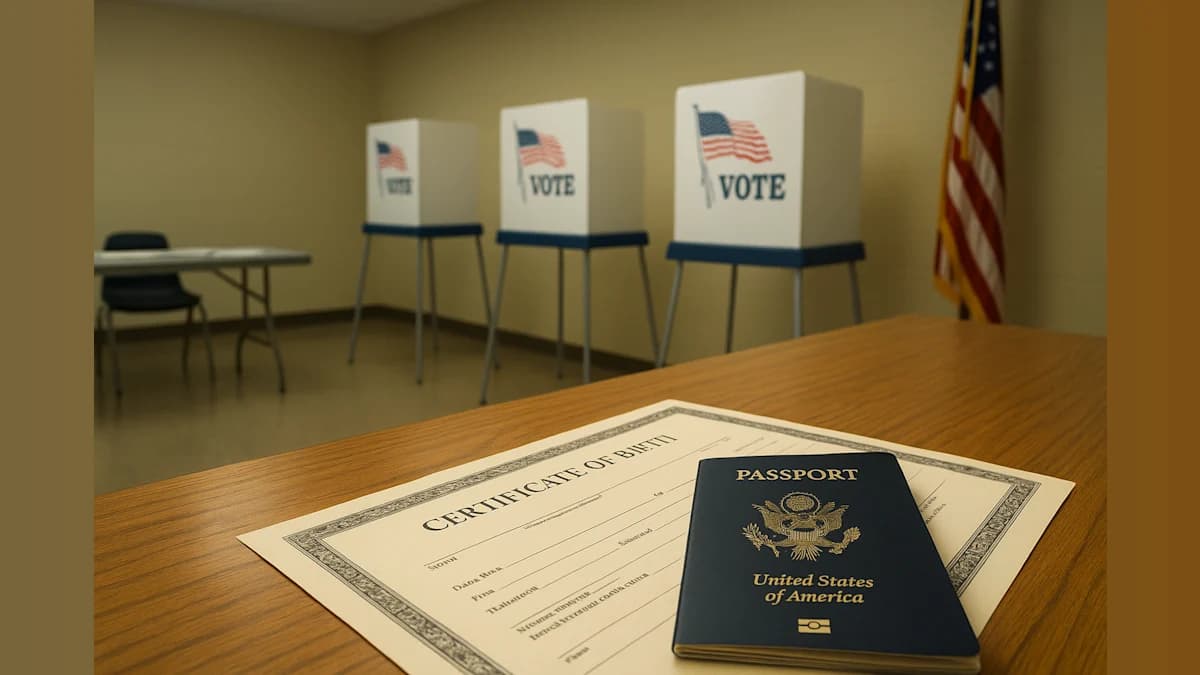
President Trump is currently pushing Congress to pass the SAVE America Act, legislation that would mandate voters present a passport or birth certificate to register and impose strict identification requirements for casting ballots. The practical implications of such requirements could prove far-reaching.
"Half of all Americans don't have passports. So already there, you're talking about half the country can't comply," Berman told NPR. "Ask the average person, 'Do you know where your birth certificate is?' And a lot of people are gonna struggle to find it."
Berman describes President Trump as obsessed with voting mechanics, noting a pattern of attempting to alter electoral processes whenever political outcomes appear unfavorable. The journalist suggests the SAVE America Act serves a dual purpose: creating substantive barriers to voting while simultaneously establishing grounds to challenge future election results.
"If Republicans lose, he's going to say, 'Well, we didn't have the SAVE Act, therefore the election was rigged,'" Berman told NPR. "He is creating the predicate for some kind of dramatic intervention to either challenge how people vote, how their votes are counted, or how the elections are ultimately certified."
Mail Voting Under Threat
The Supreme Court preserved mail-in voting by a single vote during its recent session, but conservative justices issued dissents that questioned the legitimacy of mail voting more broadly. This concerns voting rights advocates who see such dissents as potential blueprints for future majority opinions.
States including Oregon, Washington, Utah, and Alaska have conducted mail elections successfully for years without evidence of elevated fraud rates. President Trump himself has voted by mail on multiple occasions, most recently in a special election for the Florida legislature. Nevertheless, the conservative justices' arguments against mail voting could embolden efforts to restrict or eliminate the practice in other states.
Campaign Finance and Redistricting
Beyond voting access, the Supreme Court struck down decades-old limits on political party spending on behalf of candidates. The decision represents another step in what Berman characterizes as a decades-long project by the Roberts Court to increase the influence of wealthy individuals in the political process.
Following the midterms, state legislatures in both Republican and Democratic-controlled states are expected to redraw electoral maps in 2027 and 2028. Berman fears this will trigger a race to the bottom, with both parties maximizing their representation through partisan gerrymandering, leading to increased polarization and decreased electoral competition.
The Path Forward
Berman, author of Minority Rule: The Right-Wing Attack on the Will of the People — and the Fight to Resist It and Give Us the Ballot: The Modern Struggle for Voting Rights in America, notes that voting rights experts increasingly believe any congressional legislation protecting voting rights would simply be struck down by the current Supreme Court. This reality has fueled growing support within Democratic circles for Supreme Court reform, including proposals for term limits or expanding the number of justices.
The journalist warns that the dismantling of Voting Rights Act protections represents more than the weakening of a single law. It threatens the broader project of multiracial democracy and risks returning Southern states to a politics reminiscent of the Jim Crow era. With the midterm elections approaching and legal battles continuing, the fundamental question of who can vote and how remains unsettled, with profound implications for American democracy.