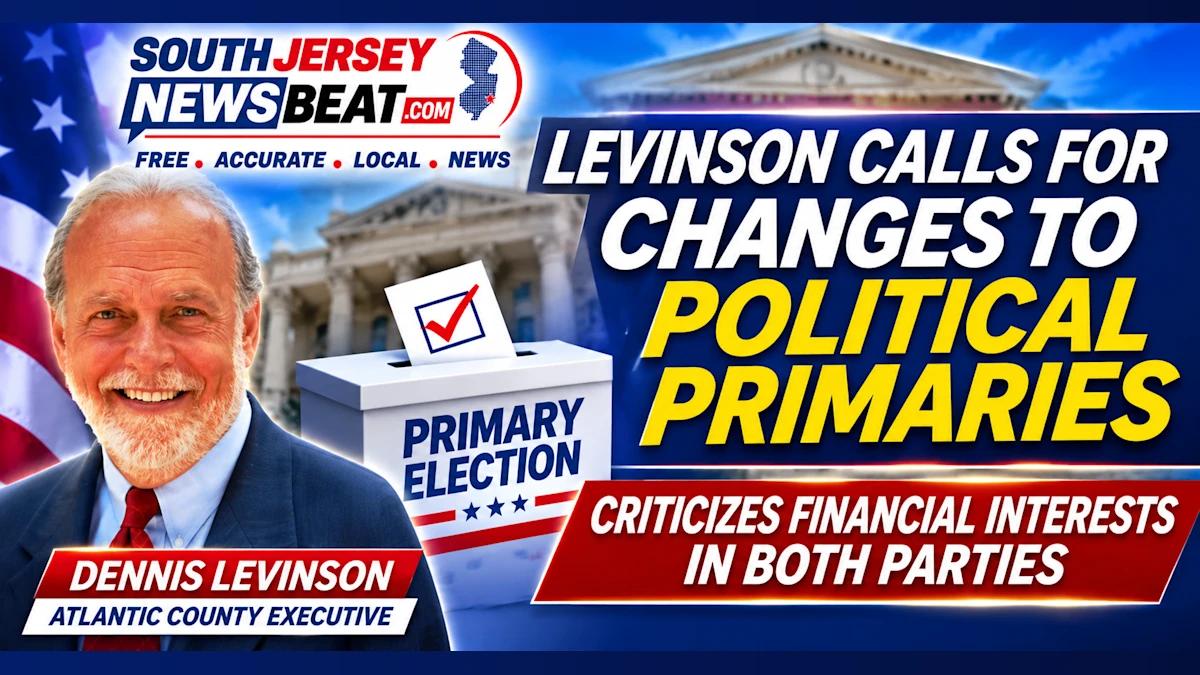
Atlantic County executive questions why taxpayers fund party primaries and says money and political hypocrisy have become major problems in American government.
ATLANTIC COUNTY, N.J. — Atlantic County Executive Dennis Levinson is calling for a fundamental examination of how political parties select their candidates, questioning why taxpayers must finance primary elections while accusing politicians from both major parties of allowing financial interests to overshadow public service.
Speaking with Anne Baker on Talking with Anne on News Talk 1400 & 92.3 WOND, Levinson, a Republican, offered an unusually broad criticism of the American political system following Tuesday's election.
His comments came during a discussion with an Atlantic City caller who identified herself as an independent voter and expressed frustration with both political parties.
Levinson said the influence of money in politics has become so widespread that traditional distinctions between Republican and Democratic leadership often obscure what he considers a larger problem.
"You see the map, the political map of the United States, and you see red states and you see blue states," Levinson said. "Well, ladies and gentlemen, they're all green."
"That's what it comes down to, and that's why they're there," he added.
Levinson specifically criticized financial dealings involving politically connected families, citing President Donald Trump's family, former House Speaker Nancy Pelosi's family and Hunter Biden.
He argued that allegations of financial self-interest should be examined consistently, regardless of political affiliation or the amounts of money involved.
"You can say, gee whiz, they didn't make even a little bit close to what the Trumps made," Levinson said. "Well, guess what? It is a question of degrees, isn't it? But it shouldn't have been done in the first place."
He continued with a pointed criticism of what he sees as partisan hypocrisy.
"Come on. We've got to take a hose and clean out the stables on both sides," Levinson said.
His comments reflected his views about political ethics and financial conflicts. The interview did not establish that the individuals he mentioned had committed criminal wrongdoing.
Why Should Taxpayers Pay for Party Primaries?
Levinson then turned to a subject he said deserves serious legislative attention: the public financing of primary elections.
In New Jersey, primary elections determine which candidates will represent political parties in the general election. Although political parties control their nomination processes, elections are administered by government officials using public resources.
Levinson questioned whether that arrangement is fair to voters who do not belong to either major party.
"I don't know why the public, the taxpayer, have to pay for primaries," he said.
"You want to run somebody? Why should an independent, why should somebody that is not involved or unaffiliated have to pay for the Republicans or the Democrats to spend millions to see who they're going to put up on their ticket?"
Levinson did not soften his assessment.
"I find that to be revolting," he said.
"But they've gotten away with it. And every year, you know, we have these primaries, which cost millions, and most people in the country are unaffiliated or independent, but they're paying for the Republicans and Democrats to decide who the people want to run."
Levinson suggested the issue deserves consideration by lawmakers.
"That's something that will be looked upon in the legislature," he said, before qualifying his remarks.
"But, you know, it's just one man's opinion, Ann."
His proposal raises significant questions about election administration, including whether political parties should bear more of the costs of choosing their nominees and how any changes would affect voter participation.
Levinson did not outline a specific legislative proposal or explain how he would replace the existing primary system.
An Independent Voter's Frustration
The discussion was prompted in part by a caller identified as Patty from Atlantic City, who said she had worked for Atlantic County government for 15 years and praised Levinson's management of taxpayer money.
She then described herself as politically independent and expressed dissatisfaction with both parties.
"I can't really find anything really good to say about either party right now," she said.
"What happened is legislators are not listening to their constituents."
The caller said she believed independent voters played an important role in the election results and argued that Republican candidates had failed to recognize growing dissatisfaction among some voters.
"Us independents are the ones who swung this election," she said.
She also criticized what she viewed as financial self-dealing among political families.
Levinson responded by broadening the conversation beyond the recent election, suggesting that the concerns raised by the caller reflected longstanding problems with political parties and government.
A History Lesson About Political Parties
Levinson drew on American history to argue that the nation's founders did not envision the modern political-party system when they drafted the Constitution in Philadelphia in 1787.
"When we put this Constitution together, these geniuses that sat in Philadelphia in 1787, it was an extraordinary event," Levinson said.
"But, you know, they never mentioned political parties. It wasn't part of it."
The Constitution does not establish political parties, although organized political factions developed during the nation's earliest administrations.
Levinson pointed to the disagreements between Alexander Hamilton and Thomas Jefferson during George Washington's presidency as an example of how partisan divisions emerged.
He said Washington became deeply frustrated by the political conflicts surrounding his administration.
"That was destructive as far as Washington was concerned," Levinson said, referring to the development of competing political factions.
"So consequently, we're stuck with this."
Levinson also discussed the original presidential election system, under which the candidate receiving the second-highest number of electoral votes could become vice president.
That arrangement was subsequently changed by the 12th Amendment, ratified in 1804, which established separate Electoral College votes for president and vice president.
His larger argument was that partisan competition, while deeply rooted in American history, should not be allowed to overwhelm the public interest.
Criticism Extends Beyond Republicans and Democrats
Levinson's remarks were particularly notable because they followed an election in which Republicans suffered major setbacks in Atlantic County and elsewhere in New Jersey.
During the same interview, Levinson acknowledged that Republicans faced a difficult political environment and criticized aspects of the party's national messaging.
But his comments about primaries and financial interests went beyond an assessment of Republican electoral losses.
Instead, he challenged a system in which both major parties benefit from established election procedures while voters who identify with neither party help pay the costs.
His criticism also suggested that political leaders cannot credibly demand accountability from their opponents while overlooking questionable conduct within their own ranks.
For Levinson, the problem is not simply which party wins an election.
It is whether the political system is serving the people who finance it.
And on the question of taxpayer-funded primaries, he made his position unmistakable.
"I find that to be revolting."
Atlantic County Executive Dennis Levinson made his comments during an interview with Anne Baker on Talking with Anne, airing weekdays from 10 a.m. to noon on News Talk 1400 & 92.3 WOND.
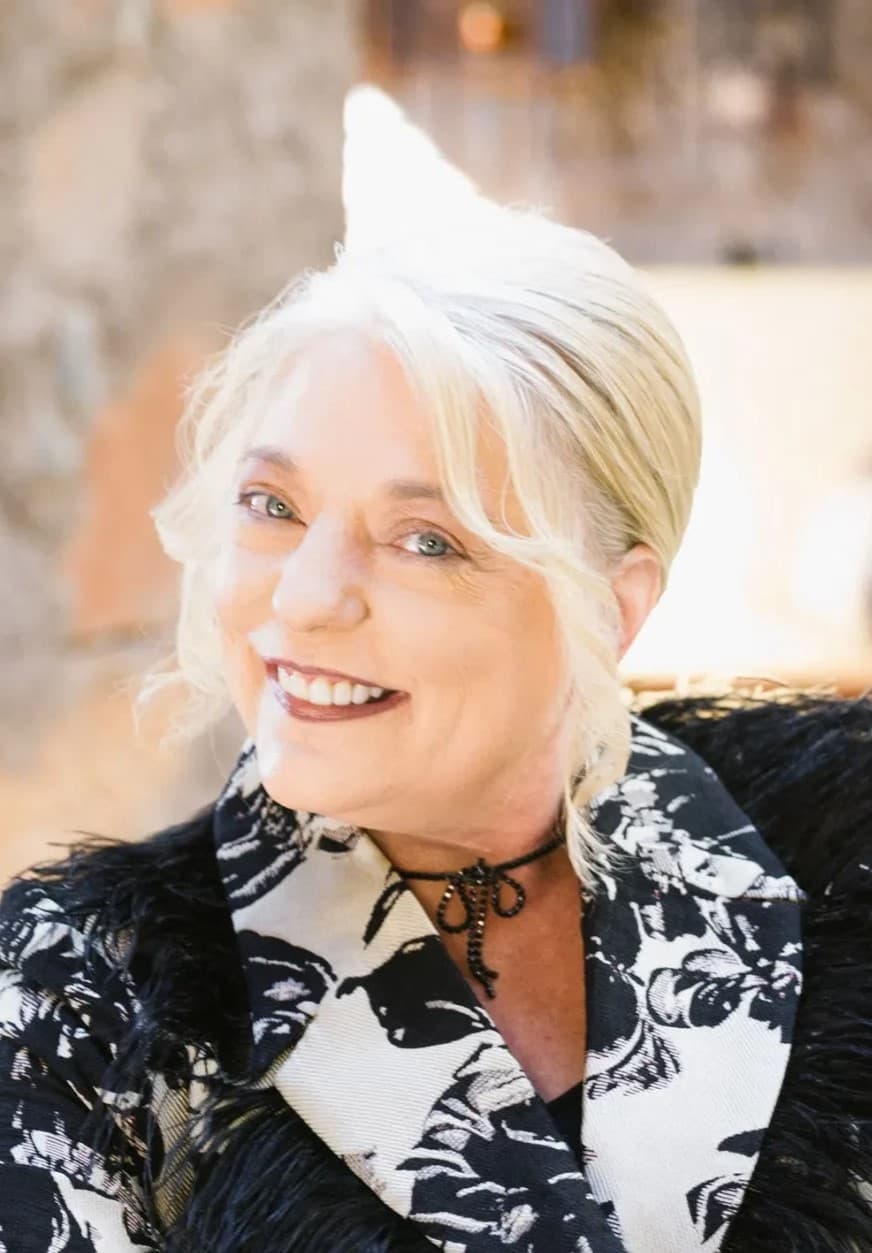
About the Author
Karen Johnson
With over 30 years of news experience in major markets like Los Angeles, Denver, and Columbus, Karen now covers our area for South Jersey NewsBeat. She also brings her articulate and conversational news delivery to WOND radio listeners every weekday. Her background includes work with the NBC Radio Network, and she thrives in fast-paced news environments.