For nearly two minutes before the Amazon cargo plane careened off a Miami International Airport runway on Sunday afternoon, one pilot repeatedly alerted his counterpart that their aircraft was traveling too fast, according to flight information released Wednesday by the National Transportation Safety Board.
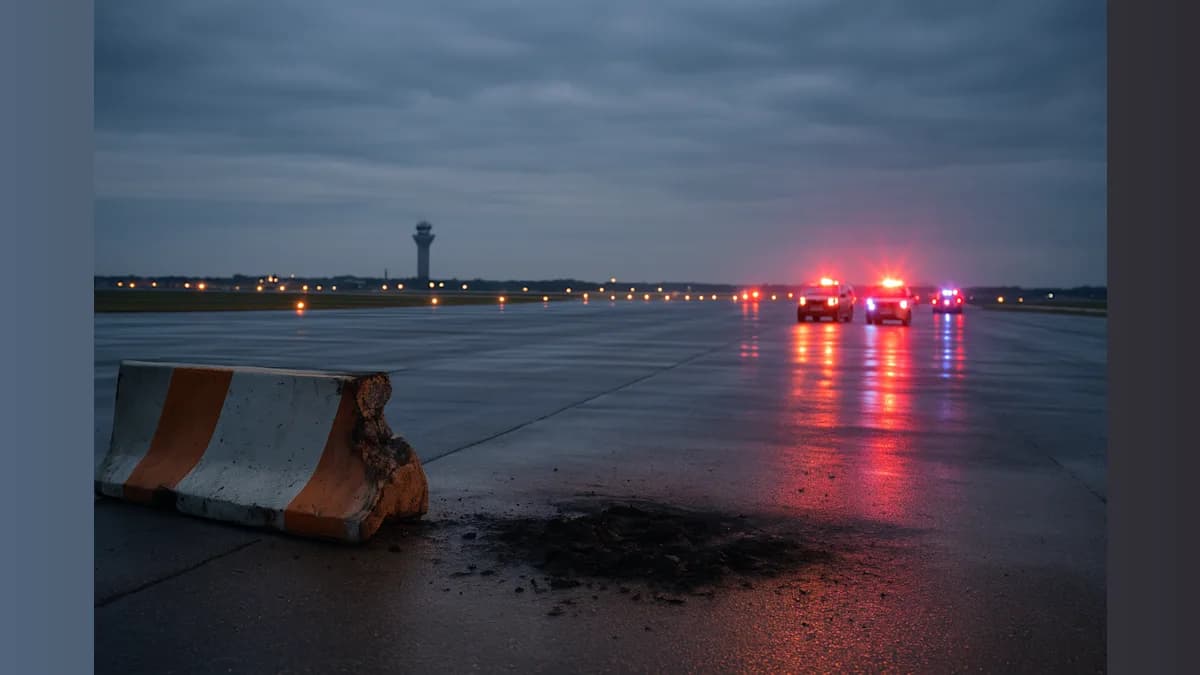
The warnings went largely unacknowledged. The NTSB summary of cockpit voice recordings indicated the other pilot never provided a consistent verbal response to the speed alerts. The Boeing 767 touched down in an unstable manner, briefly attempted to abort the landing and take off again, then skidded approximately 1,300 feet beyond the runway's end before striking a van carrying five workers, all of whom died in the collision.
The aircraft, operated by North Carolina-based carrier 21 Air on behalf of Amazon, also collided with a compact SUV as it slid across a public road before catching fire. Five additional people sustained injuries, with two remaining in critical condition as of Tuesday. Both pilots survived the crash and were interviewed by investigators on Wednesday.
Multiple Opportunities to Abort Landing
Aviation safety experts have questioned why the crew did not take corrective action or abandon the approach entirely. Former Federal Aviation Administration official Mike O'Donnell, who previously oversaw airport safety and crash investigations, explained that the pilots had several options available when the speed warning was first issued.
"You have plenty of time to slow down, plenty of time to say, let's just do a go-around at two minutes out," O'Donnell told NPR. The crew could have extended spoilers, reduced throttle, lowered landing gear, or executed a go-around maneuver to circle and attempt another landing.
Unstable Approach in Challenging Conditions
Flight data recorder information released late Tuesday revealed the aircraft's instability during its final approach amid strong winds. The plane's automated warning systems issued multiple alerts about descent speed and approaching terrain, which O'Donnell said suggests the aircraft may not have been properly configured for landing.
The cargo jet touched down well past the runway's threshold, with its right and nose landing gear making initial contact. According to Flightradar24 analysis of NTSB data, the plane was nearly halfway down the 9,360-foot runway when it first made contact with the ground, significantly reducing the available stopping distance. Strong winds associated with incoming storms may have created a tail wind that further propelled the aircraft forward.
After touchdown, the pilots briefly disengaged the brakes and increased throttle as if attempting to take off and retry the landing, but abandoned that effort just four seconds later.
Questions About Cockpit Coordination
Aviation safety experts have raised concerns about the apparent breakdown in crew coordination. Former airline pilot and safety expert Steve Arroyo questioned the lack of teamwork evident in the released information.
"Where's the coordination? Where's the leadership here in terms of managing the flight deck? And following the trained guidelines set forth in the company's flight manual?" Arroyo said, speaking to NPR.
Mary Schiavo, former Inspector General of the Transportation Department, speculated about potential crew dynamics. She questioned whether the pilot at the controls was the more senior captain while a less experienced first officer issued the warnings, suggesting the junior pilot may not have been sufficiently assertive in challenging the approach.
Investigation Continues
The 32-year-old Boeing 767 was originally manufactured for passenger service and operated for various foreign airlines for more than two decades before being converted to cargo configuration in 2015. The aircraft was being operated by 21 Air, which has flown packages for Amazon since 2024.
NTSB investigators are examining multiple factors that may have contributed to the crash, including the jet's ownership history, weather conditions at Miami International Airport, maintenance records, and 21 Air's operations. The complete transcript of cockpit conversations will not be released until later in the investigation.
This marks the second fatal cargo jet crash in the United States in less than a year. In October, a UPS plane crashed at Louisville's Muhammad Ali International Airport after losing its engine during takeoff acceleration, killing all three pilots and 12 people on the ground, with 23 others injured.