
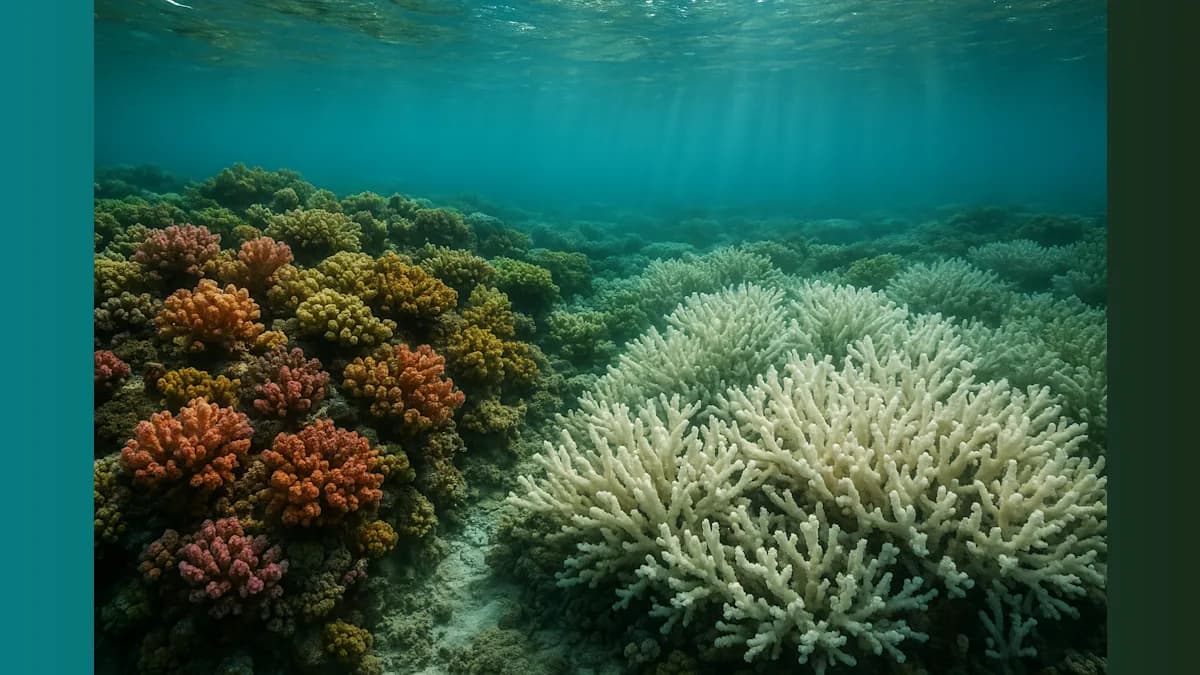
The Great Barrier Reef has received a critical reprieve from ongoing environmental stress, as monsoon conditions earlier this year helped limit damage from coral bleaching events that have increasingly threatened the massive ecosystem.
According to the 40th annual report released by the Australian Institute of Marine Science, the rainy season brought increased cloud cover and cooler sea temperatures that reduced both the severity and geographic spread of bleaching during the summer months. The findings offer evidence of what researchers describe as initial recovery following recent climate-related impacts.
The world's largest coral system has endured six mass bleaching events between 2016 and 2025, a dramatic increase from conditions before the 1990s when such events were exceptionally rare along the 1,400 miles of northeastern Australian coastline. The latest assessment reveals limited impacts from the 2025 mass bleaching event and the regional bleaching that occurred in the Northern and Central regions earlier in 2026.
Coral cover measurements showed improvement across two of the three monitored regions. The Northern Region recorded a 16.7% increase in coral cover compared to 2025 levels, while the Central region saw growth of 10.2%. The Southern region experienced a 2% decline relative to the previous year, though all three regions maintained coral cover at or near long-term average levels.
Dr. Mike Emslie, leader of the Australian Institute of Marine Science Long-Term Monitoring Program, noted that substantial declines in coral cover levels were uncommon this year. The program surveyed a total of 121 coral reefs for the annual assessment.
The majority of surveyed reefs—106 in total—demonstrated moderate to high coral cover. Only three reefs showed coral cover below 10%, indicating relatively widespread health across the system.
Dr. Emslie explained that bleaching events produce highly variable outcomes and do not uniformly result in coral mortality. The intensity and duration of heat stress determine the ultimate impact on coral populations.
While the current coral cover levels exceed those of many reef ecosystems worldwide, Dr. Emslie emphasized that the Great Barrier Reef continues to face significant environmental pressure. He noted that although the system demonstrates resilience, its recovery capacity faces limitations.
The report underscores the importance of comprehensive conservation strategies to support reef survival amid climate challenges. Researchers advocate for reducing global emissions, implementing effective reef management practices, and developing science-based interventions that promote adaptation and recovery in coral ecosystems.