
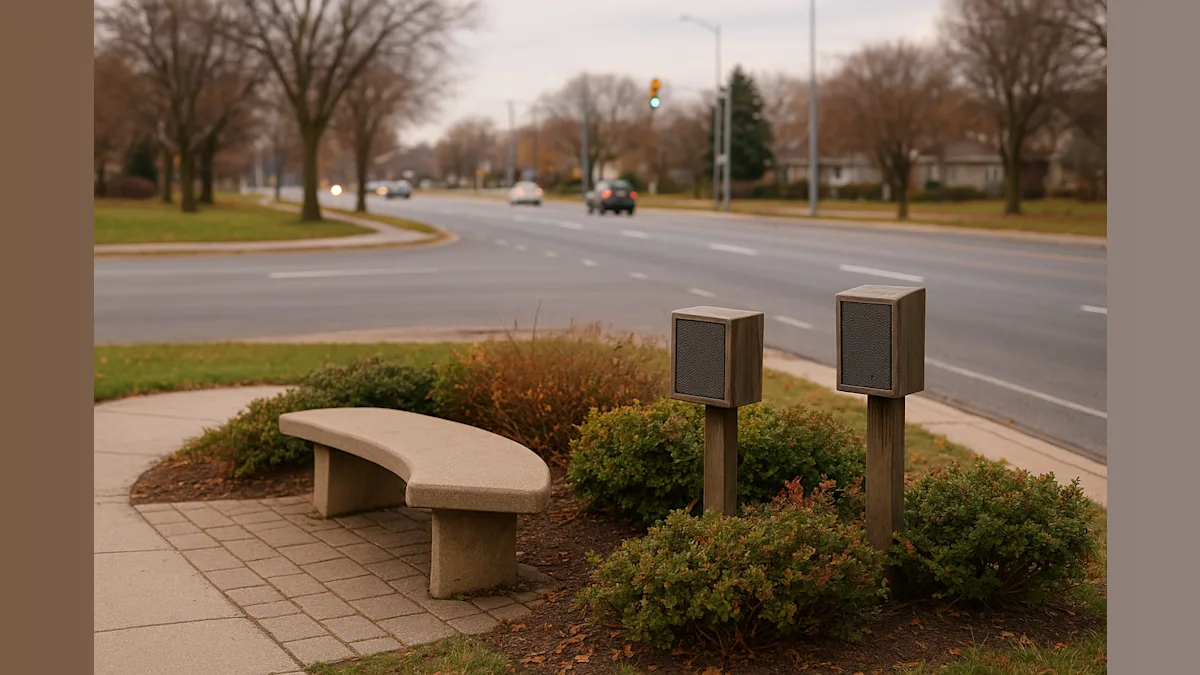
MONTREAL — A small pocket park squeezed between busy Montreal roads has become an unexpected case study in how cities can address traffic noise without simply muffling it. Rather than treating sound as a nuisance to be suppressed, researchers and artists have installed field recordings of coastal life in the space, turning an ordinary thoroughfare into a destination residents now deliberately seek out.
The project carries particular weight for a neighborhood shaped by the displacement of islanders who left the Magdalen Islands generations ago. For those families, the recordings function as cultural memory made audible rather than mere decoration, giving a long-standing loss a public and sensory form.
Catherine Guastavino, a McGill professor whose team helped design the installation, framed the underlying premise in an interview with DailyGood. "Sound is more than just noise, it can be a powerful resource," Guastavino told the publication.
The results appear to support that view. According to DailyGood, one resident now visits the park specifically for "the boost it gives me afterwards."
The broader lesson for urban communities is that the remedy for what makes city life alienating may not always be quiet. Sometimes it lies in hearing the right sounds instead. Belonging, the project suggests, can travel through frequency, and a community's attachment to home can survive even when the geography itself has changed.