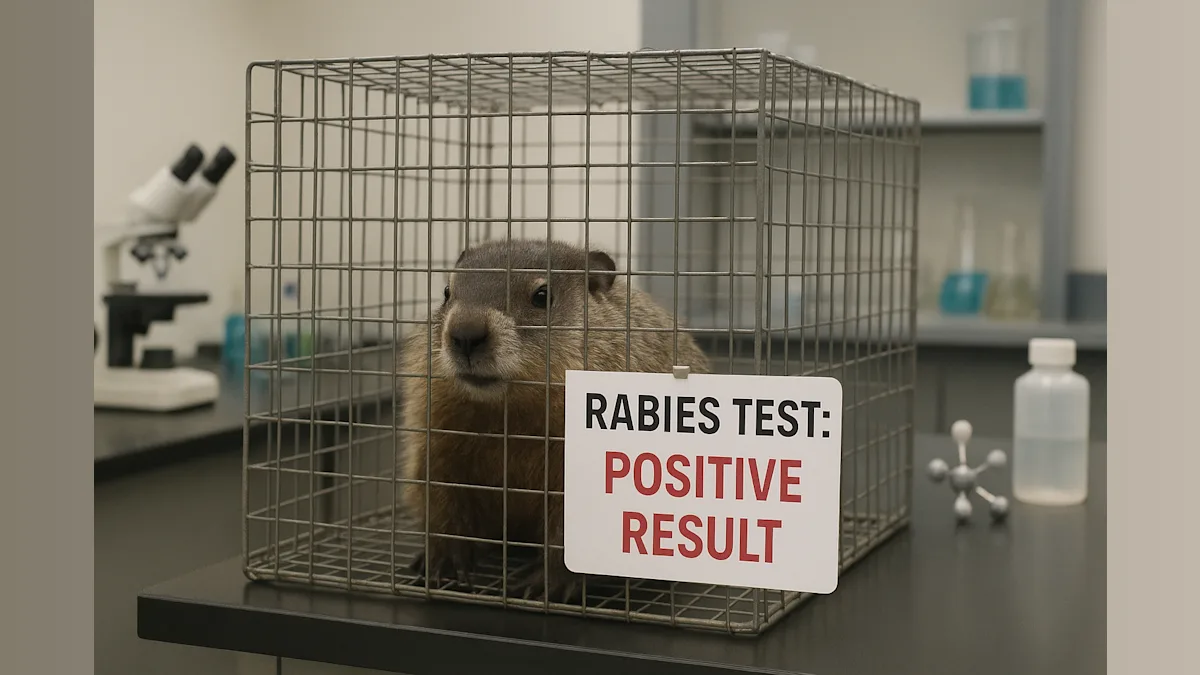
A groundhog collected from the 1300 block of Weekstown Road in Mullica Township has been confirmed positive for rabies, according to the Atlantic County Division of Public Health.
This is the second case of rabies in Atlantic County this year. The first case involved a raccoon collected from Mullica in late January.
Health officials collected the groundhog on July 27 after it attacked a homeowner. It was sent to the state lab for testing where it was confirmed positive on July 31.
An investigation by the Atlantic County Division of Public Health found one human exposure and two outdoor cat exposures. The homeowner is receiving post rabies exposure treatment, and the two outdoor cats have been placed under a 4-month informal observation confinement period.
Rabies can be fatal if left untreated. It can be transmitted through direct contact with saliva through broken skin or mucous membranes in the eyes, nose or mouth. Most human cases of rabies are the result of a bite from an infected animal. If you are bitten by an animal, wash the wound immediately with soap and water and seek medical attention. All bites should be reported to the Atlantic County Division of Public Health at (609) 645-5971.
A rabies vaccination is recommended for domestic animals to not only protect the pet but also the pet owner and family members who could contract rabies from an infected pet.
The Atlantic County Animal Shelter provides free rabies vaccination clinics for both dogs and cats by appointment only. For more information, visit atlanticcountynj.gov.
Public health officials advise residents to teach children to stay away from wild, stray or aggressive animals. Never feed or touch wild animals or try to keep them as pets.
Residents should ensure trash cans have secure lids to prevent wildlife from foraging for food and not leave pet food outside. Many animals are also attracted to bird seed.
If you see wildlife that is behaving strangely, especially nocturnal animals such as skunks and raccoons found during daylight hours, do not approach the animal. Instead, call your local Animal Control Officer.
For more information about rabies control and precautions to protect your family and your pets, please visit the county web site at atlanticcountynj.gov or call (609) 645-5971.