President Donald Trump displayed a document comparing himself to some of history's most notorious authoritarian rulers during an interview for a new book, according to one of its authors.
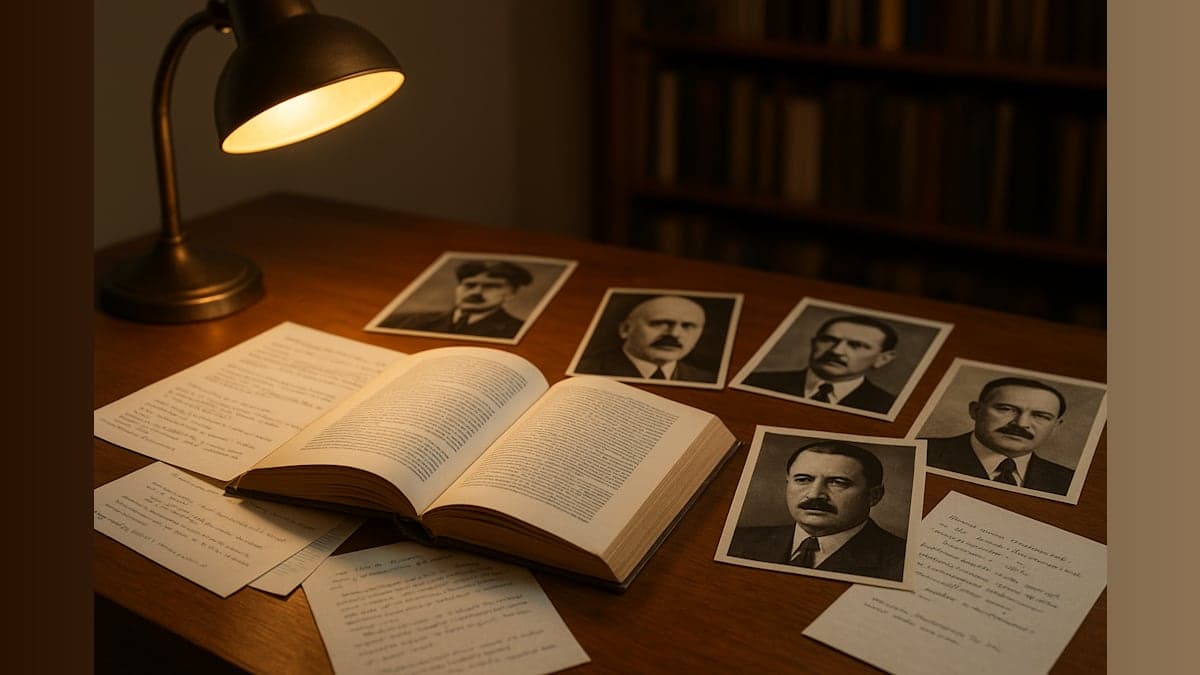
New York Times journalist Jonathan Swan, co-author of the forthcoming book Regime Change: Inside the Imperial Presidency of Donald Trump, described the moment during an interview with NPR. The document Trump showed to Swan and co-author Maggie Haberman listed figures including Mao, Stalin, Hitler, Attila the Hun and Genghis Khan.
"[The list had] nothing to do with morality, all just about pure power projection. And Trump was relishing being in their company," Swan told NPR. "Maggie and I talked about it afterwards, and it really occurred to us that when you look at it through that lens, his second term makes a lot more sense."
The book, based on interviews with more than 1,000 sources including Trump himself, examines what Swan characterizes as a presidency focused on power projection and historical legacy. Swan has covered Trump throughout three political campaigns and both of his presidential terms over the past eleven years.
According to Swan, the president has become particularly fixated on establishing himself as a "great man of history" during his second term. This preoccupation manifests not only in foreign policy decisions but also in White House aesthetics.
"He's gilded almost every corner of the Oval Office," Swan told NPR. "The history of the Oval Office in the White House has been of modesty when it comes to design and decoration, reflecting the fact that America is a republic, not a monarchy. Trump has no use for that history."
Swan described Trump's decorating approach as reflecting his "inner Louis XIV" style, noting the president's fascination with the opulent palaces he visited during Middle Eastern trips. The White House renovations include construction of a grand ballroom, and Trump and First Lady Melania Trump maintain separate bedrooms that Swan suggested have become subjects of competition.
The journalist observed significant differences between Trump's first and second terms. Senior officials who previously viewed their roles as constraining presidential impulses have been replaced by loyalists who share the president's worldview, Swan explained. Many current administration members went through the 2024 campaign viewing the election stakes as existential, with some having received subpoenas themselves.
"This term is unrecognizable from term one," Swan told NPR. The reduced internal friction means presidential ideas can move rapidly from concept to policy execution without the guardrails that existed previously.
Swan also described the chaotic nature of White House meetings, which he said lack clear structure and often include unexpected participants ranging from professional wrestlers to cryptocurrency investors. He recounted one classified defense meeting that was derailed when a contractor walked in with stone samples for Rose Garden renovations.
The book addresses Trump's current challenges, particularly regarding the ongoing conflict with Iran. Swan assessed that aside from the COVID-19 pandemic, he cannot recall Trump appearing "as stuck as he looks right now."
"It's pretty clear he realizes that this war [with Iran] has not gone well, has not played out the way that Netanyahu pitched him or that Trump himself thought [it] would play out," Swan told NPR.
Trump responded to the book on Truth Social, calling Regime Change "mostly made up, Fake News, largely fiction, as have been most of the things [Haberman] has written about me for so many years."
Swan acknowledged the difficulty of interviewing Trump, describing the experience as confronting "a sort of tidal wave of words" that often detach from reality. He emphasized the importance of preparation and strategic fact-checking during such conversations.
"Trump creates an unreality bubble. It's the way he operates," Swan told NPR, noting that even interviewer Tucker Carlson has described the experience as being "under a spell."
The book is published by Simon & Schuster. Swan and Haberman both work as journalists for The New York Times.