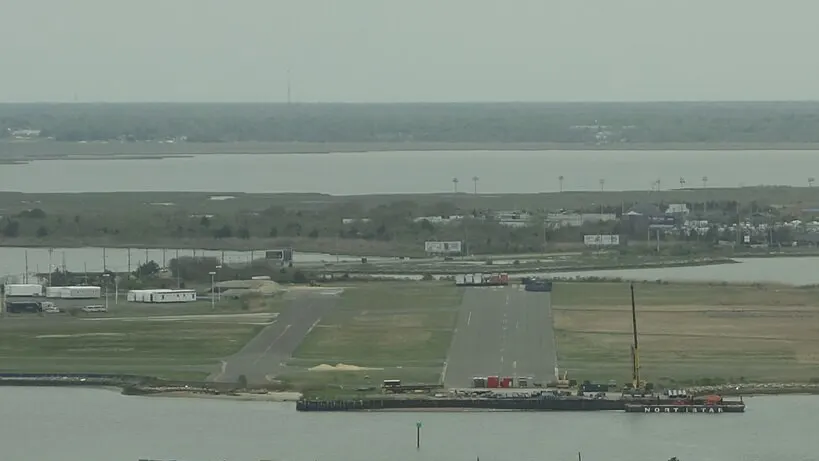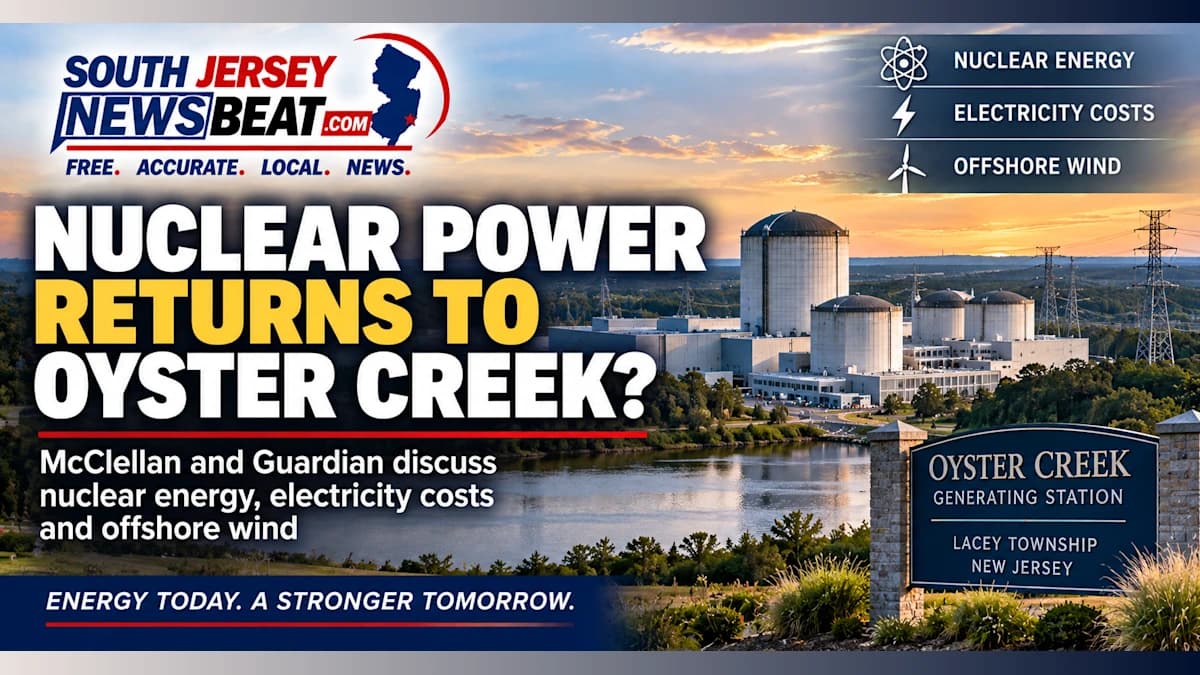
LACEY TOWNSHIP, N.J. — Nuclear power could return to the former Oyster Creek generating station in Ocean County under a proposal to build four small modular reactors, potentially producing more than twice the electricity generated by the original plant.
The proposal comes as New Jersey lawmakers debate how to increase electricity production and address rising utility bills, an issue discussed Monday, Sept. 21, by Assemblymen Antwan McClellan and Don Guardian during an interview on News Talk 1400 and 92.3 WOND.
Holtec International, the Camden-based company overseeing the decommissioning of Oyster Creek, announced July 30 that it plans to develop four SMR-300 reactors at the site.
The proposed facility would have a combined generating capacity of approximately 1,360 megawatts, compared with roughly 636 megawatts produced by the original Oyster Creek reactor.
Holtec's development materials identify 2036 as a potential commercial operation target, although the project remains dependent on regulatory approvals, financing and other conditions.
The company has not announced a final electricity sales agreement specifically for the proposed Oyster Creek reactors.
Oyster Creek Could Return to Electricity Generation
Oyster Creek began generating electricity in 1969 and permanently shut down Sept. 17, 2018, after nearly 49 years of operation.
The plant was once the nation's oldest operating commercial nuclear power station.
Holtec acquired the facility in 2019 and has been overseeing its decommissioning.
In July, the company announced that the U.S. Nuclear Regulatory Commission had approved the site's License Termination Plan, establishing the framework for completing the decommissioning process.
That approval is separate from the company's proposal to construct new reactors.
Holtec would need additional federal licensing and other approvals before building and operating a new nuclear facility.
The proposed reactors would use Holtec's SMR-300 technology, which is designed to generate electricity using smaller reactor units than conventional large nuclear plants.
Holtec estimates that construction of the proposed Oyster Creek facility could support approximately 4,000 jobs, with more than 400 permanent positions once the plant is operating.
Those figures are company projections, not confirmed employment commitments.
The company also anticipates potential economic benefits involving local suppliers, infrastructure investment and tax revenue.
Who Would Buy the Electricity?
One of the most significant unanswered questions is where the electricity produced by the proposed reactors would go.
Holtec has identified Oyster Creek as a potential location for advanced nuclear generation and has discussed the possibility of integrating artificial intelligence data centers into the site's future development.
However, the company has not publicly announced a completed power-purchase agreement specifically identifying the customers for electricity from the proposed Oyster Creek reactors.
Holtec's development materials indicate that financing and commercial arrangements remain important conditions for the project.
The former Oyster Creek property has existing connections to the regional electricity grid, making it a potential location for new generation.
If the proposed reactors were connected to the regional grid, their electricity could contribute to the broader supply serving New Jersey and other states in the PJM Interconnection region.
Alternatively, some electricity could potentially be supplied to large customers through specific commercial arrangements.
The ultimate distribution of the proposed plant's output has not been finalized publicly.
That distinction matters for South Jersey residents hoping that additional nuclear generation could eventually reduce their electric bills.
Although increasing electricity supply can help address regional shortages, the effect on individual customers would depend on the cost of the project, the price of the electricity it produces and the commercial arrangements governing its sale.
The proposed reactors would not provide immediate relief from current utility bills.
New Jersey Removes Major Barrier to Nuclear Construction
The Oyster Creek proposal follows a significant change in New Jersey's nuclear energy policy.
On April 8, Gov. Mikie Sherrill signed legislation removing a longstanding permitting obstacle that had effectively prevented the construction of new nuclear power plants in the state.
The previous law required a federally approved method of radioactive waste disposal that could not be satisfied under the existing regulatory framework.
The new legislation allows state regulators to consider nuclear projects using waste-storage methods that comply with federal safety requirements.
Sherrill also established a Nuclear Task Force to examine financing, technology, workforce development, permitting and public safety issues associated with potential new nuclear facilities.
In July, the governor signed additional legislation establishing a competitive procurement process for new nuclear generation.
The process is intended to evaluate proposed projects and include safeguards addressing potential costs to electricity customers.
The legislation creates a possible pathway for projects such as Oyster Creek, but it does not constitute approval of Holtec's proposal or guarantee that the facility will be built.
McClellan and Guardian Discuss Electricity Costs
The potential return of nuclear generation to Oyster Creek comes amid continued concern about electricity affordability throughout South Jersey.
McClellan, R-Cape May, and Guardian, R-Atlantic, discussed the state's energy policies during a Sept. 21 appearance on Off The Press with Scott Cronick, with Guardian serving as guest host.
The lawmakers questioned New Jersey's previous emphasis on offshore wind development and discussed the possibility of expanding nuclear energy production.
McClellan raised concerns about the state's approach to energy development and the need for additional electricity generation.
Guardian emphasized the financial burden that rising electricity costs place on households, particularly senior citizens and residents living on fixed incomes.
Their discussion reflected a broader debate over how New Jersey should increase electricity production while addressing affordability and environmental concerns.
The lawmakers discussed nuclear power as one potential component of the state's future energy supply.
However, the interview did not establish that either lawmaker had formally endorsed Holtec's specific four-reactor proposal or its financing arrangements.
Offshore Wind Remains Part of the Energy Debate
New Jersey's previous emphasis on offshore wind has been a recurring subject of debate among state lawmakers, particularly those representing coastal communities.
McClellan questioned the state's earlier approach to offshore wind development and discussed the need to consider additional energy sources.
Nuclear power and offshore wind have different operating characteristics.
Nuclear plants can provide continuous electricity generation, while offshore wind production varies according to wind conditions.
Both technologies can generate electricity without the combustion-related carbon emissions associated with fossil-fuel power plants during operation.
However, they also involve different construction costs, financing requirements, development timelines and environmental considerations.
The development of additional nuclear generation would not automatically eliminate the need for other electricity sources.
New Jersey's electricity costs are also influenced by factors extending beyond the state's offshore wind policies, including regional electricity demand, generation capacity, transmission expenses and wholesale power prices.
The New Jersey Department of Environmental Protection has identified growing electricity demand from data centers, particularly in other states within the PJM region, as one factor contributing to pressure on the regional electricity system.
The department also cites supply constraints and broader energy-market conditions among the factors affecting electricity prices.
Could New Nuclear Power Lower Electric Bills?
The Sherrill administration has identified additional electricity generation as part of its strategy for addressing New Jersey's energy costs.
State officials argue that expanding the electricity supply could help reduce pressure on wholesale prices as demand increases.
Nuclear generation is among the technologies being considered because it can provide large amounts of electricity continuously.
However, the financial implications of a new nuclear facility depend on its construction costs, financing, operating expenses and the price at which its electricity is sold.
Holtec has not announced a final construction cost or a completed electricity sales agreement specifically for Oyster Creek.
The proposed facility's potential 2036 commercial operation target also means that any contribution to the regional electricity supply would be years away.
Even if the project proceeds, its eventual effect on household electricity bills cannot yet be established.
The state's nuclear procurement legislation includes provisions intended to evaluate project costs and protect ratepayers as officials consider new generation proposals.
What Happens Next?
Holtec's Oyster Creek proposal remains in the development stage.
The company would need to complete the necessary federal licensing process, obtain applicable state and local approvals, secure financing and finalize commercial arrangements before construction could proceed.
The proposed 2036 operating target is conditional and should not be interpreted as a guaranteed opening date.
The project also raises questions about the future use of the former Oyster Creek property, radioactive waste storage, water resources, local employment and the potential relationship between new nuclear generation and data-center development.
For South Jersey residents, the proposal represents a potential return of electricity generation to a site that operated for nearly half a century.
Whether that electricity ultimately serves the regional grid, specific commercial customers or a combination of both remains to be determined.
As McClellan and Guardian's discussion illustrates, electricity affordability remains a central concern for New Jersey lawmakers and the residents they represent.
The proposed Oyster Creek project offers one possible source of additional generation, but its ultimate cost, customers, construction timetable and effect on electricity bills have yet to be established.

About the Author
Peter Killeen
A 25-year radio news veteran, Peter covers South Jersey for NewsTalk 1400 & 92.3 WOND radio. Known for his concise and impactful delivery, he ensures listeners and readers stay informed without unnecessary filler.