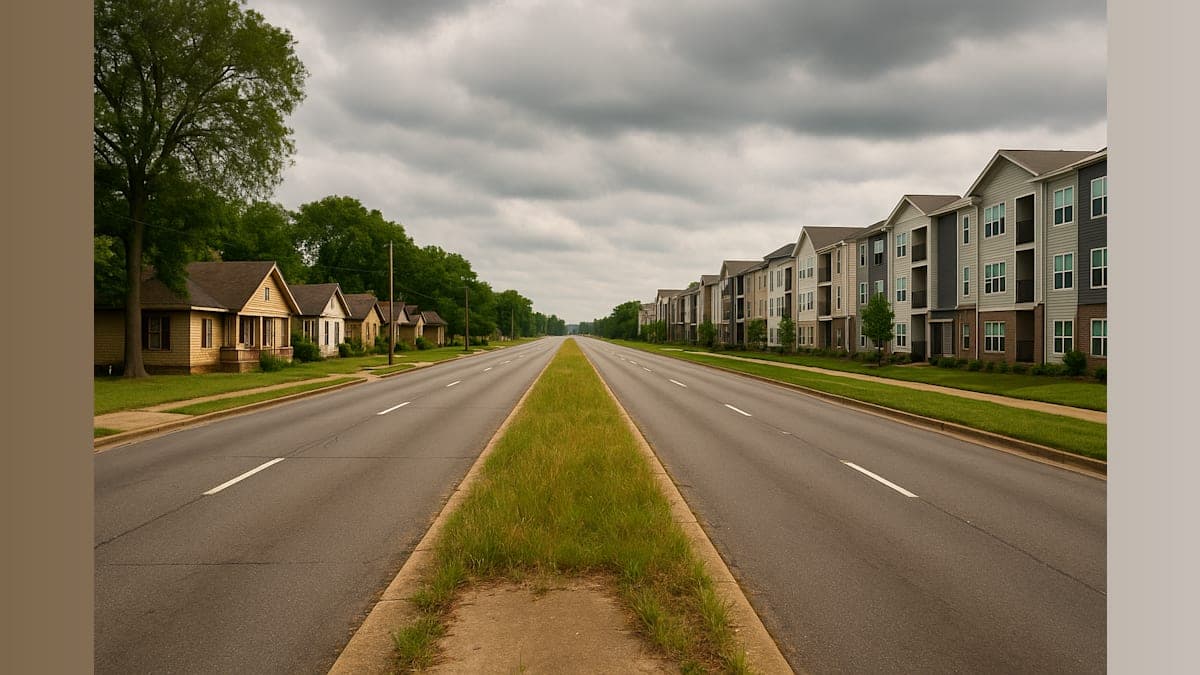
Residents of North Nashville are raising concerns that recent redistricting efforts by Tennessee lawmakers have reopened old wounds by dividing their community along the same geographic line that separated them when a highway was constructed sixty years ago.
The redistricting plan, which affects a historically Black community in North Nashville, has drawn criticism from residents who view the boundary changes as a deliberate attempt to dilute their electoral influence. The new district lines follow the path of a highway that physically divided the neighborhood in the 1960s, a period when urban renewal projects frequently disrupted African American communities across the nation.
Community members argue that the redistricting represents a contemporary form of political division that mirrors the physical fragmentation their neighborhood experienced decades earlier. The highway construction of the 1960s separated families, businesses, and social networks within North Nashville, fundamentally altering the fabric of the community. Now, residents contend that the legislative redistricting accomplishes a similar fragmentation through political means.
The concerns center on voting power and political representation. By splitting the community of Black voters along this historic dividing line, residents maintain that their collective voice in elections becomes diminished. When a cohesive community is divided into separate districts, its ability to influence electoral outcomes and advocate for shared interests can be significantly reduced.
This redistricting dispute in North Nashville reflects broader national debates about how district boundaries are drawn and whether such decisions adequately protect minority voting rights. The Voting Rights Act of 1965 established protections against redistricting practices that dilute minority voting strength, though enforcement and interpretation of these protections remain subjects of ongoing legal and political contention.
The parallel between the highway construction and the redistricting plan underscores how infrastructure decisions and political boundary-drawing can have lasting impacts on communities of color. Urban highways built during the mid-twentieth century frequently carved through Black neighborhoods, often with devastating economic and social consequences that persist today. The fact that redistricting lines now follow this same path adds symbolic weight to residents' objections.
North Nashville has a rich cultural and historical significance within the city, serving as a center of African American life, business, and political activity for generations. The community's concerns about maintaining political cohesion and representation reflect a broader struggle to preserve the influence and identity of historically Black neighborhoods amid changing demographic and political landscapes.
As redistricting continues to shape electoral maps across Tennessee and the nation, the situation in North Nashville serves as a reminder of how boundary decisions carry implications that extend far beyond simple geographic designations. For residents who have witnessed their community divided before, the current redistricting effort represents not merely a technical adjustment but a continuation of historical patterns they have long worked to overcome.