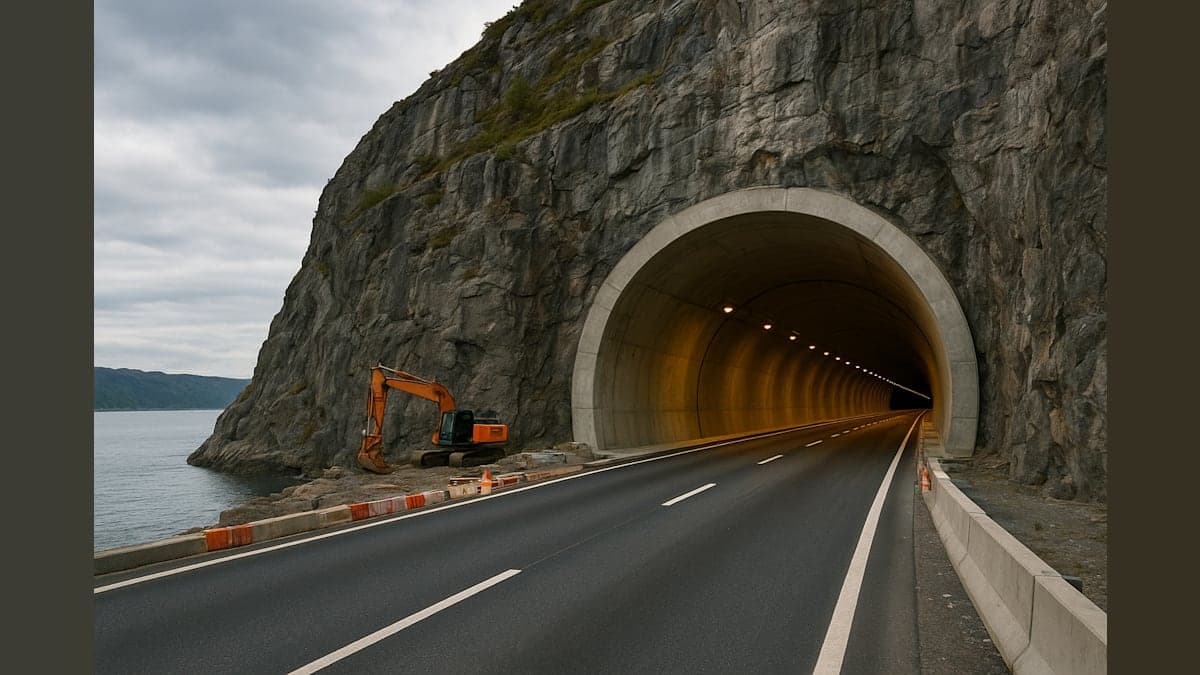
Deep beneath the North Sea, Norwegian engineers are advancing toward completion of an infrastructure project that will claim the title of the world's longest undersea road tunnel. The Rogfast—an abbreviation for Rogaland Fixed Link—represents a monumental achievement in tunnel engineering, with construction taking place 1,000 feet below the ocean's surface.
Norway brings considerable expertise to this undertaking, having already constructed the Ryfylke, the current record holder for the world's longest undersea road tunnel at nine miles in length. The Rogfast project builds upon this foundation of technical knowledge and engineering capability.
The tunnel's completion will deliver significant time savings for travelers, cutting journey times by approximately five hours. This dramatic reduction in travel duration reflects the inefficiency of current routes, which require lengthy detours or ferry connections to navigate the region's complex coastal geography.
Among the project's distinctive features is a planned 'Great Hall of Lights,' an architectural element that will distinguish the Rogfast from conventional tunnel designs. This innovative addition suggests Norwegian planners are considering the driver experience alongside purely functional transportation objectives.
The construction methodology relies on controlled blasting to carve through bedrock beneath the seabed. Each detonation brings the project incrementally closer to linking communities that have historically been separated by challenging maritime terrain. The depth of the tunnel—more than 300 meters below sea level—presents substantial engineering challenges related to water pressure, ventilation, and emergency response protocols.
Norway's investment in subsea tunnel infrastructure reflects the nation's commitment to connecting remote coastal populations and reducing dependence on weather-dependent ferry services. The country's mountainous topography and extensive coastline have made tunnel construction a strategic priority for transportation planners.
When operational, the Rogfast will serve as a critical transportation artery for the Rogaland region, facilitating commerce, tourism, and daily commuting patterns. The project demonstrates how advanced engineering can overcome geographic obstacles that have historically constrained economic development and social connectivity in coastal areas.