
As Los Angeles prepares to host the 2028 Summer Olympics, authorities in two local districts have enlisted the expertise of the Ocean Cleanup, an international nonprofit organization, to address a persistent environmental challenge: removing thousands of pounds of trash from the LA and San Gabriel rivers before the world arrives.
The initiative centers on a specialized device called the Interceptor, invented by Boyan Slat, the founder of the Ocean Cleanup who gained international recognition for his efforts to clean the Great Pacific Garbage Patch. The technology represents a strategic investment in both environmental stewardship and the region's global image as Olympic host.
One Interceptor has already demonstrated remarkable success in Ballona Creek near Marina Del Rey, where it has been operational since 2022. The barge collects approximately 28,000 pounds of trash annually from Westside communities including Venice, Beverly Hills, and Santa Monica. Since its installation, the device has removed more than 200 tons of debris from the waterway, according to officials.
The proven results prompted Seal Beach City Councilmember Joe Kalmick and state assemblymember Diane Dixon, who represents parts of Orange County, to contact the Ocean Cleanup about deploying similar technology in the San Gabriel River. The two officials established the San Gabriel River Working Group and assembled a team to conduct a feasibility study examining whether the Ballona Creek success could be replicated.
The Interceptor operates as a stationary white barge that activates during rainfall events, when stormwater washes accumulated garbage from numerous zip codes downstream toward the ocean and beaches. A diver connects a boom and net to the concrete sides of the canalized river, creating a funnel system that directs floating debris toward a central collection point. A conveyor belt mechanism then extracts the trash and deposits it into six onboard bins. When the containers reach capacity, the vessel transports the waste to harbor facilities where cranes recover it for proper processing.
Slat originally designed the Interceptor for deployment in the world's 100 most polluting rivers, predominantly located in low and middle income countries. James Patterson, head of Ocean Cleanup's operations for Los Angeles, explained that each barge requires customization for its specific environment.
"One of the challenges with the LA River and San Gabriel River is the sheer volume of trash," Patterson said, speaking to the Los Angeles Times. "We need a good extraction method that can actually pull trash out in a rapid amount of time."
The urgency behind the expansion stems from Long Beach's role as host for Olympic events including rowing and open swimming competitions. City leaders view the multi-million-dollar investment in Interceptor technology as essential to presenting the region favorably to international visitors and competitors.
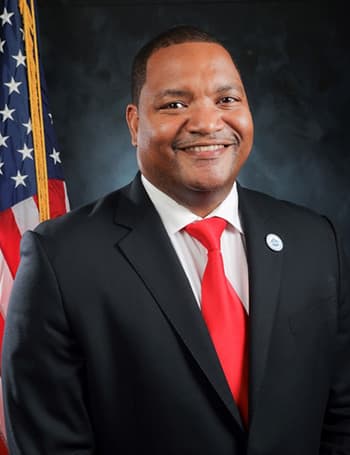
Long Beach Mayor Rex Richardson articulated the civic motivation behind the initiative in remarks regarding the decision to bring the technology to the San Gabriel River. "We want to make sure we present the very best of Los Angeles and Long Beach, and that includes a cleaner, healthier, more beautiful coastline," Richardson stated.
The project represents a convergence of environmental necessity and international prestige, as local authorities recognize that the 2028 Olympics will place unprecedented scrutiny on the region's waterways and coastal areas. The Interceptor technology offers a proven solution that addresses both immediate trash removal needs and long-term water quality improvements for communities throughout the Los Angeles basin.