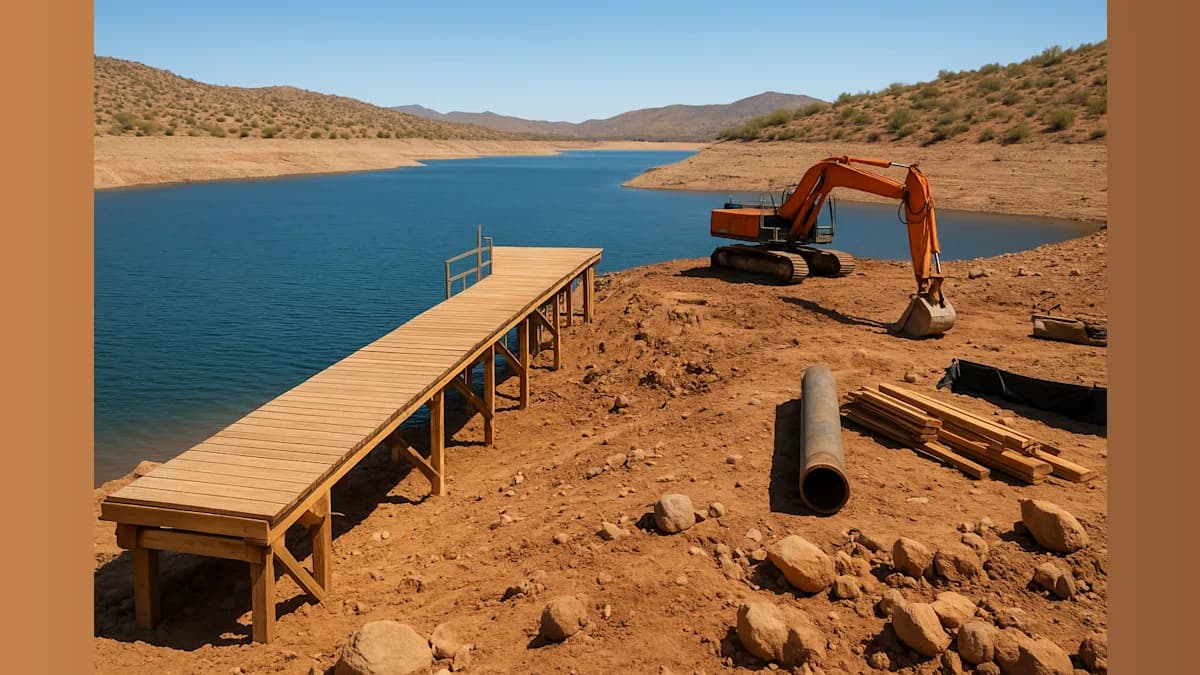
The National Park Service is undertaking a $74 million project to relocate a dock at Lake Powell, where persistent drought conditions have caused water levels to recede beyond the reach of existing infrastructure.
The substantial investment reflects the continuing operational challenges facing the reservoir as it contends with what officials describe as drought-strangled water levels. The dock relocation represents the latest in a series of infrastructure adjustments necessitated by the diminished reservoir.
Lake Powell, a major recreation destination straddling the Arizona-Utah border, has experienced significant water level decline in recent years. The shrinking reservoir has forced park officials to repeatedly modify facilities to maintain access for visitors and boaters who rely on the lake for recreational activities.
The $74 million expenditure demonstrates the financial burden that climate-driven changes are imposing on federal land management agencies. As drought conditions persist across the western United States, infrastructure designed for higher water levels has become increasingly inadequate, requiring costly adaptations to maintain basic services.
The dock relocation project is part of broader efforts by the National Park Service to adapt facilities at Lake Powell to the changing environmental conditions. The agency faces the dual challenge of preserving public access to the reservoir while managing the practical realities of a dramatically altered landscape.