
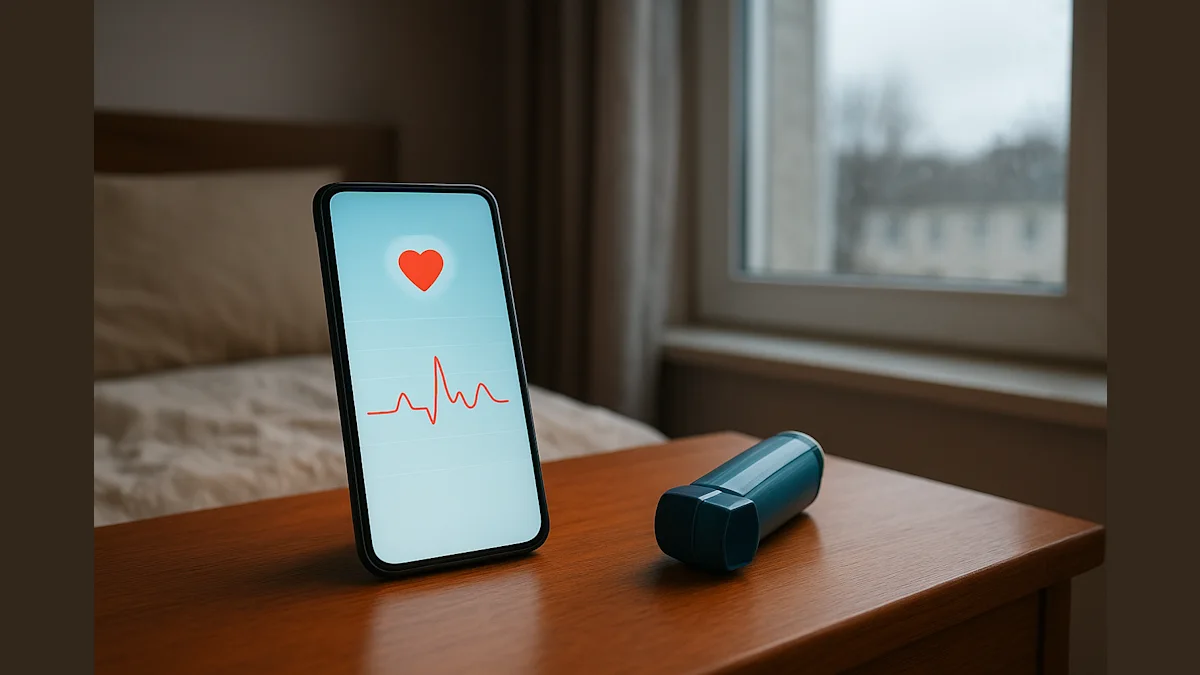
A groundbreaking mobile phone application can now detect voice changes that signal an impending asthma attack or chronic obstructive pulmonary disease flare-up up to three days before symptoms become severe, according to new research from the Netherlands.
Scientists at Maastricht University have developed technology that uses artificial intelligence to analyze subtle shifts in vocal patterns, providing patients with vital early warning of potentially life-threatening respiratory exacerbations. The innovation represents a significant advancement in managing chronic respiratory conditions that affect millions of people worldwide.
Study leader Dr. Sami Simons, a consultant respiratory physician at Maastricht University Medical Centre, explained that sudden exacerbations of asthma or COPD—when symptoms like difficulty breathing, coughing, and phlegm become suddenly worse—are not only frightening but can lead to longer-term deterioration and increase the risk of death. The research team recognized that early detection could dramatically improve patient outcomes and potentially save lives.
The study, published in the journal ERJ Open Research, enrolled 38 people with COPD and 35 people with asthma who were receiving treatment in the Netherlands. Over a twelve-week period, participants used a specially designed application to record and analyze their voices daily. Each recording session required participants to speak a long "a" sound, then either read a short piece of text or answer a question. Participants also completed daily questionnaires to track whether their symptoms were worsening.
The research revealed that at the very beginning of a flare-up, measurable deterioration occurs in vocal tone or pitch, the number of pauses during speech, and overall voice quality. These changes were detectable as early as the first day symptoms began to worsen. Significantly, the vocal measures improved as the flare-ups subsided, demonstrating a clear correlation between voice characteristics and respiratory health status.
Dr. Simons explained the physiological mechanism behind these vocal changes. As the airways constrict during an exacerbation, the air passing the vocal folds becomes limited. This weakens the normal vibration of the vocal folds, making it harder to maintain a steady voice. As a result, the voice of someone experiencing an exacerbation sounds breathier and rougher than normal.
The application, called TACTICAS (Telemonitoring for Asthma and COPD Through voICe AnalysiS), was co-designed with patients and a start-up company called Zana Technologies. While currently available only for research purposes, the development team has created a website at www.speaktoCOPD.com to explain how the voice technology works and to allow interested individuals to contribute to ongoing research with their own voice recordings.
The research team has developed machine learning algorithms capable of detecting exacerbations based on voice changes as early as three days before symptoms manifest. These algorithms are currently being tested in two new studies, one in the Netherlands and one in Brazil, to validate their effectiveness across different populations and healthcare settings.
Dr. Marc Miravitlles of the European Respiratory Society, who works at Vall d'Hebron University Hospital in Barcelona, Spain, welcomed the breakthrough. He noted that being able to spot a flare-up, or even anticipate it by a few days, could prove valuable in reducing symptoms such as breathlessness or coughing, as well as lowering the risk of lung damage, hospital admission, or death.
Dr. Miravitlles emphasized that this technology could enable better monitoring and care for patients with asthma or COPD via a mobile phone regardless of their location anywhere in the world. He characterized the innovation as a compelling example of how new technologies and artificial intelligence could genuinely improve the quality of life for patients living with chronic respiratory diseases.
The advancement arrives at a critical time, as respiratory diseases continue to represent a major global health burden. By providing patients with several days of advance warning before a serious exacerbation, the technology could allow for early intervention with medications or medical consultation, potentially preventing emergency room visits and hospitalizations while giving patients greater control over managing their chronic conditions.