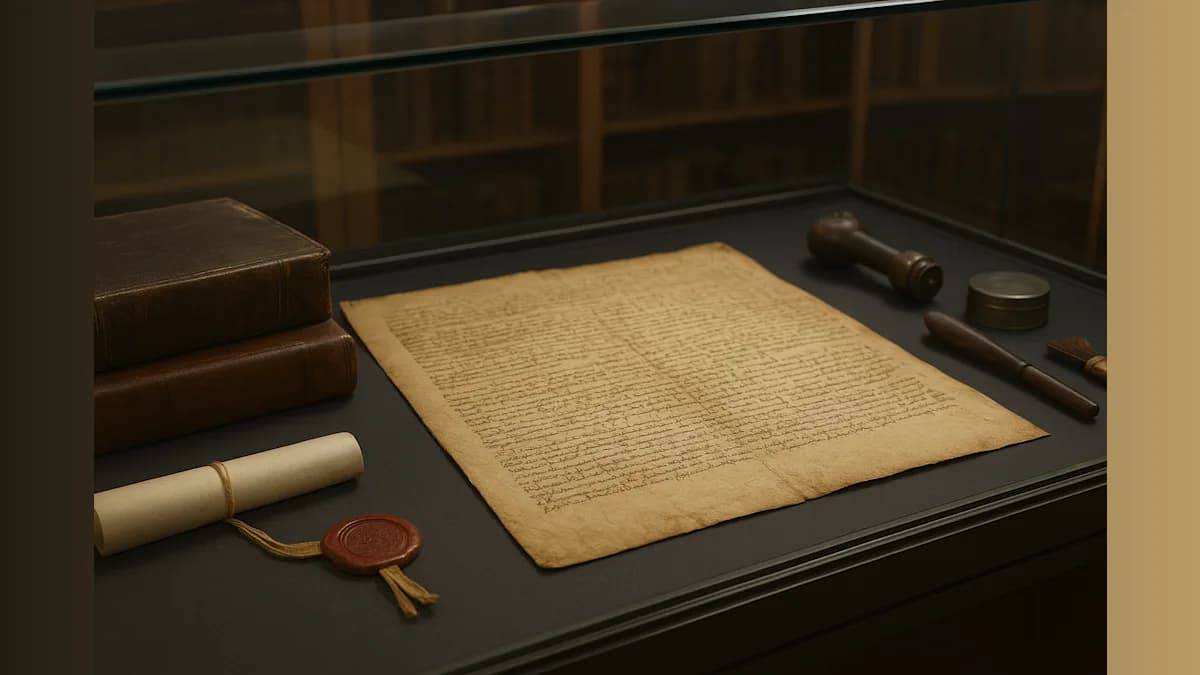
An extraordinary piece of American history has emerged from the archives of a British institution, offering a tangible connection to the founding of the United States. A volunteer researcher at The National Archives in Kew has identified a rare 1776 printing of the Declaration of Independence — one of only 11 known surviving copies and the only example documented outside American borders.
The discovery occurred as the institution prepared to launch an exhibition commemorating the 250th anniversary of American independence. Michael Scurr, a volunteer working on the America 250 – Royal Navy Admirals' and Captains' letters project, made the astonishing find while cataloguing a box of historical correspondence.
The document was concealed among letters submitted by Thomas Fitzherbert, captain of HMS Raisonable. Its presence in British archives stems from a naval engagement during the Revolutionary War: the capture of the Dalton of Newburyport, an American privateer vessel from Massachusetts, on December 24, 1776.
This particular printing originated in Exeter, New Hampshire, produced by printer Robert Luist Fowle between July 16 and July 19, 1776, for his newspaper, the New Hampshire Gazette or Exeter Morning Chronicle. These printings, known as 'Exeter Declarations,' represent some of the earliest disseminations of the founding document beyond the Continental Congress.
The discovery unfolded through meticulous archival work. While examining a letter dated January 10, 1777, Scurr noted Captain Fitzherbert's report of the Dalton's capture, which referenced documents seized from the vessel. Upon closer inspection of these records, what Fitzherbert had described as 'another document' revealed itself to be the exceptionally rare Declaration printing.
The document's journey to British archives reflects standard naval warfare practices of the era. When enemy ships were captured, international maritime law required captors to present all seized papers before a court to establish the legality of the seizure. Fitzherbert's junior officer provided sworn testimony that all papers from the Dalton had been submitted to the court.
However, historical records now reveal this testimony was incomplete. Captain Fitzherbert had forwarded the Declaration to Royal Navy officers in London rather than including it with the court submission. The document remained in naval custody before eventually transferring to The National Archives, where it resided unrecognized for 250 years until Scurr's discovery.
The rarity of this find cannot be overstated. With only 11 known surviving Exeter Declarations, each represents a critical artifact from the Revolutionary period. Prior to this discovery, all known copies resided within the United States, making this British-held example unique in its geographic location and historical provenance.
The timing of the discovery proves particularly significant, coinciding with preparations for the 250th anniversary of American independence. The document will likely feature prominently in exhibitions exploring the emergence of the United States and the complex relationship between Britain and its former colonies during the Revolutionary era.
This finding underscores the ongoing importance of archival research and the potential for significant historical discoveries within existing collections. The work of volunteers like Scurr demonstrates how careful examination of historical materials can yield unexpected treasures, enriching our understanding of pivotal moments in history and preserving connections to the founding principles of the American republic.