Conservation teams in Victoria have achieved a remarkable milestone in protecting one of Australia's most endangered orchids, transforming a species on the verge of disappearing into a viable population with hundreds of specimens ready for reintroduction to the wild.
The rosella spider orchid, native to New South Wales and Victoria, numbered just 120 individual plants in the wild when scientists first recorded populations in 2000. By 2023, that figure had climbed to approximately 600 plants—a fivefold increase that represents years of painstaking laboratory work and field cultivation.
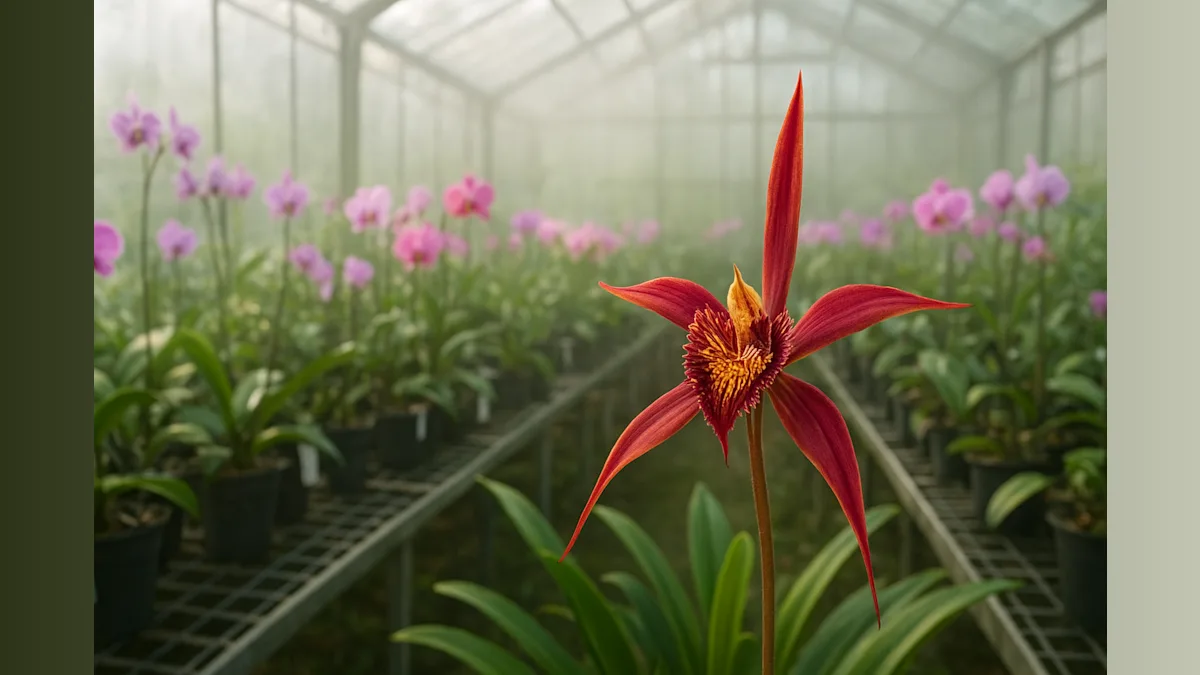
Research scientist Alex McLachlan and his colleagues at the Royal Botanic Gardens Victoria have built a nursery population exceeding 500 rosella spider orchids, surpassing the total wild count from two decades ago. This achievement provides critical insurance against extinction for a species confined to just four known locations across an area roughly the size of a Melbourne suburb.
"The orchid conservation team at the Botanic Gardens [in Victoria] have something like 500 species in propagation," McLachlan told ABC News AU. "There's about 8 threatened species, including non-orchid species, that are going back out into the wild this year."
The rosella spider orchid exemplifies what McLachlan describes as Australia's "cryptic" orchid species. These plants maintain remarkably low profiles, often appearing as nothing more than a single green leaf resembling a blade of grass when not in bloom. Some remain entirely underground until flowering conditions align.
Between August and September, the rosella spider orchid produces a single purple flower designed to attract one specific pollinator: a native bee species called Leioproctus platycephalus. This extreme specialization makes the orchid vulnerable to any disruption in bee populations or habitat conditions.
Despite recent population gains, the species remains critically vulnerable. A single severe wildfire could potentially eliminate the entire wild population given its limited geographic range.
Propagating the orchid proved extraordinarily challenging. The plants require a symbiotic relationship with a specific fungal species to germinate—a requirement that prevented traditional seed-starting methods. McLachlan and his team developed a meticulous process of introducing seeds and fungal spores together in petri dishes, manually facilitating the relationship that would occur naturally in ideal soil conditions.
"The seedlings will form, and then they're kept in our growth room back at Cranbourne," McLachlan told ABC News AU. "And they'll stay in their little plates for about 3 months until they're big enough to then go up into flasks."
The cultivation timeline extends another year before plants reach sufficient maturity for soil transplantation. After three years of laboratory horticulture, volunteers and scientists successfully transplanted young orchids to privately-managed land in July. Each plant received protective caging to shield it during establishment.
The reintroduction site remains undisclosed to protect the vulnerable population, though scientists confirmed the location supports populations of Leioproctus platycephalus, ensuring the orchids will have access to their specialized pollinators.
Australian orchids have developed what ABC News described as "cult" followings among conservation enthusiasts, providing McLachlan's team with abundant volunteer support for field transplantation efforts. The widespread public interest has proven essential as conservation teams confront the reality that numerous orchid species require similar intensive intervention to survive.
The Royal Botanic Gardens Victoria currently maintains approximately 500 orchid species in propagation programs, with eight threatened species—including several non-orchid plants—scheduled for wild reintroduction this year. Each species presents unique conservation puzzles requiring researchers to decode specific pollinator relationships, fungal dependencies, and environmental triggers before successful propagation becomes possible.
While the rosella spider orchid's recovery represents significant progress, McLachlan acknowledged the bittersweet nature of field transplantation work. The successful reintroduction of hundreds of orchids underscores both the effectiveness of intensive conservation efforts and the sobering number of species requiring such intervention to avoid extinction.