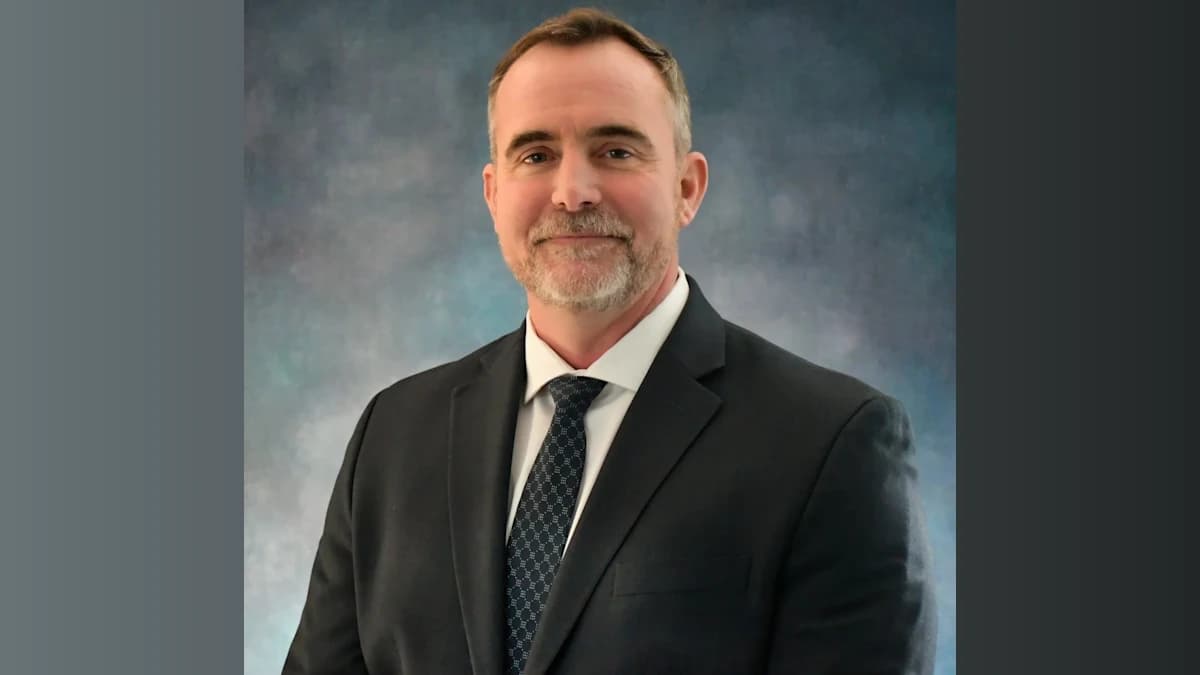
ATLANTIC CITY — Atlantic County sheriff candidate Sean Riggin says his plan for the Sheriff’s Office begins with a simple premise: County law enforcement should take work off municipal police departments so more local officers can remain on the streets.
Riggin, the Democratic challenger to Republican Sheriff Joe O’Donoghue, laid out what he called a “back to basics” approach during an appearance on Off The Press with Scott Cronick on WOND.
“The sheriff’s office should take a burden off of every local police department and put local cops back into their neighborhoods,” Riggin said.
The former Pleasantville police chief, who now serves as Atlantic City’s public safety director, said he believes the Sheriff’s Office should concentrate first on its fundamental responsibilities.
“It’s safe courts. It’s safe places to do court business,” Riggin said. “It’s reliable transportation of prisoners. It’s effective warrant and legal services.”
From there, Riggin said, the department should look for additional ways to support municipal police agencies throughout Atlantic County.
“The sheriff’s office doesn’t need to chase headlines,” Riggin said. “It just needs to be exceptionally good at being a sheriff’s office.”
Prisoner transports become campaign issue
Riggin used prisoner transportation as one example of how he believes the Sheriff’s Office could free municipal officers for patrol duties.
He said transporting a prisoner to the county jail can now consume substantially more police time than it once did.
“It takes a jail transport that used to take a half an hour, and now it’s taking two or four or six hours,” Riggin said.
The consequences, he said, are particularly significant for smaller departments.
Riggin contrasted Atlantic City, which has a larger police force, with Pleasantville.
“In Pleasantville, you’re going to have five cops on the street,” Riggin said. “You’re going to lose 20% of your police force by handling that prisoner transport.”
If an officer cannot immediately take the prisoner to jail, Riggin said, another officer may have to remain at the police station with the prisoner.
“We just don’t have the same amount of resources that we used to have in these local departments,” he said.
Cronick noted that county prisoner-transport programs have been attempted previously and asked why Riggin believes another effort would succeed.
Riggin acknowledged the history.
“Yes, it has been tried before,” Riggin said. “And it has worked and not worked, depending on the specifics of the time.”
But he argued that a previous program failing or encountering difficulties should not end the discussion.
“If there’s a thing that’s needed and we didn’t work, then try it again,” Riggin said. “If it doesn’t work that time, try it again and keep trying it until you get it right.”
“If it’s a priority, make it a priority and solve the problem,” he added.
‘My priority is local cops on the street’
Riggin said his broader philosophy would be to ask individual municipal police departments what services they need rather than dictate priorities from the county level.
“My priority is local cops on the street in local communities,” Riggin said. “What do we do to make that happen?”
He pointed to his experience in Pleasantville, where he said municipal departments worked together during a major crime spike around 2009 and 2010.
Riggin said Pleasantville did not have enough officers to address an open-air crime problem by itself, leading officials to seek assistance from surrounding departments.
Over the following years, Riggin said, that municipal task-force approach resulted in hundreds of operations and seizures of guns and drugs.
He said a countywide support model could operate under a similar philosophy.
“What is the list of priorities that each of these towns wants?” Riggin said. “How do we bring those towns together? How do we create the economy of scale, staff it up with the officers that we can share from the sheriff’s department and then get out there and do it?”
Riggin said participation would not be forced on municipalities.
“If you don’t want to be involved, you just say no,” he said. “There were towns that did say no, and we didn’t involve them.”
“It’s not easy, but it’s not complicated,” Riggin said.
Riggin questions how police communicate crime
Riggin also raised a broader philosophical issue about law enforcement communications, arguing that publicizing too much police activity can have an unintended consequence.
He said police departments understandably want residents to know they are working, but suggested a steady stream of arrests and crime reports can leave people with the impression that their communities are less safe.
“If people are constantly being bombarded with everything that the police department is doing, it’s actually making them feel less safe,” Riggin said.
“What they want is a sense of safety,” he added. “They want to be able to look out and see police cars without their lights on, going about the business of protecting the community.”
Riggin became even more pointed later in the discussion.
“We’ve gotten to a place where we’re scaring the hell out of the public in order to demonstrate that we’re working hard,” he said.
Riggin said he believes that approach may come from good intentions, but called it “completely ineffective” and “wrong headed.”
“We need to just get to the business of doing the work and making people feel safe,” he said.
Technology could free officers for other duties
Riggin also said the Sheriff’s Office should examine newer technology that could potentially reduce manpower demands.
He cited high-volume weapons-screening systems as one example, while stressing that he was not endorsing a particular vendor or product.
“If you can use technology in that kind of way, and again, free up additional personnel, find ways to create efficiencies, I think that’s the kind of thing that we should be looking for and talking about all of the time,” Riggin said.
The objective, he said, should be determining “how can technology put police officers into the street, into the courtroom, into the jails.”
Riggin stopped short of proposing a specific purchase, saying it would be premature before taking office.
Riggin will face O’Donoghue in the Nov. 3 general election.
Cronick said O’Donoghue is expected to appear on a future edition of Off The Press, providing the incumbent sheriff an opportunity to discuss his record and respond to issues raised by his challenger.

About the Author
Peter Killeen
A 25-year radio news veteran, Peter covers South Jersey for NewsTalk 1400 & 92.3 WOND radio. Known for his concise and impactful delivery, he ensures listeners and readers stay informed without unnecessary filler.