A groundbreaking architectural project in Rotterdam seeks to accelerate the societal transformation necessary for a sustainable future. Plans unveiled Tuesday reveal a striking new landmark designed to shift public perception from despair to hope through the power of design and storytelling.
The Shift Embassy will rise along the river Maas as part of Rotterdam's emerging Waterkant neighbourhood, a development planned to include nearly 4,000 residences, educational facilities, and creative workspaces. The building represents an unconventional approach to climate communication: rather than lecturing audiences about environmental crises, it will immerse them in proven solutions already functioning in various parts of the world.
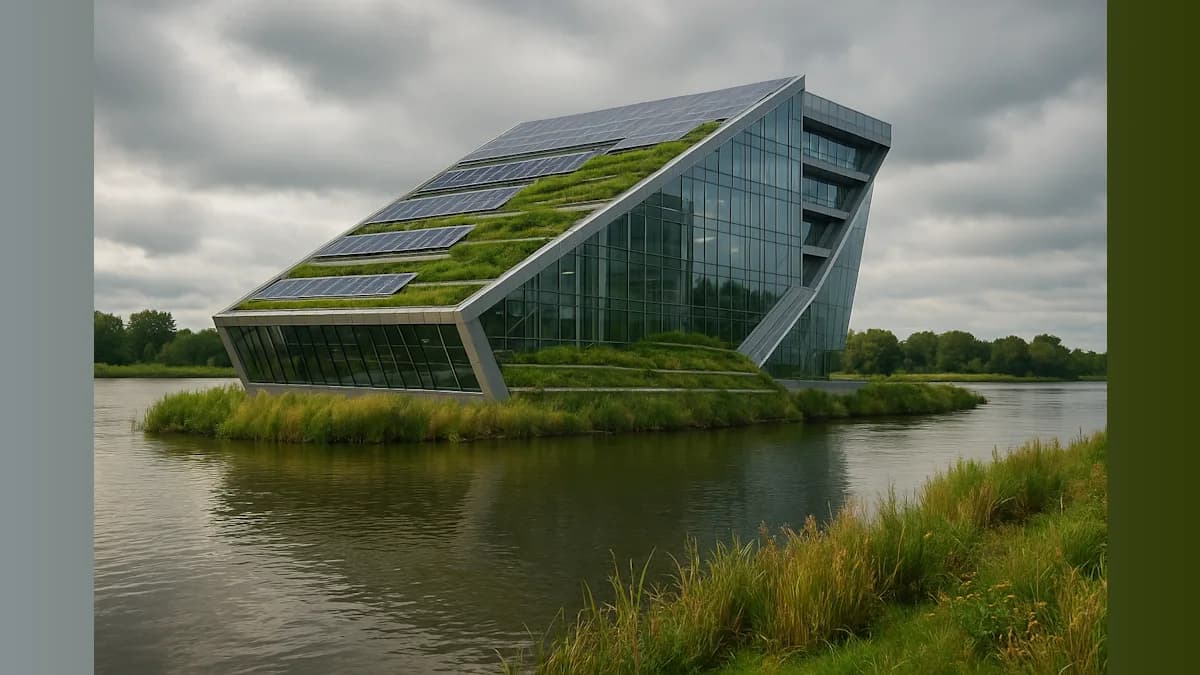
Architectural firm MVRDV won an international competition to design the structure with their proposal dubbed Rotterdam Rocks. The winning design features a rocky, vegetation-covered exterior housing a massive exhibition hall dedicated to showcasing successful initiatives in nature restoration, renewable energy, sustainable transportation, and circular economy practices. Additional spaces will accommodate educational programming, community gatherings, and hospitality services.
The project originated with Shift, a social enterprise focused on scaling solutions to global challenges. Founder Don Ritzen explained the underlying philosophy to Positive News: the building aims to counter widespread pessimism about humanity's trajectory by demonstrating tangible pathways forward.
"Most people, when they think about the future, they think that it's all going to shit," Ritzen told Positive News. "In order to bring more systemic change, we need to create places where people get inspired and get hope again, where they feel empowered to take action, and where they can meet like-minded people."
The embassy will employ immersive art installations and compelling narratives to present alternative futures already taking shape in select communities worldwide. Rather than prescribing specific behaviors, the space will invite visitors to envision their participation in these emerging systems.
"We don't believe in telling people what to do," Ritzen told Positive News. "We believe in showing them what is possible, and that it's something that they can participate in. It's going to be fun."
The judging panel praised MVRDV's approach for departing from conventional sustainability messaging. Their statement highlighted how the design combines discovery and surprise into a fresh architectural vocabulary, predicting the building will prompt visitors to reconsider daily habits and embrace new sustainable living practices.
Winy Maas, a founding partner of MVRDV, emphasized the structure's dual purpose as both showcase and laboratory for low-carbon construction techniques. The building itself will demonstrate cutting-edge methods for reducing emissions while creating spaces that serve both human communities and natural ecosystems.
"We need to reduce carbon dioxide emissions and to create inclusive spaces for people, trees, plants, for water, air, and for animal habitats, balancing the need for new built space with new landscapes to compensate our ecological impact," Maas said. "Our design integrates these human and natural spaces."
The Waterkant neighbourhood where Shift Embassy will stand is being developed as a nature-positive district, incorporating a new tidal park that the building will overlook. This context positions the embassy within a broader urban experiment in sustainable development.
Following Tuesday's announcement, the Rotterdam Rocks proposal will proceed to public consultation before developers seek construction permits. The timeline for breaking ground has not been disclosed, but the project represents a significant commitment to reimagining how architecture can catalyze social change and environmental progress.