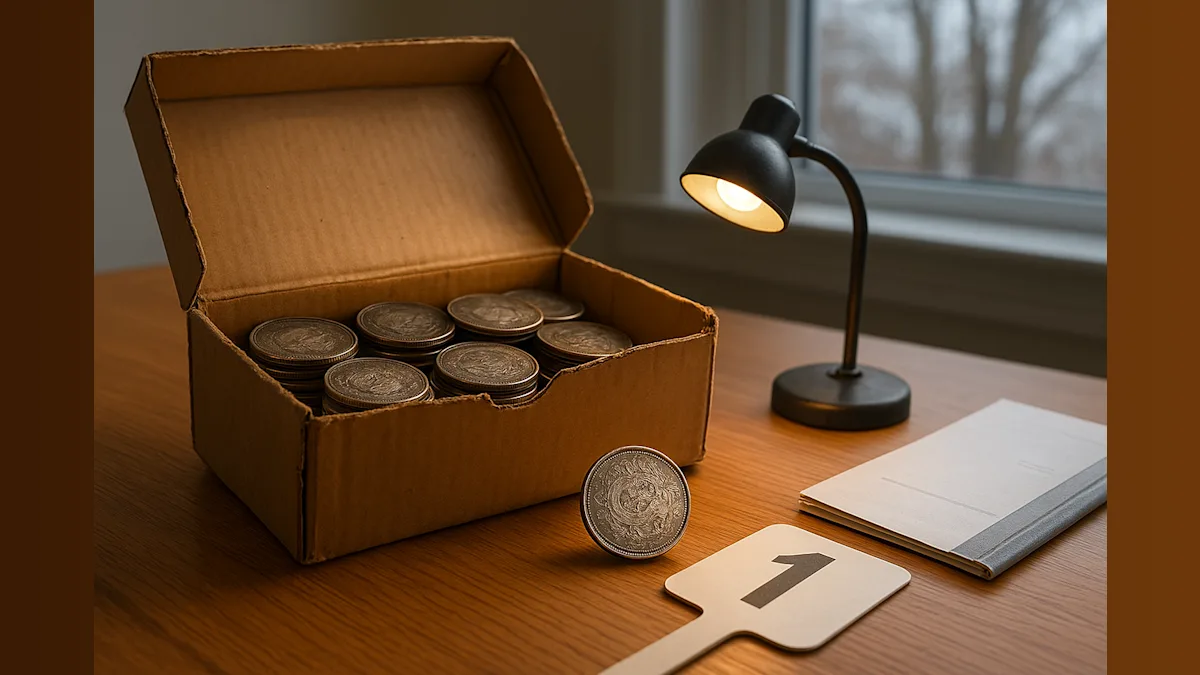
A modest plastic bag of Chinese coins, tucked inside a shoebox and regarded by its owner as worthless, has produced one of the more surprising auction results of the season. The 12-coin lot, consigned to Hansons Auctioneers in Kent, England, carried a presale estimate of only $250. It ultimately sold for $36,000 (£28k) after two Chinese bidders drove the price upward, according to Good News Network.
Justin Matthews, director of Hansons Auctioneers, said the coins had been mixed in with items the owner characterized as worthless Chinese "bits." In comments to Good News Network, Matthews explained that the firm suspected something special was hidden in the group once the catalogue went online and began drawing significant interest. "We had a suspicion there was something special lurking in them, when the catalogue went online and started to attract significant interest," Matthews told Good News Network.
The object of that attention was a 1914 silver dollar depicting Yuan Shikai, the first President of the Republic of China, in an ornate plumed military hat. Collectors refer to the piece as the "Plumed Hat" dollar, and it ranks among the scarcest coins struck in the opening years of the Chinese Republic. The design came from Luigi Giorgi, an Italian engraver who served as chief engraver at the Tientsin Mint. Only 20,000 of the standard issue were recorded, a low figure that helps explain the demand. On the coin's reverse, Chinese characters encircle the denomination inside a wreath, with "ONE DOLLAR" inscribed below.
Charles Hanson, the auctioneer on the rostrum when the lot closed, described the outcome as the "ultimate sleeper" and said the result should encourage others to bring in items they might otherwise discard. "It was an incredible result, and also a reminder for anyone with what they think of as junk to consign it to auction," Hanson told Good News Network. The sale concluded to applause from those in attendance.
The portrait on the coin belongs to a figure whose career shaped modern China. Yuan Shikai, who lived from 1859 to 1916, was a military commander who gained influence during the last years of the Qing dynasty. He played a part in ending imperial rule and then served as provisional president of the newly founded Republic of China in 1912, later taking the office of formal president. His legacy remains debated among historians, which adds to the interest his likeness carries for numismatists.
For local collectors and families sorting through inherited belongings, the sale offers a practical lesson: ordinary storage does not diminish the value of a rare piece, and expert appraisal can uncover significance that an owner never suspected. The coins spent years in a shoebox among assorted items, yet the presence of a single scarce issue transformed the entire lot's worth.