An innovative agricultural program in Sierra Leone is providing amputees with practical skills, economic independence, and renewed dignity through sustainable farming education. The initiative, known as Farming on Crutches, has reached a significant milestone by serving its 100th participant and now faces a growing waitlist of individuals seeking to join.
Pastor-turned-farmer Mambud Samai established the program in 2018 after witnessing the ongoing struggles of amputees in his country. Sierra Leone's devastating 11-year civil war left an estimated 30,000 people with amputations, many of whom continue to face severe economic hardship and social marginalization decades after the conflict ended.
"Historically, this community has been left with very little support from the state, few work opportunities, and very little dignity," Samai told Positive News. The lack of reparations and employment options has forced many amputees into street begging as their only means of survival.
Samai's commitment to supporting amputees began after he spent two years in a refugee camp in Guinea during the war. Upon his return, he first established the Single-Leg Amputee Sports Association in 2001, using football to build community connections. The sports program expanded beyond the capital city of Freetown to include four other provinces, creating leagues for both men and women.
"We still run the association today, using the power of the beautiful game to help communities find hope," Samai told Positive News.
However, Samai recognized that sports alone could not address the economic challenges facing the amputee community. In 2018, he traveled to the Asian Rural Institute in Japan to complete specialized training in community development and organic farming practices. Armed with new knowledge, he immediately launched Farming on Crutches upon his return to Sierra Leone.
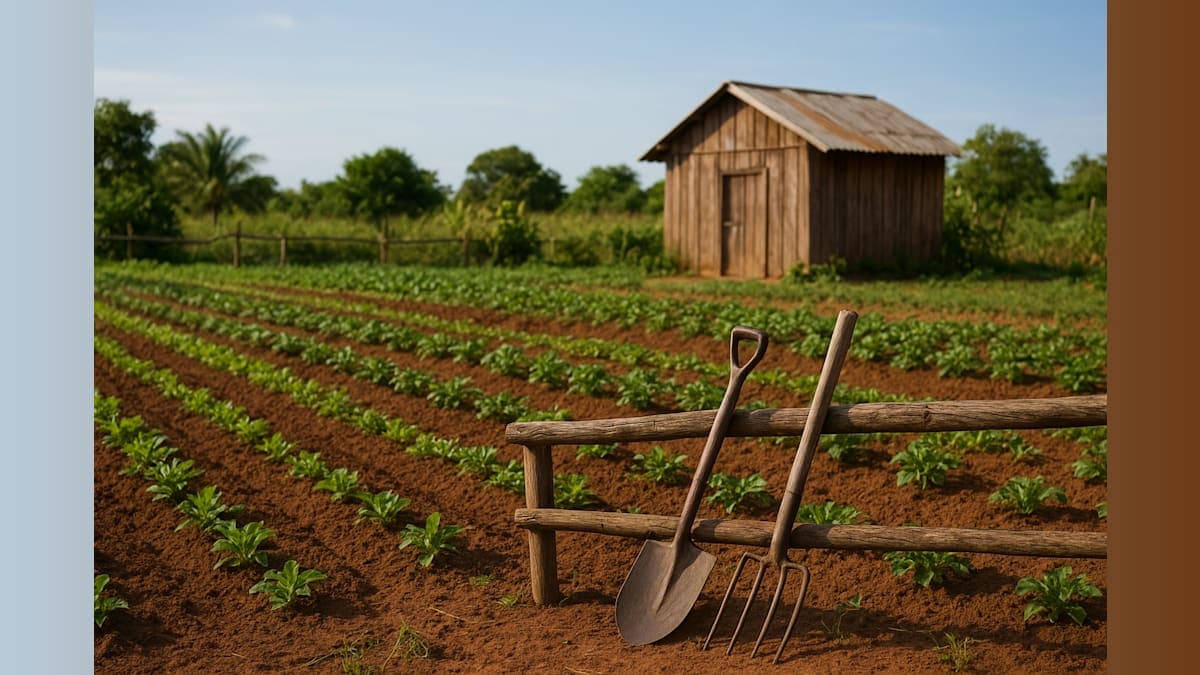
The program operates from a small farm that functions as an educational center. Participants from across the country live and work on-site during their training period, learning sustainable agricultural techniques they can implement in their home villages. The goal is for graduates to establish their own farming operations and become self-sufficient.
Mustapha Bockarie, who participated in the inaugural training group, exemplifies the program's transformative impact. After losing an arm to a stray bullet following the civil war, he faced social isolation and economic hardship.
"My friends said I was a burden to them," Bockarie told Positive News, "but this training makes people who see us as beggars come closer to us. We made a name for ourselves."
Following his training, Bockarie returned to his village and established a community farm with neighbors. The operation now raises goats and produces enough food for both consumption and sale. He has also developed a beekeeping enterprise and teaches sustainable farming methods to others, generating steady income.
The program encourages innovation and problem-solving among participants. A 2024 cohort designed and constructed a more accessible wheelbarrow using bicycle wheels, timber, and bamboo grown on the farm. This adaptation addresses the specific mobility challenges faced by amputee farmers.
Zainab Makieu, who worked on the wheelbarrow project, emphasized the empowering nature of the program. "The bamboo wheelbarrow is very important for us who are physically challenged. Because I wouldn't say we are disabled: we all know disability is not inability. I see my other disabled brothers and sisters and feel comfortable when I'm here," she told Positive News.
The success of Farming on Crutches has generated significant demand. The program currently maintains a waitlist of prospective participants and plans to expand operations to other West African countries in the coming years. Future curriculum additions will include advanced beekeeping instruction and value-added processing techniques such as drying, fermenting, storage, and packaging of agricultural products.
"I've been so delighted, and deeply rewarded, to see my own passion for sustainable farming be matched by the enthusiasm of our participants," Samai told Positive News. "At the very beginning they may know next to nothing about agriculture, but they complete our course and return to their local communities as change makers."
The initiative demonstrates how targeted skills training can create pathways to economic independence for marginalized populations while promoting sustainable agricultural practices that benefit entire communities.