A contentious debate over historical memory has erupted in Philadelphia as activists push to restore an exhibit about enslaved people who served in George Washington's presidential household, setting the stage for a broader conversation about how America commemorates its founding as the nation approaches its 250th anniversary.
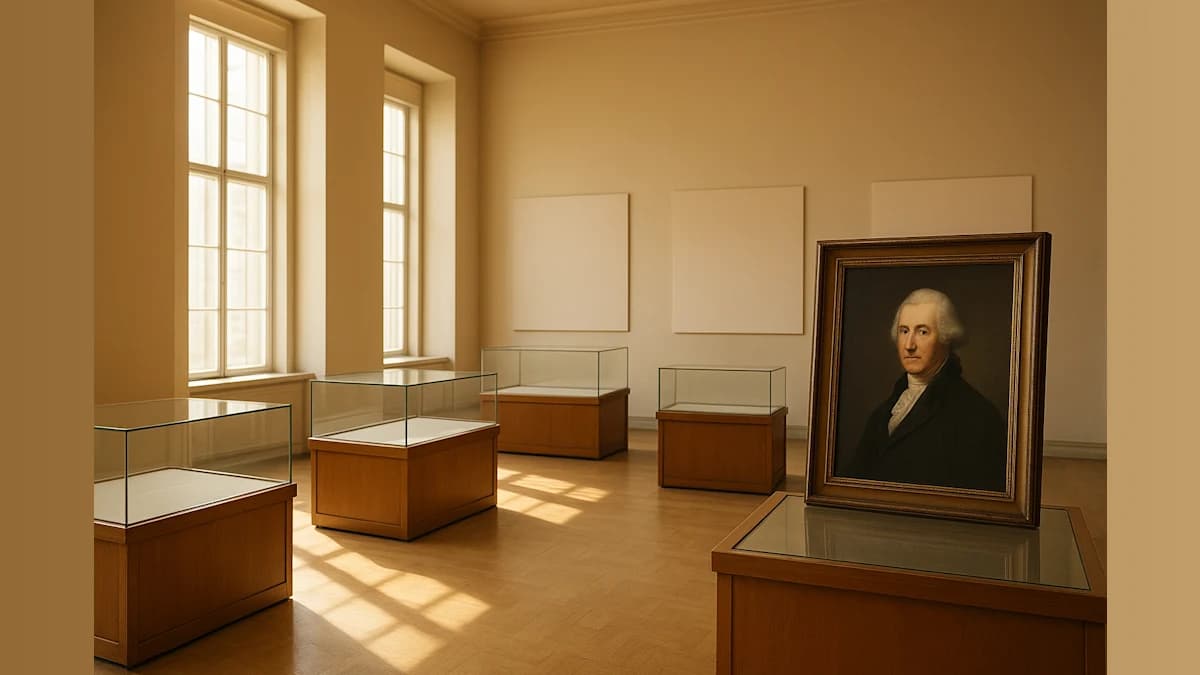
The controversy centers on an exhibit that documented the lives of enslaved individuals who lived and worked in the first president's residence during Philadelphia's tenure as the nation's capital from 1790 to 1800. The exhibit's removal or alteration has galvanized community activists who view its restoration as essential to presenting an honest accounting of American history.
The timing of this dispute carries particular significance as Philadelphia prepares to serve as a focal point for the semiquincentennial celebration in 2026. The city, which hosted the Continental Congress and witnessed the signing of the Declaration of Independence, occupies a central role in America's founding narrative. However, activists argue that this narrative remains incomplete without acknowledging the enslaved people whose labor supported the nation's early leaders.
George Washington brought enslaved people from his Mount Vernon estate to serve in the President's House in Philadelphia, navigating Pennsylvania's gradual abolition law through a practice of rotating his enslaved workers back to Virginia before they could claim freedom under state law. This historical reality stands in stark contrast to the ideals of liberty and equality enshrined in the founding documents created in the same city.
The fight over the exhibit reflects broader national tensions about how museums, historic sites, and public institutions should address the contradiction between America's founding principles and the institution of slavery that persisted for nearly a century after independence. As the 250th anniversary approaches, these questions have taken on renewed urgency in Philadelphia and other cities with deep connections to the Revolutionary era.
For activists leading the restoration effort, the exhibit represents more than historical documentation. It serves as a necessary corrective to celebratory narratives that omit the experiences of enslaved people who were present at the nation's founding but excluded from its promises of freedom. The outcome of this dispute may influence how Philadelphia and the nation choose to tell their stories during the semiquincentennial commemoration.
As America prepares to mark 250 years since the Declaration of Independence, the controversy in Philadelphia underscores ongoing debates about historical memory, public commemoration, and the responsibility to present complete and accurate accounts of the past, including its most troubling chapters.