Homeowners face an expanding array of smart devices that promise convenience and efficiency, yet the gap between marketing claims and real-world value remains wide. While some connected gadgets deliver genuine savings through reduced energy consumption or prevented damage, others simply add a phone app to a standard appliance and charge hundreds of dollars extra for the privilege.
Technology analysts at Yahoo, Consumer Reports, and CNET have evaluated the smart home landscape to separate worthwhile investments from expensive disappointments. Their assessments reveal clear patterns about which categories justify the cost and which ones homeowners can safely ignore.
Devices That Earn Their Keep
Robot vacuums equipped with mopping capabilities represent one of the strongest investments in the smart home category. Chris McGraw evaluated these dual-function machines for Yahoo Tech and highlighted their ability to handle the least pleasant floor-cleaning tasks. He pointed to the Shark Matrix Plus Robot Vacuum and Mop as an example of equipment that manages both vacuuming and mopping without human intervention.
Smart plugs offer another high-value option at the opposite end of the price spectrum. These inexpensive devices, which start at approximately twenty dollars, address the persistent problem of standby power consumption. Electronics including televisions, gaming consoles, coffee makers, and chargers continue drawing electricity even when not actively in use. Smart plugs allow owners to schedule automatic shutdowns overnight or remotely disable devices through a smartphone application, cutting waste without requiring any change in daily habits.
Water leak sensors provide protection that can prevent catastrophic damage. Tyler Lacoma analyzed these devices for CNET and emphasized their importance even for prepared homeowners. Freezing weather can cause pipes to burst unexpectedly, while slow leaks often go undetected until mold develops or structural damage occurs. These compact sensors connect to smartphone applications and send immediate alerts when moisture appears, enabling homeowners to shut down water lines or adjust indoor temperatures before minor problems escalate into expensive repairs.
Irrigation Controllers Deliver Measurable Savings
Properties with in-ground sprinkler systems can benefit significantly from smart controllers. Daniel Wroclawski examined these devices for Consumer Reports and found that models typically range from approximately $80 to $300. These controllers replace existing programmable timers and manage water valve operation based on current weather conditions rather than fixed schedules.
The technology functions similarly to smart thermostats that automatically adjust indoor climate. By responding to rainfall, temperature, and humidity data, smart sprinkler controllers maintain lawn health while reducing water consumption. Homeowners in drought-prone regions see particularly strong returns through lower utility bills, though the devices benefit any property with automated irrigation.
Expensive Upgrades That Fail to Justify Their Cost
Smart blinds carry substantial upfront expenses while delivering minimal energy savings. The payback period stretches across many years, and some models demand professional installation or specialized wiring that drives total costs even higher. The modest reduction in heating and cooling expenses rarely compensates for the initial investment.
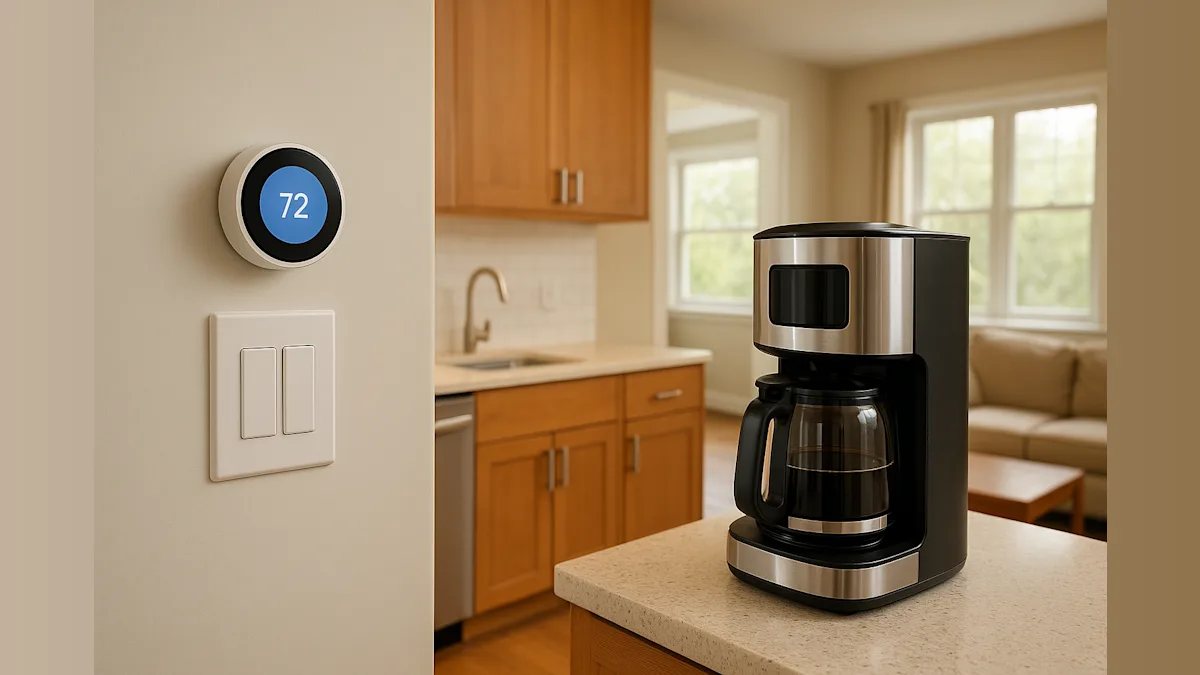
Connected kitchen gadgets present similar problems. Smart coffee makers, toasters, and blenders command premium prices compared to conventional versions while addressing trivial inconveniences. The smartphone applications and software support that justify the higher cost can vanish as manufacturers shift focus to newer products, leaving owners with expensive ordinary appliances that no longer connect to anything.
Large smart appliances represent the riskiest category. Refrigerators, ovens, washing machines, and dryers with connected features can cost hundreds or thousands of dollars more than standard models. The additional capabilities rarely prove essential, and the longevity mismatch between hardware and software creates a fundamental problem. Appliances typically function for ten years or longer, but the software platforms supporting smart features often lose manufacturer support well before the physical equipment fails. Homeowners end up paying a substantial premium for features that stop working years before the appliance itself needs replacement.
The Pattern Behind Smart Home Value
The analysis reveals a consistent principle: compact, focused devices that address specific problems tend to justify their cost through measurable savings. Smart plugs reduce electricity waste. Leak sensors prevent water damage. Irrigation controllers lower utility bills. These targeted solutions pay for themselves through avoided expenses or prevented disasters.
Large connected appliances follow the opposite pattern. They add complexity and cost without delivering proportional benefits, and their software becomes obsolete long before the hardware wears out. Homeowners considering smart home investments should focus on small devices that solve clear problems rather than expensive appliances that promise vague improvements in convenience.

About the Author
Ava Hart
Ava Hart is a pop culture junkie and loves to share what's happening in Hollywood and what trends are taking the world by storm.