Class of 2030 arrives as Stockton works to stabilize enrollment amid an increasingly competitive higher-education market
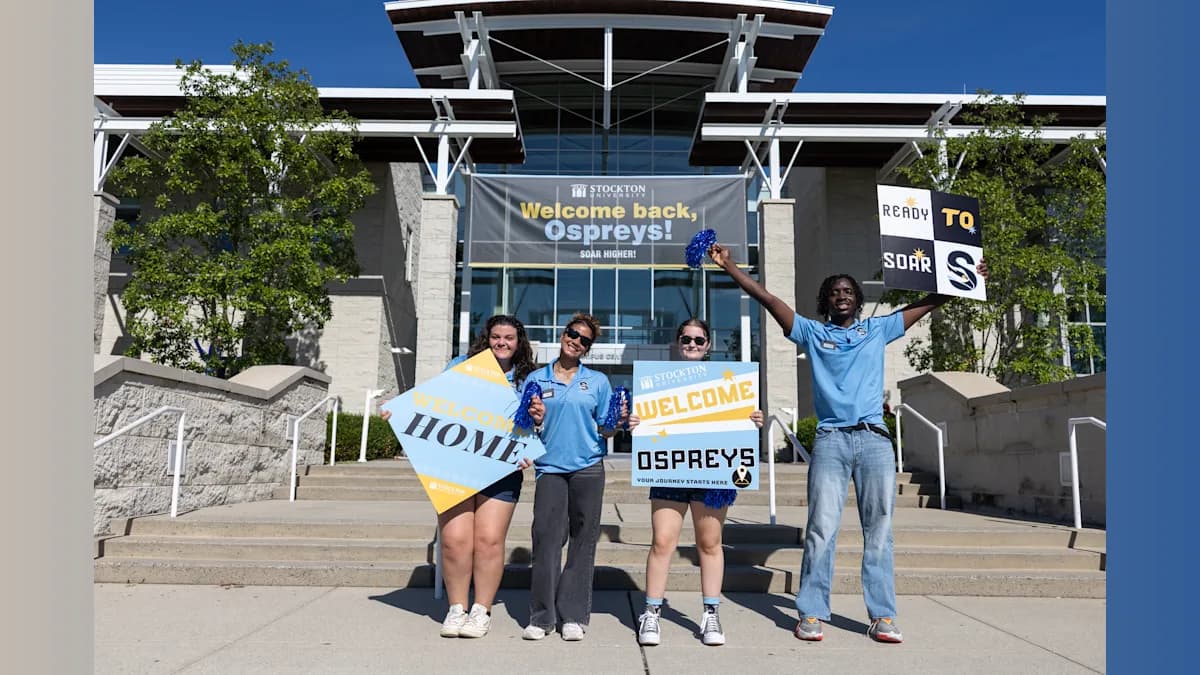
GALLOWAY TOWNSHIP — More than 1,300 first-year students began classes at Stockton University this week, bringing a new class to the South Jersey university as it continues working to stabilize enrollment following several years of declines.
Stockton announced Wednesday that its Class of 2030 includes students from 12 states and 13 countries, with more than half of its first-year undergraduates becoming the first members of their families to attend college.
But the size of the incoming class also comes against a larger enrollment challenge facing Stockton.
The university enrolled 1,487 new first-time students in fall 2025, according to Stockton records. This year's announcement of more than 1,300 first-year students indicates a smaller incoming class, although Stockton has not yet released a precise fall 2026 enrollment count.
Stockton had 1,562 new first-time students in fall 2022 and 1,530 in fall 2023, according to the university's Strategic Enrollment Management Plan.
The university's overall enrollment has also declined significantly from its peak.
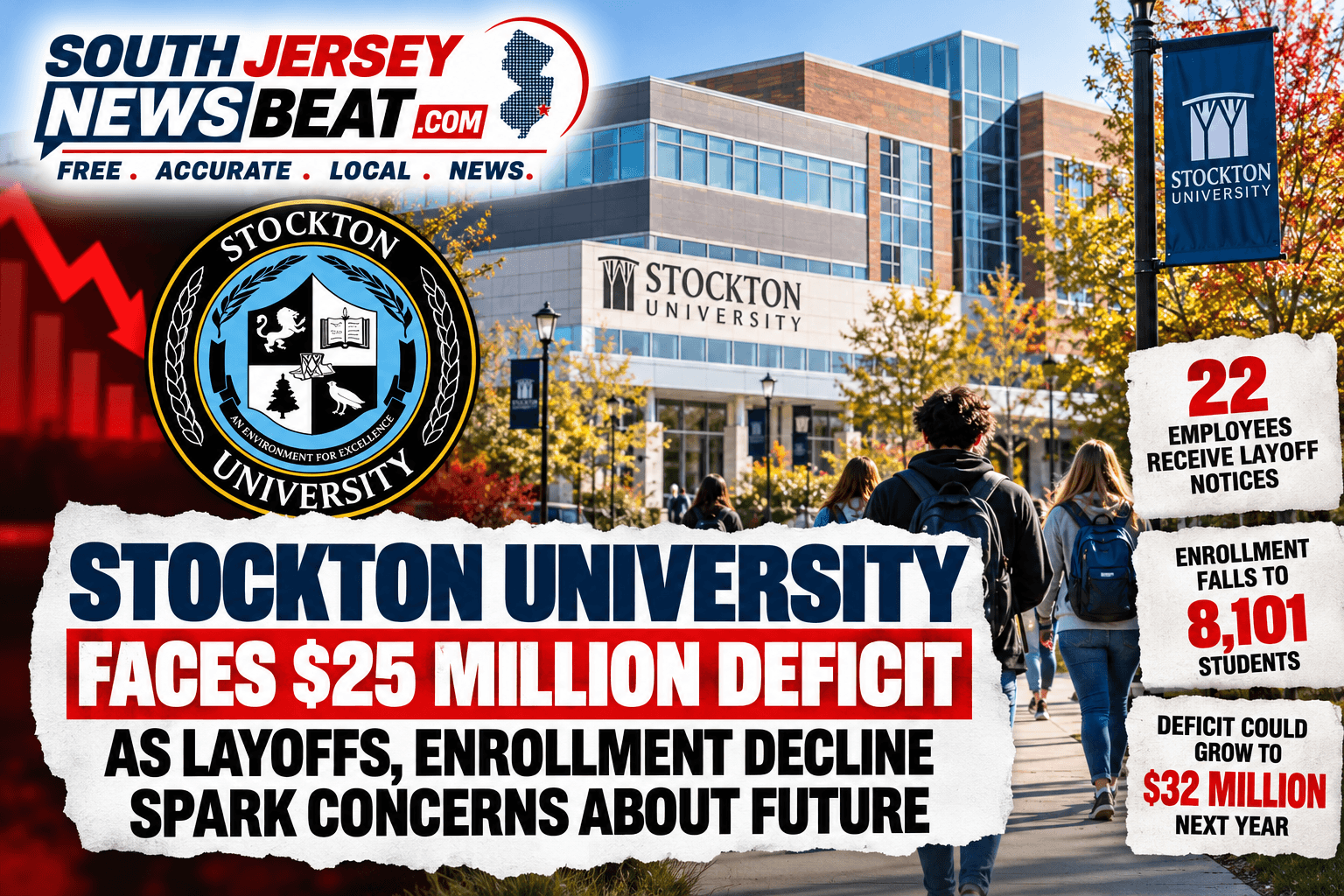
Stockton reached a record 9,893 students in fall 2020, before dropping to 9,352 in 2021, 9,079 in 2022 and 8,788 in 2023.
Total enrollment stood at 8,631 in fall 2024 and 8,626 in fall 2025, meaning overall enrollment was essentially flat last year.
Stockton has acknowledged enrollment challenge
Stockton President Joe Bertolino has publicly identified enrollment stabilization as a university priority.
During his 2024 State of the University address, Bertolino said first-year enrollment had fallen 5% that fall and warned of the approaching national higher-education “enrollment cliff,” driven in part by demographic changes and competition for a shrinking pool of traditional college-age students.
“To stabilize and right-size, we must regain our market share,” Bertolino said at the time, adding that Stockton had put an interim plan in place and was taking steps to improve its position.
There was improvement in 2025.
Stockton enrolled 1,487 new first-time students last fall, a 2.3% increase from 2024, Bertolino said. But declines in transfer and graduate enrollment pushed total new-student enrollment down 1.8%, while overall university enrollment remained essentially unchanged.
Bertolino said last year that Stockton would develop new enrollment and retention strategies as it competes in a changing higher-education market.
The enrollment issue has also surfaced in discussions about Stockton's finances.
State Sen. Vince Polistina recently told Scott Cronick on WOND's Off The Press that he had met with Bertolino and other Stockton officials about the university's financial situation.
Polistina characterized Stockton's problems as primarily short-term but pointed to lower enrollment, the university's investments in Atlantic City and a $2.3 million reduction in state funding this year as contributing factors.
The discussion came as questions have been raised about whether enrollment pressures represent a temporary financial challenge or a longer-term structural issue for the university.
Nearly $10.2 million in aid for new class
Stockton's announcement Wednesday also illustrates how aggressively the university is working to attract and support students.
Nearly 91% of full-time, first-year students are receiving institutional grants or scholarships totaling almost $10.2 million, according to the university.
Nearly 52% of registered first-year undergraduates are first-generation college students.
The Class of 2030 includes students from states ranging from Maine to Texas and as far west as Nevada and Wyoming. Students also arrived from 13 countries.
Stockton said 147 members of the incoming class are recruited athletes.
The three most popular majors among new students are Health Science, Psychology and Business Administration.
The university also welcomed more than 620 transfer students this semester.
A key number still to come
The 1,300-plus freshman figure does not by itself show whether Stockton's overall enrollment will decline this fall.
Total enrollment also depends on returning students, transfers, graduate students, retention and the number of students who graduated or otherwise left the university.
Stockton has not yet published its final fall 2026 total enrollment figure.
That number will provide a clearer indication of whether the university has begun reversing its longer-term enrollment decline.
For now, the Class of 2030 arrives at a pivotal time for the university: Stockton is welcoming students from across the country and around the world while confronting the same demographic and financial pressures reshaping colleges throughout New Jersey and the nation.

About the Author
Peter Killeen
A 25-year radio news veteran, Peter covers South Jersey for NewsTalk 1400 & 92.3 WOND radio. Known for his concise and impactful delivery, he ensures listeners and readers stay informed without unnecessary filler.