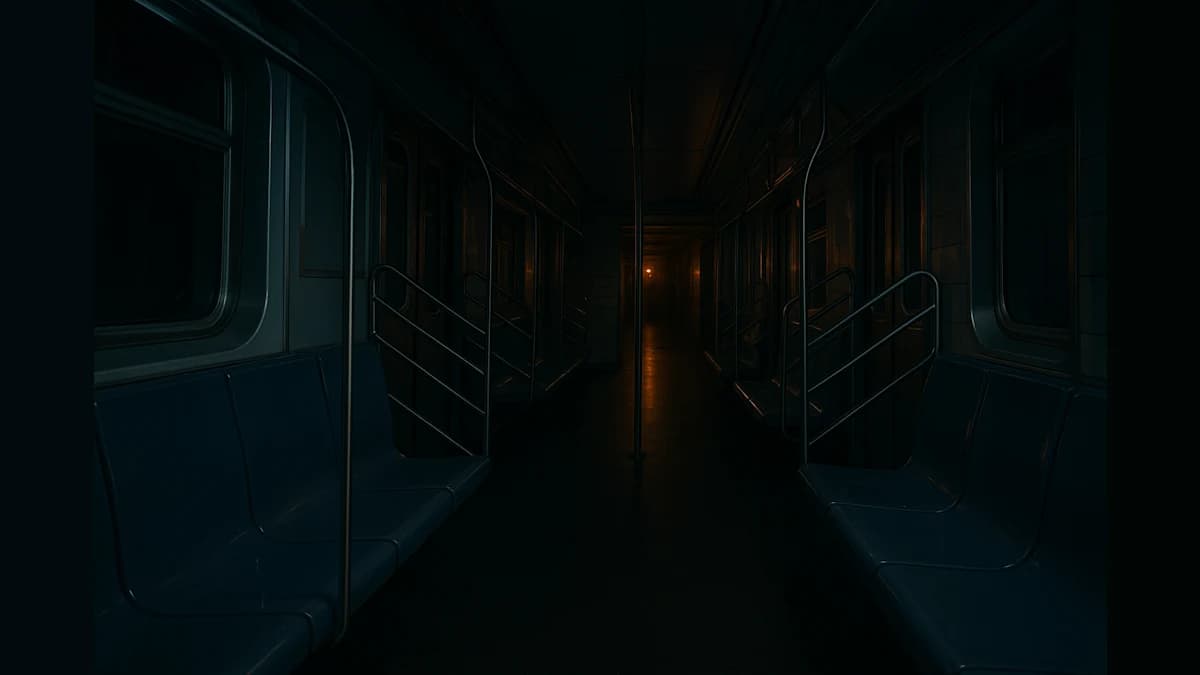
When the lights went dark in November 1965, Lynn Lowin found herself trapped beneath the East River with hundreds of strangers. What began as an inconvenience—she worried about missing her orthodontist appointment—became a six-hour ordeal that would shape her understanding of human kindness for the rest of her life.
The massive power failure that struck the Northeast in 1965 affected 30 million people across the region, plunging communities from the United States into Canada into darkness. In New York City alone, more than 800,000 subway riders became stranded underground when the electrical grid collapsed.
Now in her senior years, Lowin recently reached out to Good News Network to share her experience from 61 years ago. Her account reveals not chaos or panic, but an unexpected display of community spirit in the most unlikely of circumstances.
"Traveling by subway from Brooklyn to Manhattan, the train suddenly stopped and all the lights went out," Lowin told Good News Network. "I remember thinking I was going to be late for my orthodontist appointment if they didn't fix it quickly."
She had no way of knowing the scope of what had occurred. The blackout was anything but ordinary.
Passengers faced an immediate dilemma: remain in the darkened cars or risk stepping onto the electrified third rail that powers subway trains. Without visibility and uncertain which rail posed the deadly threat, riders chose to stay put.
"There is a 'third rail' in a subway system that can be very dangerous if anyone should step on it, so none of us wanted to leave our subway car and take the risk of sudden death," Lowin told Good News Network. "Even if we knew which rail was the third one, we weren't able to see in the darkness that surrounded us."
As minutes stretched into hours, the atmosphere inside the subway car transformed. Strangers began sharing whatever provisions they carried. Lowin received half a doughnut from one passenger and offered portions of the peanut butter sandwich her mother had prepared that morning.
"As the hours went by, we began to feel almost at home with the people in our subway car," Lowin told Good News Network.
Without cell phones or any means of communication, passengers remained cut off from information about what had happened above ground. Some speculated about a bombing, while others feared they might never escape the tunnel. Trapped beneath the East River, uncertainty bred anxiety.
Yet rather than descending into panic, passengers increasingly turned toward one another. Conversations multiplied. Encouragement flowed between people who had been complete strangers moments before the lights failed.
"More and more people began to talk to one another, encourage each other and try and lift the spirits of the strangers who were rapidly becoming their neighbors," Lowin told Good News Network.
Medical professionals took initiative. Two nurses and a doctor moved through the darkened subway cars, checking on passengers and offering assistance to anyone who needed help.
After six hours underground, rescue finally arrived. Firefighters and police officers guided the stranded passengers through the pitch-black tunnels to safety.
"As we followed the firefighters and police officers leading us through the dark tunnels, I was conscious of being thankful not only for our rescue, but for all the people who reached out to one another to keep our spirits up," Lowin told Good News Network. "I was less scared, because I was not alone."
The experience left an indelible mark on her worldview.
"That is the lesson I learned from that experience and carried with me throughout my life," Lowin told Good News Network.
The citywide response mirrored what occurred in that subway car. Crime statistics from the 1965 blackout reveal an extraordinary pattern of civic behavior. Authorities documented just five looting incidents throughout New York City that night—a figure historians noted represented the smallest number of criminal reports for any evening since the city began maintaining such records.
Transit officials later recognized the composure displayed by riders during the crisis. The Subway Sun, which published informational posters displayed inside subway cars, dedicated its Volume 27, Issue 4 to expressing gratitude to passengers for their calm response during the Northeast blackout of 1965.
Six decades have passed since that November evening, but Lowin's memory of strangers sharing food in the darkness, of medical professionals checking on fellow passengers, of voices offering comfort in uncertainty, remains vivid. The blackout of 1965 revealed not what people feared in the dark, but what they could become when the lights went out.